Hezbollah Chief Says Disarmament Push Is ‘Israeli-American Plan’
Hezbollah leader Naim Qassem accuses Israel of violating ceasefire as Lebanese army advances disarmament south of Litani River
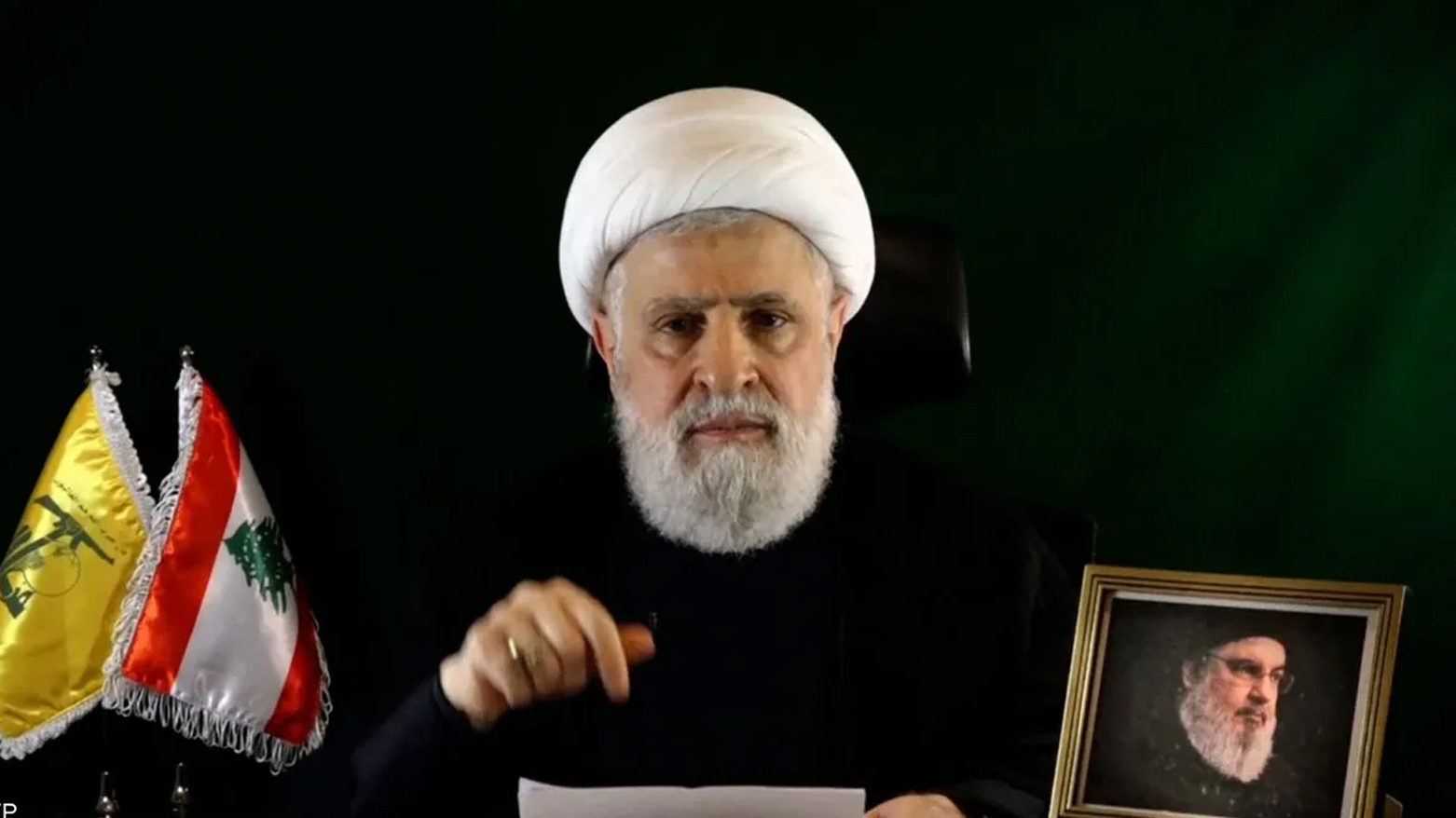
ERBIL (Kurdistan24) - Hezbollah leader Naim Qassem said on Sunday that efforts to disarm the group in Lebanon are part of an “Israeli-American plan,” accusing Israel of failing to honor a ceasefire agreement reached last year.
Speaking in a televised address, Qassem rejected mounting domestic and international pressure to strip Hezbollah of its weapons, arguing that such demands serve Israeli interests rather than Lebanon’s sovereignty.
“Disarmament is an Israeli-American plan,” Qassem said. “To demand exclusive arms control while Israel is committing aggression and America is imposing its will on Lebanon—stripping it of its power—means that you are not working in Lebanon’s interest, but rather in the interest of what Israel wants.”
Under heavy U.S. pressure and amid fears of renewed Israeli escalation, the Lebanese military is expected to complete the disarmament of Hezbollah forces south of the Litani River—around 30 kilometers from the Israeli border—by the end of the year. Authorities have indicated that the process would later extend to the rest of the country.
Despite a ceasefire reached in November 2024 that was intended to end more than a year of cross-border hostilities, Israel has continued airstrikes on Lebanon and has maintained troops in five areas it deems strategically vital.
Under the terms of the agreement, Hezbollah was required to withdraw its forces north of the Litani River and dismantle its military infrastructure in the vacated zone. Israel, however, has repeatedly questioned the effectiveness of the Lebanese army’s deployment and accused Hezbollah of rearming. The group has consistently rejected calls to surrender its weapons.
Qassem said the Lebanese army’s deployment was conditional on Israeli compliance with the ceasefire.
“The deployment of the Lebanese army south of the Litani River was required only if Israel had adhered to its commitments—to halting the aggression, withdrawing, releasing prisoners, and beginning reconstruction,” he said. “With the Israeli enemy not implementing any of the steps of the agreement, Lebanon is no longer required to take any action on any level before the Israelis commit to what they are obligated to do.”
Lebanese army chief General Rodolphe Haykal said earlier this week that the military is nearing completion of the first phase of its disarmament plan.
“The army is in the process of finishing the first phase of its plan,” Haykal told a military meeting on Tuesday, adding that preparations are underway “for the subsequent phases.”
The issue of Hezbollah’s weapons remains one of the most contentious political and security questions in Lebanon, as the fragile ceasefire continues to face repeated violations and growing uncertainty.