Iraq Eyes Independent Prime Minister as Power Struggles Intensify in Parliament
Coordination Framework signals shift amid U.S. pressure for a cabinet free of Iran-linked figures.
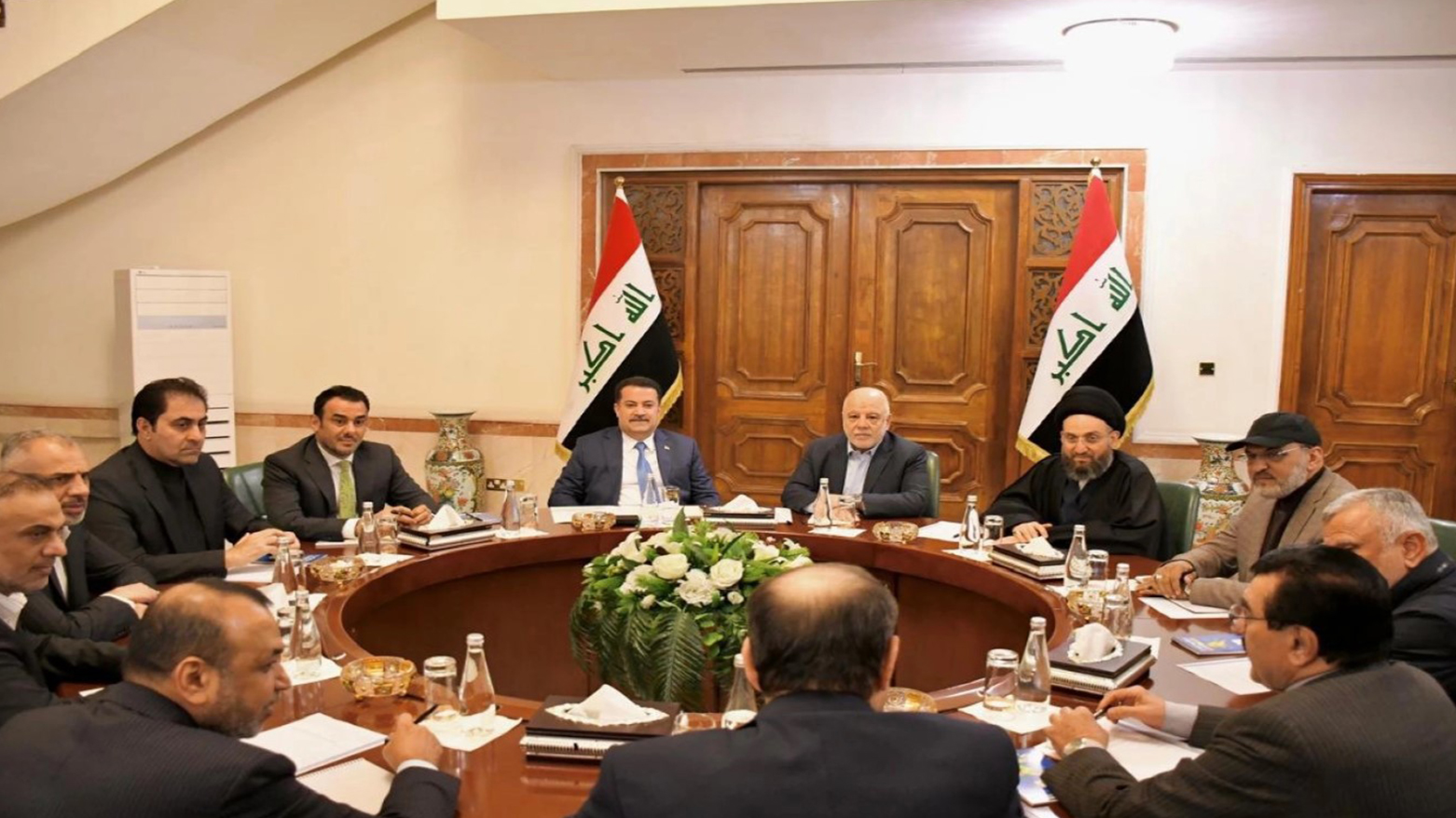
ERBIL (Kurdistan24) — A senior member of Iraq’s Shiite Coordination Framework said Tuesday that the country’s next prime minister will be an independent figure, declaring that all current candidates for the post have effectively been ruled out, as political negotiations intensify over the formation of a new government.
Speaking to Kurdistan24 on Tuesday, Abdulrahman al-Jazaeri said a new Iraqi government is expected to be formed within the next two months.
He stressed that the future prime minister must be politically independent and capable of maintaining balanced relations with Iraq’s top religious authority, as well as with both the United States and Iran, to navigate the country’s mounting internal and external challenges.
“None of the names currently being floated can secure the post of prime minister,” al-Jazaeri said, adding that the political environment requires a figure who can overcome expected obstacles and restore stability.
His remarks came amid competing assessments from other Shiite political blocs. Baha al-Araji, a leader within the Shiite Coordination Framework, said that only two figures — Nouri al-Maliki and incumbent Prime Minister Mohammed Shia al-Sudani — remain serious contenders, while the chances of other candidates have significantly weakened.
Behind the scenes, international pressure — particularly from the United States — continues to shape the political landscape. U.S. officials have repeatedly signaled that Washington will not accept a prime minister who is loyal to Iran or heavily influenced by Tehran, according to Iraqi political sources and media reports.
The United States is also pressing for the formation of a new cabinet that excludes ministers and senior officials affiliated with political parties or armed factions listed on U.S. terrorism designations, or those widely known for close ties to Iran-backed militias operating within Iraq.
Washington views such a government as essential to preserving Iraq’s sovereignty, limiting militia influence over state institutions, and ensuring continued international support at a time when Iraq faces economic strain, regional instability, and heightened tensions linked to broader Middle East conflicts.
As negotiations continue, diplomats and Western media reports say the push for an “independent” prime minister reflects not only internal Iraqi calculations, but also the growing weight of external actors seeking to have and work with a new Iraqi government that is not a puppet in Iran's hands.
Under Article 72 of Iraq’s constitution, parliament has 30 days after electing its presidency to choose a new president of the republic. The president then tasks the nominee of the largest parliamentary bloc with forming a government.
Since 2003, Iraq has operated under an informal power-sharing arrangement in which the presidency is held by a Kurd, the premiership by a Shiite Arab, and the speakership of parliament by a Sunni Arab.
While not enshrined in law, this system has become a cornerstone of Iraq’s post-war political order, with factions typically negotiating candidates internally before formal votes take place.
Political tensions have also surfaced within parliament over the election of the second deputy speaker, a position traditionally allocated to the Kurdish bloc. Kurdistan24 correspondent Dilan Barzan reported that the Kurdistan Democratic Party (KDP) withdrew Shakhawan Abdullah as its candidate and instead nominated Farhad Atrushi, head of the party’s parliamentary faction.
Ahmad Kani, a member of the KDP’s central committee, criticized Monday’s parliamentary session, saying it deviated from prior political agreements. He argued that the KDP, as the party with the largest nationwide electoral mandate, has a legitimate right to nominate a candidate for the post.
“There is still a third round of voting ahead,” Kani said, expressing hope that the process would conclude in line with earlier agreements. He warned, however, that failure by other parties to honor commitments could prompt the KDP to reassess its political options regarding Iraq’s future.
Meanwhile, Badr Organization leader Abu Mithaq Masari told Kurdistan24 that the second deputy speaker position would ultimately be settled in favor of the KDP, adding that judicial and federal authorities are monitoring the process to ensure the swift formation of a government.
Parliament is scheduled to convene later Tuesday for a third round of voting after two previous rounds failed to produce a winner, as neither candidate secured the required majority of 166 votes.
On Monday evening, parliament elected Haibat al-Halbousi as speaker and Adnan Fayhani as first deputy speaker, leaving the second deputy speaker post unresolved.