Kurdish Lawmaker in Türkiye Warns Against 'Political Operation' to Strip Opposition Immunity
DEM Party MP Newroz Uysal says efforts to lift the immunity of twenty-two lawmakers are political operations aimed at suppressing democratic politics, amid ongoing debates over Türkiye’s peace process.
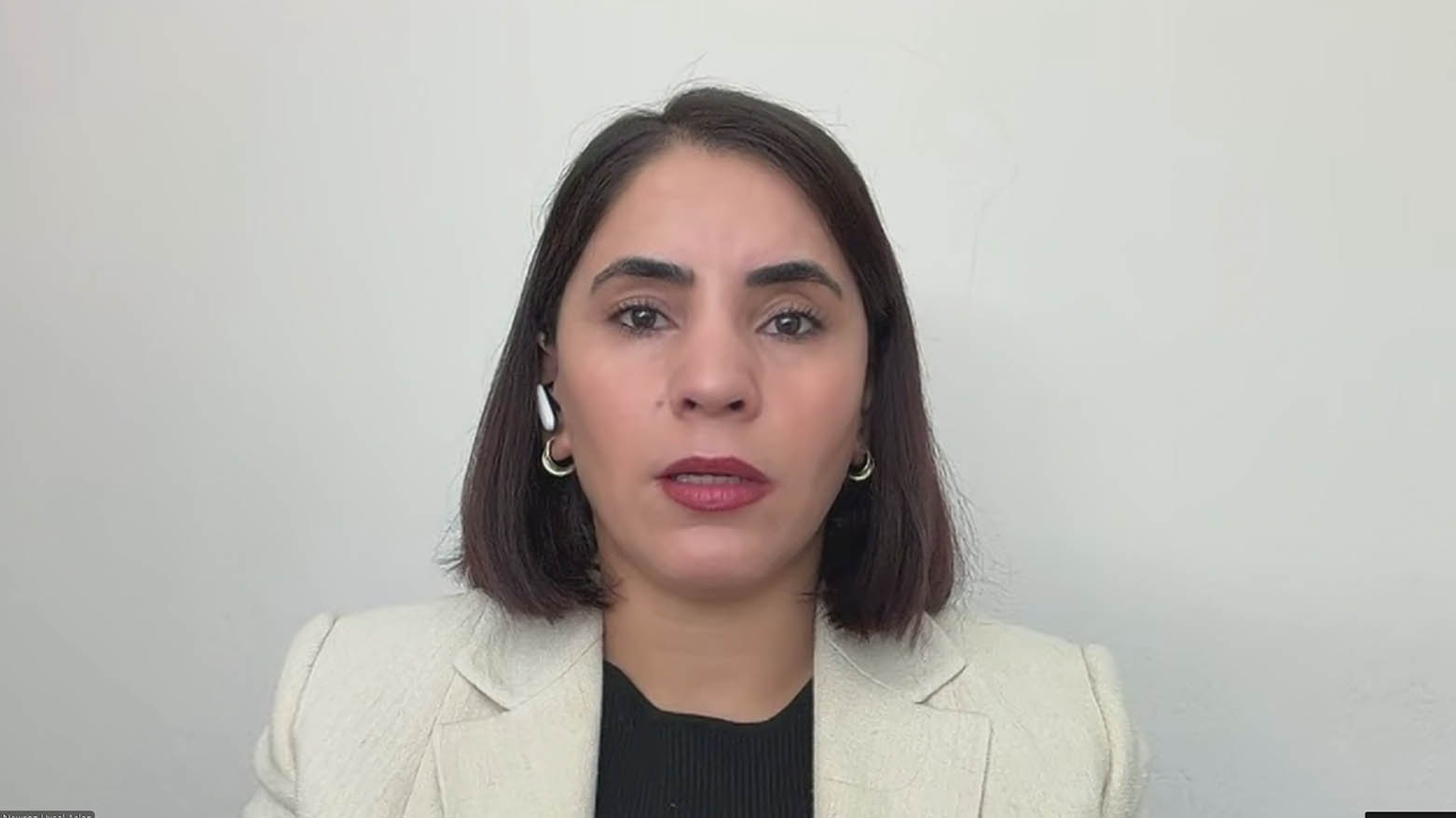
ERBIL (Kurdistan24) - As political tensions resurface in Türkiye’s parliament, renewed demands to lift parliamentary immunity have ignited sharp reactions, with Kurdish lawmaker Newroz Uysal warning that the move represents a deliberate political operation aimed at silencing democratic representation.
Newroz Uysal, a member of parliament from the Peoples’ Equality and Democracy Party (DEM Party), said that requests to lift the immunity of twenty-two lawmakers are not legal in nature but constitute a political operation designed to obstruct democratic politics.
Speaking to Kurdistan24 about the submission of new indictments to the Turkish parliament, Uysal said the demand to lift the immunity of twenty-two MPs from the DEM Party and the Republican People’s Party (CHP), particularly across thirty-seven separate files, represents a continuation of what she described as the “dark days” of 2015 and 2016.
“This approach in the Turkish parliament has now become something routine,” Uysal said. “When the state does not want to resolve the Kurdish issue through political means, it turns to lifting immunities and criminalizing politicians. But history has shown that arresting MPs and stripping them of immunity has solved nothing. On the contrary, it has deepened the crisis.”
Uysal stated that legal teams and parliamentary commissions are operating under the influence of political decisions. She added that although these files are prepared under the name of ‘law,’ their content is entirely based on the political speeches and activities of lawmakers.
The DEM Party MP also stressed that accusing politicians of ‘membership in an organization’ is used as a pretext to silence the public and suppress collective political will.
In another part of her remarks, Uysal highlighted Kurdish public demands for peace, saying, “Today, both Ocalan and the DEM Party demonstrate a very strong will for peace. Our people demand a dignified and democratic life. But the state’s response through indictments and immunity removals shows that there is still a refusal to recognize Kurdish will. As long as the state does not move away from this ‘security-centered’ mentality and Kurdish identity is not constitutionally recognized, this type of pressure will continue.”
Uysal concluded by emphasizing that the Kurdish issue is not limited to Türkiye alone but is a regional and international matter. “Peace in the north has a direct impact on stability in Rojava Kurdistan and the entire Middle East,” she said. “All sides must understand that the will of the people cannot be broken through force or indictments. The solution can only be achieved through dialogue and democratic politics.”
One week earlier, the Democracy, Brotherhood, and National Unity Commission of the Turkish parliament decided by majority vote to extend its work for an additional two months. Turkish media reported that the decision was taken during the commission’s meeting on Wednesday, Dec. 24, 2025.
The commission, which is expected to conclude its work by the end of the year, has submitted its report on legal amendments related to the peace process to the Speaker of Parliament. Turkish Parliament Speaker Numan Kurtulmuş stated that steps toward peace should be taken swiftly, describing the current moment as a historic opportunity that should not be missed.
The commission was established to prepare the legal groundwork for the disarmament process of the PKK and the resolution of related issues, and it has convened twenty times so far. During recent discussions, the CHP called for official recognition of the Kurdish issue, amendments to anti-terror laws, and guarantees for freedoms. The DEM Party criticized the CHP for lacking concrete and actionable proposals in its reports and called for a more comprehensive document. Meanwhile, the AK Party and MHP emphasized that the constitution and territorial integrity should not be altered and framed the process strictly within the concept of a “terror-free Türkiye.”
As parliamentary debates intensify, Uysal’s remarks underline a growing divide between security-driven approaches and calls for dialogue, placing the future of democratic politics and the peace process at the center of Türkiye’s political agenda.