Foreign Visitors Applaud Infrastructure Improvements Amid Kurdistan Tourism Revival
Czech tourists praised Kurdistan's infrastructure and culture, citing improved roads and easy visas. KRG data shows 1.5 million visitors to Soran last year as the region advances its tourism master plan.
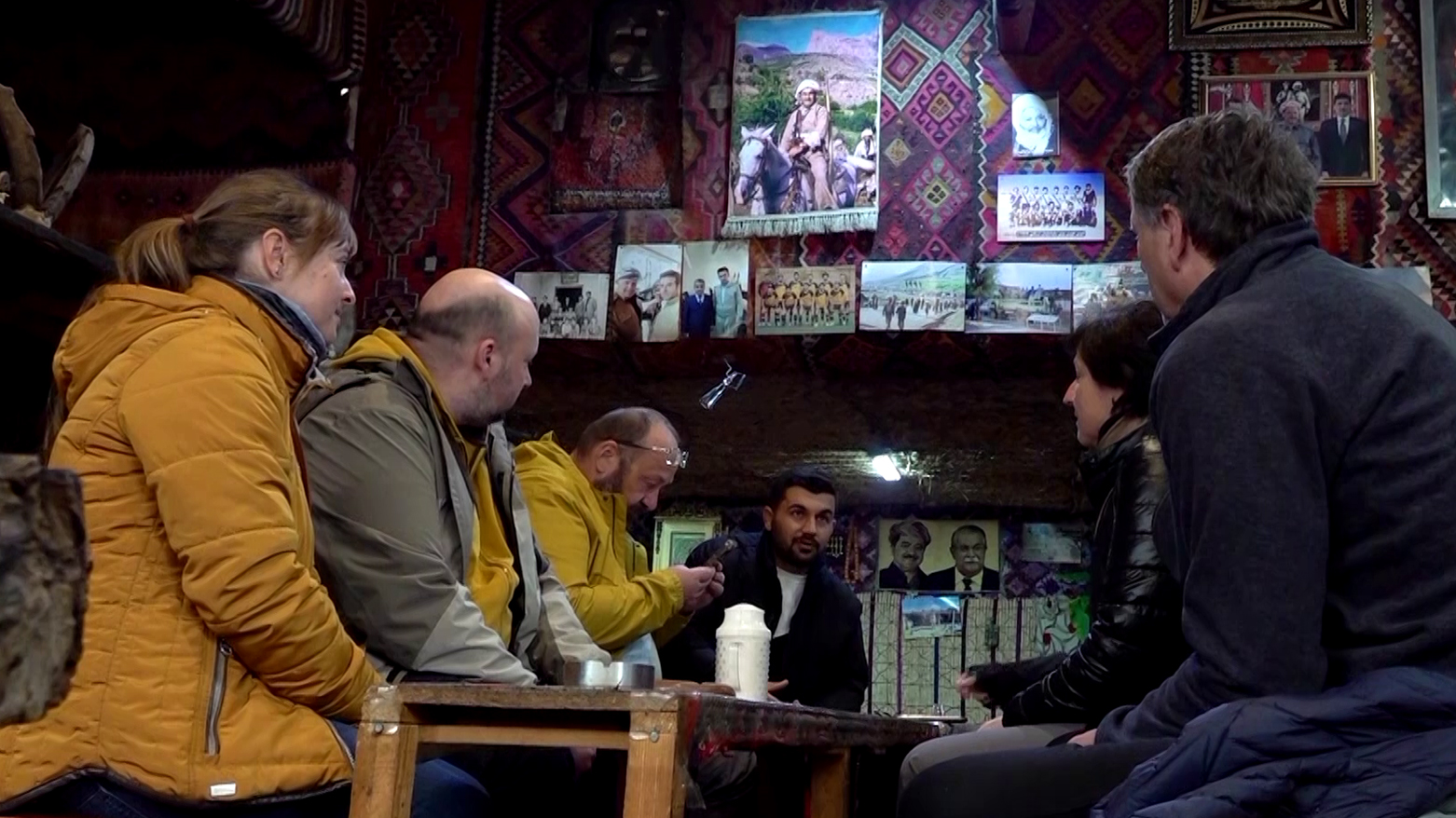
ERBIL (Kurdistan24) — A delegation of tourists from the Czech Republic has arrived in the Kurdistan Region to observe the New Year holidays, offering a distinct international perspective on the rapidly evolving tourism sector in northern Iraq. Gathered in a local teahouse to plan the next stages of their itinerary, the group’s presence highlights a growing trend of foreign interest in the region, driven by perceived improvements in infrastructure and a concerted government effort to revitalize the industry.
The visit comes as the Kurdistan Regional Government (KRG) continues to implement a broader strategy aimed at transforming the area into a premier destination within the Middle East.
Members of the Czech group, some of whom are returning visitors, expressed surprise at the pace of development they have witnessed, particularly regarding road quality and administrative organization, which they noted stands in sharp contrast to their previous experiences and, in some instances, conditions in their home country.
A Return to the Region
Pavel Cerny, a member of the traveling group, described the visit as an opportunity to deepen an existing connection with the region.
Speaking to Kurdistan 24, Cerny explained that the group consists of friends and citizens of the Czech Republic who share a passion for travel. For Cerny, this trip marks a return to the Kurdistan Region, having first visited in May 2019 with a companion.
The decision to return was motivated by a desire to explore the "beauties of Kurdistan" and to become "closely acquainted with the beautiful and rich culture of Kurdistan," Cerny said.
He noted that the group had heard extensive accounts regarding the "bravery and resilience of the Kurdish people," a reputation that appears to serve as a significant cultural draw for international visitors seeking experiences beyond standard tourist destinations.
Administrative and Infrastructural Improvements
A key factor facilitating the group's visit has been the administrative environment managed by the Kurdistan Regional Government.
Cerny highlighted the ease of entry, describing the KRG’s procedures as "very organized." He specifically pointed to the visa process, noting that they were able to obtain visas easily, a logistical streamlining that is often critical for attracting leisure travelers from Europe.
Beyond bureaucracy, the physical changes in the region made a strong impression on the returning tourist.
Cerny recalled that during his previous five-day trip in 2019, he had visited a variety of locations, including Erbil, Soran, and Amedi. On this current trip, focused again on Erbil and its surroundings, he observed tangible progress in public works.
"Now I see many things have changed," Cerny told Kurdistan 24.
He offered a specific assessment of the region's civil engineering projects, stating that the "roads and infrastructure of Kurdistan have become much better."
In a notable comparison, he went so far as to suggest that the quality of the thoroughfares he traversed in the Kurdistan Region had surpassed those in his own nation, saying, "I can say the roads are better than in my own country."
First-Time Impressions and Recommendations
While Cerny offered the perspective of a veteran observer, other members of the group provided insights from the viewpoint of first-time visitors. The group’s itinerary included a stop at the Rawanduz Canyon, where they were observed recording the colorful scenery, a testament to the region's natural potential.
Zuzana Tynerova, another member of the Czech group, admitted to having limited prior knowledge of the area.
She noted that in the Czech Republic, there is not much information available regarding Kurdistan or the local lifestyle. This information gap often colors the expectations of incoming tourists. However, Tynerova stated that seeing the lifestyle and culture with her own eyes left her "amazed."
Reflecting on the disparity between her expectations and the reality on the ground, Tynerova said, "I can say that what I experienced here and saw with my own eyes was much more than what I expected."
Based on her experience, Tynerova offered a strong endorsement for the region as a travel destination. She recommended that citizens of her country consider visiting, citing two primary factors: the physical beauty of the country and the character of its residents, whom she described as "very kind and hospitable."
Sector Growth and Official Data
The anecdotes provided by the Czech tourists align with statistical data released by local authorities, which indicate a robust recovery and expansion in the tourism sector.
According to statistics from the General Directorate of Tourism in Soran, the area has seen significant footfall over the past year.
The Directorate reported that nearly 1.5 million tourists visited the Soran area last year.
A breakdown of these figures reveals that foreign nationals constitute a notable portion of this influx, with 15 percent of those visitors coming from outside the country.
Officials indicated that recent weather patterns have supported this trend, noting that this year's snowfall has played an effective role in attracting tourists interested in winter activities.
Government Strategy and Future Outlook
The revival of the tourism sector in the area is not viewed as accidental but rather the result of ongoing investment and strategic planning. The Kurdistan Regional Government, particularly under the ninth cabinet, has signaled that it does not intend to stand idly by as demand grows.
The administration has announced a comprehensive tourism master plan designed to structure and sustain the sector's growth.
Officials expect that upon the completion of this master plan, the Kurdistan Region will secure its status as a unique tourism area within the Middle East.
The convergence of positive foreign sentiment, as expressed by the Czech delegation, and rising visitor numbers suggests that the investment in that sector continues to yield results, catching the eye of foreign tourists and potentially reshaping the region's economic landscape.