Ukraine Allies Meet in Paris to Push Security Guarantees Despite Ongoing War
U.S., European leaders seek alignment on ceasefire terms as Kyiv rejects territorial concessions and Moscow opposes foreign troops.
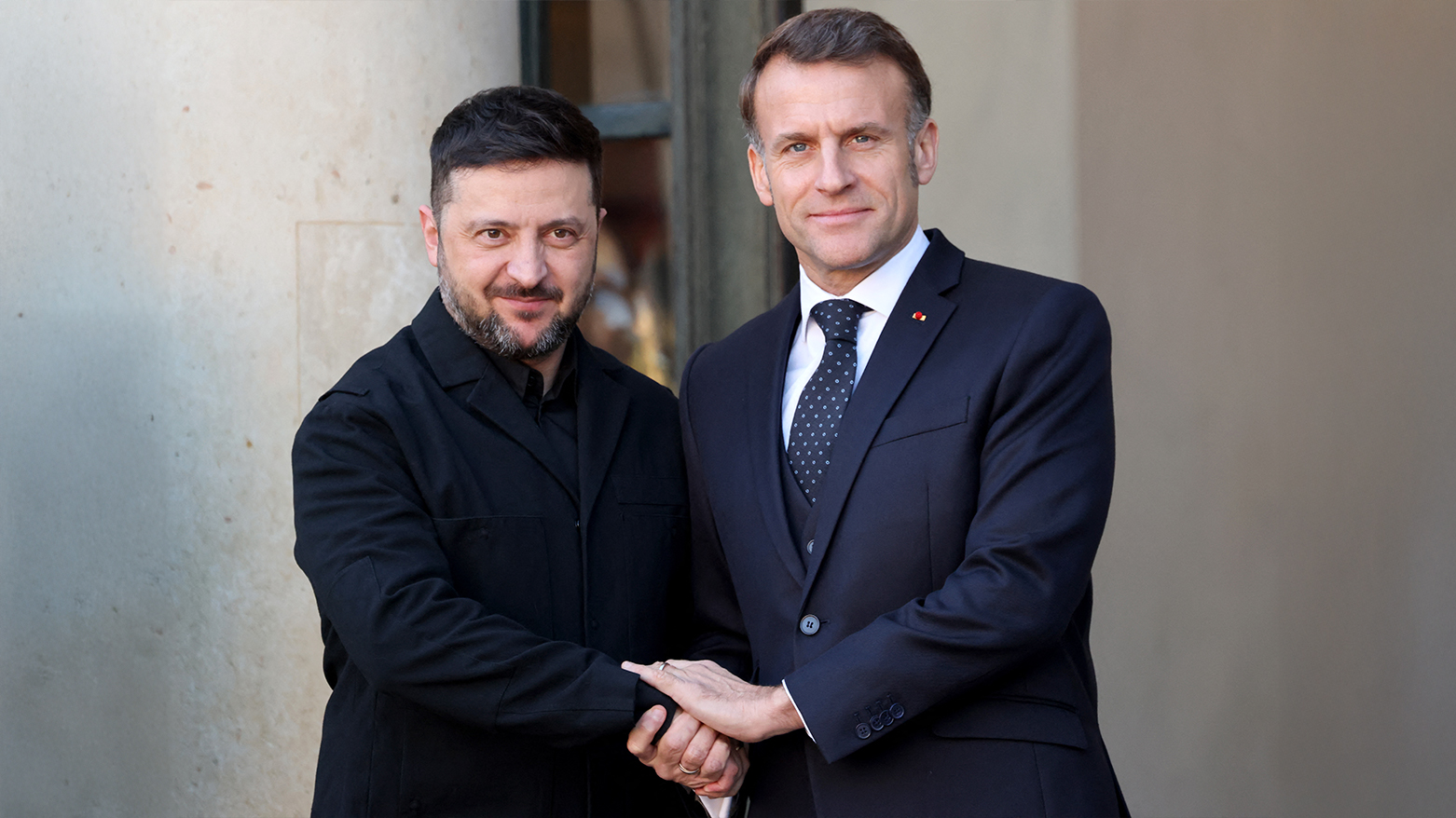
ERBIL (Kurdistan24) — Key European allies of Ukraine and senior U.S. envoys met President Volodymyr Zelensky in Paris on Tuesday in a renewed effort to agree on security guarantees that could underpin any future ceasefire in Russia’s war against Ukraine, now nearing its fourth year.
The meeting of the so-called “Coalition of the Willing” comes with no sign of a slowdown in fighting, in what remains Europe’s deadliest conflict since World War II. Representatives from 35 countries, including 27 heads of state and government, gathered in the French capital as part of a diplomatic push to align Washington, Kyiv, and European partners around a shared vision for ending the war.
The French presidency said the talks aim to demonstrate unity on security guarantees for Ukraine, including responses to potential violations of any ceasefire. Zelensky arrived in Paris ahead of the talks, according to his office.
U.S. President Donald Trump’s special envoy Steve Witkoff and his son-in-law Jared Kushner are attending the meeting, alongside French President Emmanuel Macron, UK Prime Minister Keir Starmer, German Chancellor Friedrich Merz, Italian Prime Minister Giorgia Meloni, and Canadian Prime Minister Mark Carney.
Macron also held early-morning talks with Carney before hosting Zelensky and the U.S. delegation at the Élysée Palace.
Some coalition members are advocating for the deployment of a multinational force in Ukraine to deter future Russian attacks should a political settlement be reached. Russia has repeatedly rejected any presence of NATO forces on Ukrainian territory, even in a monitoring role.
The talks take place amid new transatlantic sensitivities following the recent capture by U.S. forces of Venezuelan President Nicolás Maduro, a close ally of Russian President Vladimir Putin. While European leaders have largely avoided direct condemnation of the operation, several have expressed unease over its implications for international law.
Before traveling to Paris, Polish Prime Minister Donald Tusk said the goal of the meeting was to “tighten and align the European and American positions,” arguing that unified pressure is the only way to compel Russia to take a ceasefire and peace talks seriously.
He cautioned, however, against expecting final decisions to emerge from the summit. An adviser to Macron said the meeting marked the culmination of diplomatic efforts launched after Trump’s return to the White House, aimed at preventing a U.S. disengagement from Ukraine.
“We have succeeded in this exercise of realignment between Ukraine, Europe, and America,” the adviser said.
European leaders are expected to commit to a common framework for a ceasefire and discuss the possible deployment of a reassurance force as part of a broader political agreement.
Preparatory talks were held over the weekend in Kyiv, where security advisers from 15 countries, along with NATO and EU representatives, met in person, with Witkoff joining virtually.
Despite the diplomatic momentum, major obstacles remain. Ukrainian officials have said a deal is “90 percent” ready, but Russia—currently occupying about 20 percent of Ukrainian territory—is demanding full control of the eastern Donbas region.
Kyiv has firmly rejected any territorial concessions, warning that ceding land would embolden Moscow and fail to deter future invasions.
German Chancellor Merz said diplomatic efforts were unfolding under “difficult conditions,” citing Russia’s limited willingness to negotiate, internal challenges facing Zelensky, and shifts in transatlantic relations.
“We want a ceasefire that preserves Ukraine’s sovereignty,” Merz wrote in a letter to lawmakers. “Such a ceasefire must be backed by security guarantees from the U.S. and Europe.”