Yemen Names Foreign Minister as New Premier Amid Rift in Gulf Coalition
Yemen's PM resigned Thursday, replaced by Foreign Minister Shaya Mohsen Zindani, amid a Saudi-UAE rift. AFP reports the move follows a failed UAE-backed separatist offensive rolled back by Saudi strikes.
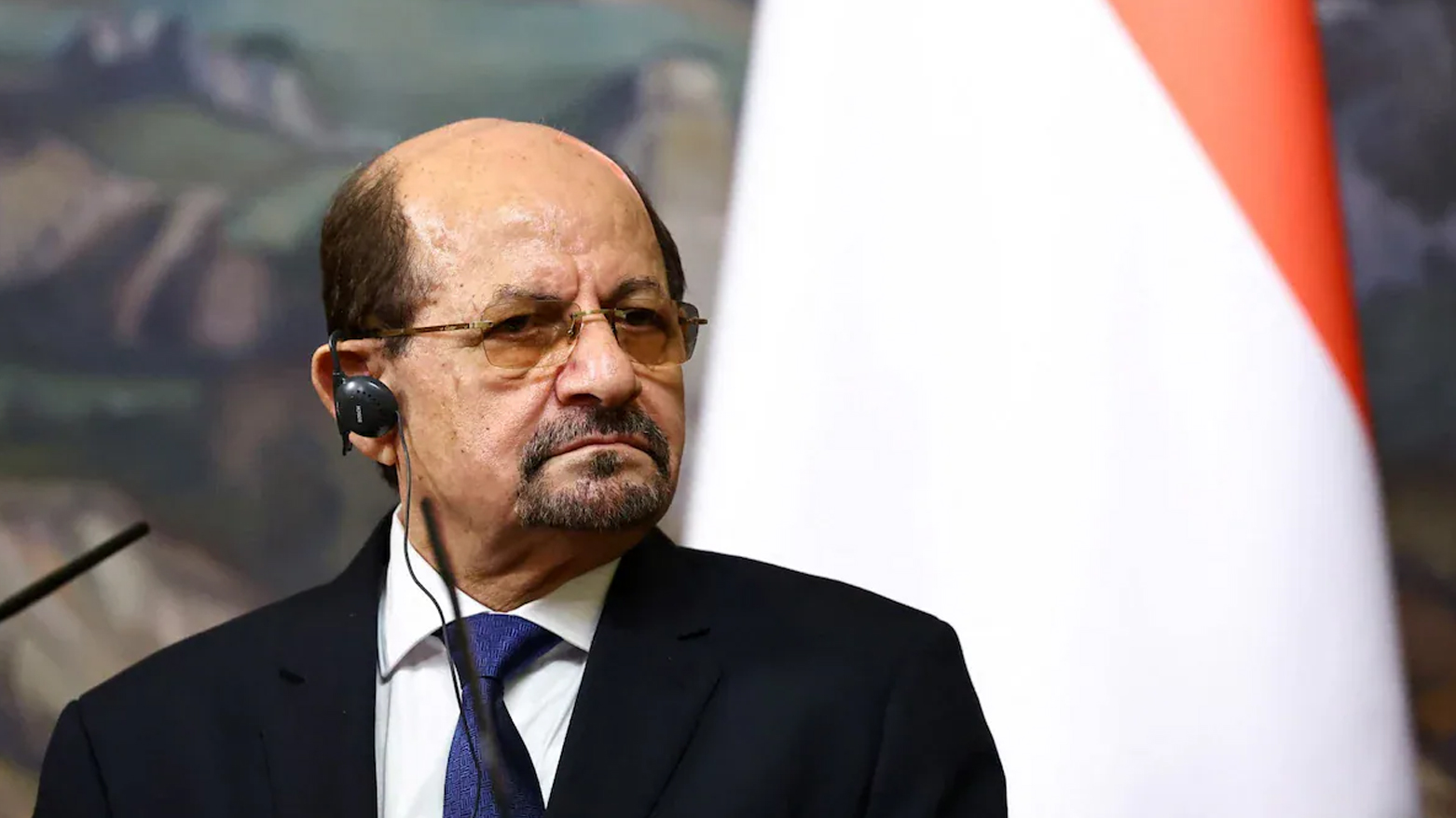
ERBIL (Kurdistan24) - Yemen’s prime minister submitted his government’s resignation on Thursday, paving the way for the foreign minister to assume the role, the country’s Saudi-backed leadership announced. The political shake-up follows a period of intensifying friction between Gulf allies Saudi Arabia and the United Arab Emirates, precipitated by a thwarted military bid by UAE-backed separatists to seize control of the country’s south.
The Presidential Leadership Council, the executive body internationally recognized as Yemen's legitimate government, accepted the resignation of Prime Minister Salim Saleh BinBuriek late Thursday.
According to a statement published by the official news agency Saba, BinBuriek met with the council’s chairman, Rashad al-Alimi, to formally tender his resignation. The move was described as a procedural step to "pave the way for the formation of a new government" capable of navigating the fractured security landscape.
In a decree posted on state media, the presidential council appointed Foreign Minister Dr. Shaya Mohsen Zindani as the new prime minister, tasking him with forming a cabinet during a critical juncture in the nation’s decade-long conflict.
The transition marks a significant consolidation of power by Riyadh, occurring shortly after Saudi military forces and their local allies rolled back a major offensive by southern separatists supported by Abu Dhabi.
Consolidation Following Military Escalation
The reconfiguration of the Yemeni government is the latest development in a power struggle that has pitted the strategic interests of Saudi Arabia against those of the UAE. While both nations are nominally partners in the coalition fighting the Iran-aligned Houthi rebels, they have increasingly backed rival factions within the anti-Houthi bloc, leading to open conflict in southern provinces.
Agence France-Presse (AFP) reported that the resignation comes after weeks of tensions between the Gulf allies following a "failed push by Abu Dhabi-backed separatists to seize most of Yemen's south."
According to AFP, this offensive was "rolled back by Saudi strikes and allies on the ground," a military intervention that ultimately forced the UAE to withdraw its troops from the country. Following this withdrawal, Riyadh moved to boost its influence within the internationally recognized government.
The official statement regarding the prime minister's resignation cited the urgent need to "restore state institutions" and "strengthen the unity of sovereign decision-making." Crucially, the statement explicitly referenced the necessity of "defeating the coup" as a primary reason for the government's dissolution.
This language refers to recent military maneuvers by the Southern Transitional Council (STC), a separatist group heavily armed and funded by the UAE.
BinBuriek's outgoing government had been characterized by internal divisions, split between ministers loyal to the UAE and those aligned with Saudi Arabia.
AFP noted that the government had undergone a purge, with UAE-aligned ministers dismissed and Chairman Alimi declaring that all southern factions would henceforth unite under Saudi command. This signals an end to the dual-track security architecture that had previously defined coalition operations in the south.
Separatist Leader Calls for Unrest
As the central government attempts to reorganize in Riyadh, tensions remain acute on the ground in Yemen. On Thursday, Aidarous Al-Zubaidi, the leader of the STC who was recently removed from the Presidential Leadership Council and accused of high treason, issued a call for mass demonstrations to challenge the new order.
In his first public statement since disappearing more than a week ago, Al-Zubaidi urged his supporters to take to the streets of Aden, the southern port city that serves as the interim capital. In a message broadcast by the pro-separatist Aden Independent Channel, Al-Zubaidi called on "the people of South Arabia to rally in the capital Aden on Friday."
Al-Zubaidi urged demonstrators to voice support for a declaration of independence made by the separatists in January and to demand the release of STC members currently detained in Saudi Arabia. The call for protests comes amid heightened uncertainty in Aden, where the contest between UAE and Saudi-backed factions threatens to further destabilize the region.
The STC seeks to re-establish the independent state of South Yemen, which existed from 1967 until its unification with the north in 1990.
This objective has placed the group at the center of the growing rift within the Gulf coalition. Tensions boiled over in December when STC forces launched an offensive into the provinces of Hadramawt and Mahra, territories bordering Saudi Arabia and Oman.
The incursion was halted only after Saudi Arabia intervened militarily with airstrikes and a ground counter-offensive.
Flight and Exile
The whereabouts of Al-Zubaidi have been a subject of contention since his forces suffered rapid defeats earlier this month. While STC officials have insisted he remains in Yemen, the Saudi-led coalition released a statement on Jan. 8 detailing his flight from the country.
According to the coalition, "reliable intelligence" indicated that Al-Zubaidi escaped Aden shortly after midnight on a Wednesday, traveling by boat to Berbera in Somaliland.
The coalition's account outlines an elaborate extraction route: from Somaliland, Al-Zubaidi reportedly boarded a Russian-made Ilyushin aircraft to Mogadishu, traveling "under the supervision of UAE officers." He was then flown to a military airport in Abu Dhabi, arriving later that evening.
The involvement of UAE officers in Al-Zubaidi’s extraction, as alleged by the Saudi-led coalition, underscores the depth of the schism between the two Gulf powers.
Riyadh’s dismantling of the STC’s political influence, including Al-Zubaidi's removal from the presidential council and the subsequent cabinet purge reported by AFP, appears designed to neutralize the UAE's proxy force in the country.
Caretaker Government
With Dr. Shaya Mohsen Zindani now appointed as prime minister, the focus in Riyadh shifts to the formation of a cabinet that aligns with the "unity of sovereign decision-making" mandated by the presidential council.
The council’s statement clarified that the current government will continue to manage affairs in a caretaker capacity until a new administration is seated. However, its powers are limited; the caretaker body is prohibited from making new appointments or dismissals during this interim period.
Observers warn that the forced consolidation of southern provinces under a single, Saudi-dominated authority faces significant hurdles.
The call for protests in Aden by the exiled separatist leadership suggests that the underlying grievances driving the southern independence movement remain unresolved.
Renewed unrest in the interim capital could complicate efforts to stabilize the economy and present a unified front against the Houthi rebels who control much of northern Yemen.
As the new prime minister begins the task of forming a government, the immediate challenge will be containing the fallout from the coalition’s internal fracture while preventing the streets of Aden from erupting into further violence.