US Envoy to Meet Kurdish Commander as Washington Adjusts Syria Policy, Official Says
SDC representative Sinam Mohammad says the US has shifted its stance toward Damascus, confirming a planned Jan. 17 meeting in Erbil between envoy Tom Barrack and SDF commander Mazloum Abdi to address escalating tensions.
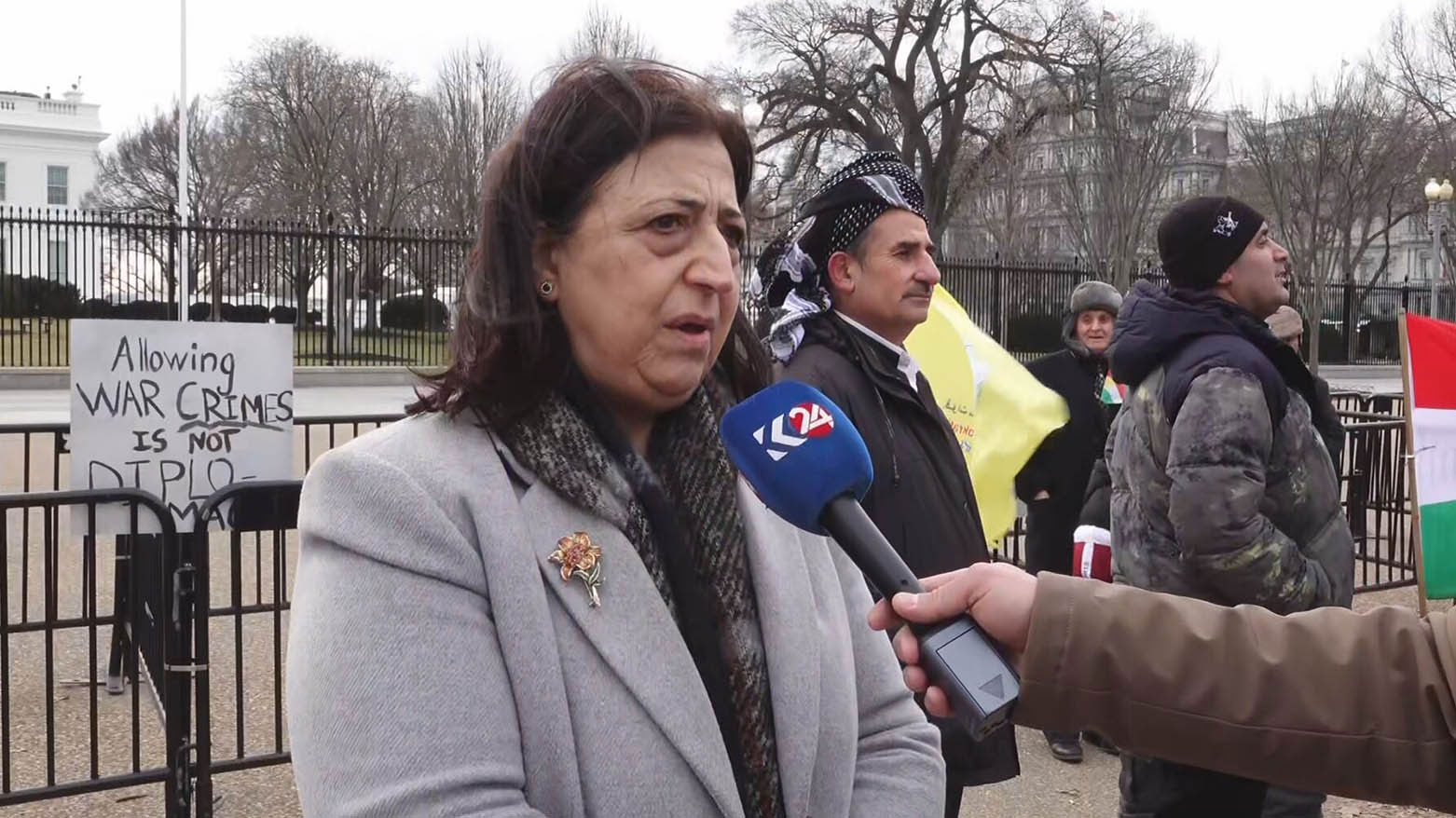
ERBIL (Kurdistan24) - As efforts intensify to prevent a wider military escalation in northern and eastern Syria (Western Kurdistan), Sinam Mohammad, the Syrian Democratic Council (SDC) representative in the United States, said Washington has ended its silence and adjusted its position toward Damascus, citing new diplomatic and field-level engagement aimed at stabilizing the situation.
In remarks to Kurdistan24, Mohammad outlined recent US moves within the framework of attempts to calm the security and military situation in northern and eastern Syria. She said the United States is taking concrete steps to halt Syrian army attacks and assess developments on the ground through direct engagement with the leadership of the Syrian Democratic Forces.
Mohammad confirmed that on Saturday, Jan. 17, 2026, US Special Envoy to Syria Tom Barrack is scheduled to meet with Mazloum Abdi, the general commander of the Syrian Democratic Forces, in Erbil. She said the meeting is part of Washington’s efforts to prevent a dangerous escalation and to discuss the broader situation in the region.
According to Mohammad, the primary objective of the meeting is to address the recent military escalation and to identify a mechanism that could help stabilize the situation and prevent further deterioration on the battlefield.
Addressing the recent visit by a US delegation to the Deir Hafer area, the SDC representative explained that the move came after clashes ended in the Kurdish neighborhoods of Aleppo. She said the Syrian Arab Army had plans to continue its attacks and make Deir Hafer a new target.
“After the fighting and clashes ended in the Kurdish neighborhoods of Aleppo, the Syrian Arab Army had plans to continue its attacks and target the Deir Hafer area,” Mohammad said.
She noted that the US delegation’s visit to the area represented a practical step to closely monitor developments and prevent any attack that could further destabilize the situation.
Mohammad also spoke about what she described as a shift in US policy. “It is true that at the beginning of the fighting in the Kurdish neighborhoods of Aleppo, the United States chose silence,” she said. “But now its position has changed and it has stepped in.”
She concluded by stressing that the SDC has delivered a clear message to the US administration during its discussions. “Protecting the Kurds and all other components of Syria is a sensitive and very important issue and must be taken into account,” Mohammad said.
Mohammad’s comments come as US diplomatic efforts continue ahead of a planned meeting between Tom Barrack and Mazloum Abdi in Erbil, part of broader US attempts to prevent a large-scale military confrontation between the Syrian Arab Army and the Kurdish-led SDF.
According to informed sources cited by Al-Monito, the meeting is expected to be mediated by Kurdistan Region President Nechirvan Barzani. The discussions are set to focus on the overall situation in Syria, as well as the latest tensions and disputes between the SDF and the Syrian government.
The planned talks follow rising tensions after the Syrian government issued threats of military action against towns in northern and eastern Syria under SDF control. Those threats came in the wake of military clashes last week between Aleppo internal security forces and the Syrian Arab Army in the Kurdish-majority neighborhoods of Sheikh Maqsud and Ashrafiyeh.
After several days of fighting and instability, Aleppo’s internal security forces withdrew from both neighborhoods. Observers have warned that any renewed confrontation could jeopardize the agreement signed on March 10 last year between Mazloum Abdi and Syrian President Ahmed al-Sharaa, which outlined a roadmap for integrating the civilian and military institutions of the Autonomous Administration into Syrian state institutions.
With Washington stepping up its engagement and high-level talks scheduled in Erbil, Kurdish officials say the coming days will be critical in determining whether diplomacy can prevent a broader escalation and ensure protection for all components of Syrian society.