President Barzani's Strategy Seen as Key as SDF-Damascus Diplomacy Intensifies
Analyst Abu Bakr Karwani states President Barzani has the strategy to mediate SDF-Damascus tensions. This follows Erbil talks and coincides with Sweida protests backing Kurds against Syrian Arab Army advances.
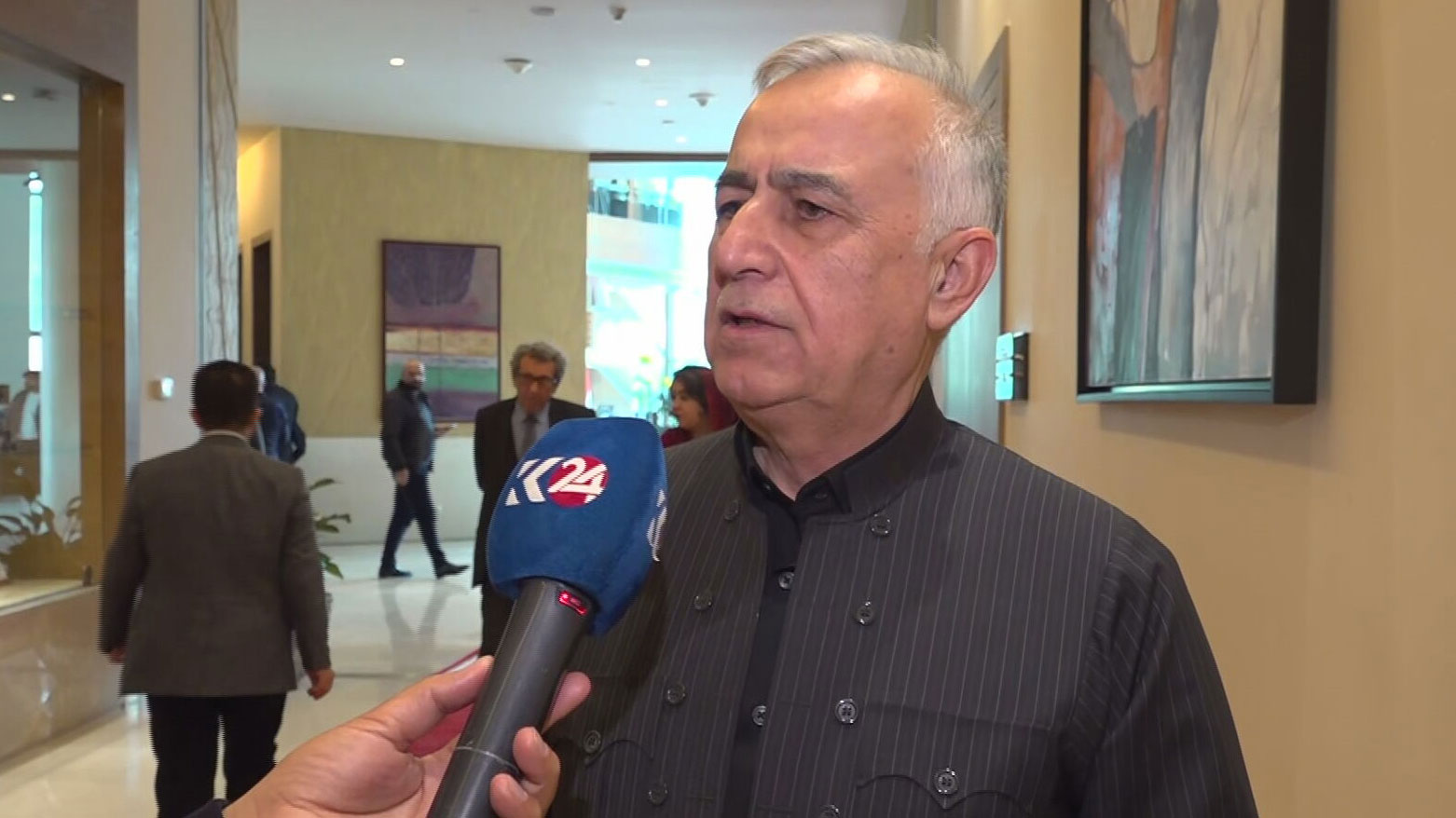
ERBIL (Kurdistan24) - President Masoud Barzani possesses the diplomatic leverage and strategic positioning necessary to mediate the complex disputes between the Autonomous Administration of North and East Syria and the government in Damascus, according to a prominent political analyst. Abu Bakr Karwani, a political and strategic expert, stated that the Kurdistan Region leadership is capable of playing an influential and positive role in addressing the "thorny files" currently destabilizing the Syrian arena.
The assessment from Karwani comes in the wake of a significant tripartite meeting held in Erbil that brought together President Barzani, Mazloum Abdi, the General Commander of the Syrian Democratic Forces (SDF), and Tom Barrack, the United States Special Envoy to Syria.
Political analysts view this high-level convergence as an indication that the Kurdistan Region has accumulated significant political and diplomatic capital, which can now be employed constructively to navigate the deepening crisis in neighboring Syria.
In a statement to Kurdistan24, Karwani explained that the importance of the Erbil meeting stems from the "ideal position" the Region occupies in international affairs. He highlighted that Erbil maintains a "wide and solid network of regional and international relations crafted with care."
The analyst argued that these established channels can be harnessed to ensure that the fate of Kurds in Western Kurdistan (Northwestern Syria) is not ignored and to protect their rights amidst shifting geopolitical tides.
Moving beyond the provision of humanitarian assistance, Karwani views the Kurdistan Region as a natural candidate to serve as a conduit for diplomacy between the conflicting parties.
He asserted that it is necessary for Erbil to play a "pivotal role" in bringing the Syrian factions closer together. This capability, he suggested, is derived from the fact that the Kurdistan Region is considered the "true strategic depth for all parts of Kurdistan."
This unique status grants its leadership a nuanced and deeper understanding of the complexities of the scene than external actors might possess, allowing for the formulation of strategies that address the core grievances of the Kurdish population while engaging with state actors.
The urgency of President Barzani’s potential roadmap to prevent the worsening of the Syrian situation is underscored by recent military escalations on the ground.
While diplomatic movements intensify in Erbil, government forces have pressed offensives against Kurdish-held territories, sparking unrest that has resonated well beyond the immediate frontlines.
The broadening scope of the crisis was evident on Saturday in the southern Syrian city of Sweida, where dozens of residents gathered in Karama Square.
The protest was organized to explicitly reject the military operations being conducted by the Syrian Arab Army in eastern Aleppo and to express strong solidarity with the Kurdish population.
The demonstration in the city center underscored a growing sense of cross-sectarian unity among certain factions of the Syrian populace as government forces press into territories held by the SDF.
In a notable display of political and communal alignment, participants in Sweida raised a collection of symbols representing the diverse groups affected by the conflict.
According to reports from the scene, the flags of Kurdistan and the Syrian Democratic Forces were hoisted alongside the banner of the Druze component. Organizers stated that this visual combination was intended to serve as a clear indication of unity in the face of recent attacks by the Syrian Arab Army.
Sulaiman Sheikh, a local activist and participant in the gathering, spoke to the Shafaq News Agency regarding the motivations behind the protest.
Sheikh articulated the group's collective stance, emphasizing that the residents of Sweida felt compelled to stand with their Kurdish counterparts. "We have gathered here today to reiterate our support for the rights of the Kurdish people and to reject those military assaults that have now targeted the Kurds," Sheikh told the agency.
The activist drew direct parallels between the current plight of the Kurds in northern Syria and the historical experiences of the Druze population in Sweida.
Sheikh indicated that the military pressure and targeting currently being faced by the Kurds bear a striking resemblance to the tragedies previously witnessed in Sweida and other regions of the country. He characterized these events as the targeting of civilians on a national basis, suggesting a systematic approach by government forces that transcends specific geography.
Sheikh also issued a warning regarding the consequences of inaction by other Syrian communities. He argued that failing to speak out against the operations in Aleppo would ultimately endanger other minority groups in the country.
"Silence in the face of these violations paves the way for their repetition against any other Syrian component," he added, framing the protest as a necessary preventative measure for the broader Syrian population.
The demands of the demonstrators extended beyond symbolic solidarity to specific political and military calls to action. The activist called for the "immediate cessation of military operations" and urged all parties to search for a "just political solution."
Sheikh emphasized that such a solution must guarantee the rights of all components of Syrian society, asserting that solidarity among Syrians remains the only viable pathway to confront violence.
The political and diplomatic maneuvers in Erbil and the protests in the south are occurring against a backdrop of fluid and contested military developments. The Syrian government has continued its advances toward areas currently under the authority of the SDF in eastern Aleppo.
The Syrian Arab Army has officially announced that its units have entered the strategic city of Tabqa on the banks of the Euphrates River, a development that would represent a substantial shift in the regional balance of power. However, the Syrian Democratic Forces issued a contradictory statement on Saturday.
In contrast to the government's announcement, SDF forces reiterated that the city remains under their full control, denying the Syrian Arab Army's claims of entry.
As the situation on the ground remains volatile with conflicting reports regarding the control of key strategic locations, the focus has returned to the diplomatic track.
Karwani emphasized to Kurdistan24 that attention is now being paid to the role President Barzani can play in drawing a roadmap that prevents the worsening of the Syrian situation.
The alignment of the strategic vision in Erbil with the calls for a political solution on the streets of Sweida highlights the widespread demand for a cessation of hostilities and a negotiated settlement to the "thorny files" that continue to plague the region.