Kurdistan Region Tourism Board to Join Madrid Fair After Boosting Infrastructure
KRG Tourism Board to attend Madrid fair to promote sector growth. Spokesperson cites 80 new projects, 20,000 jobs, and 25% foreign tourist rate.
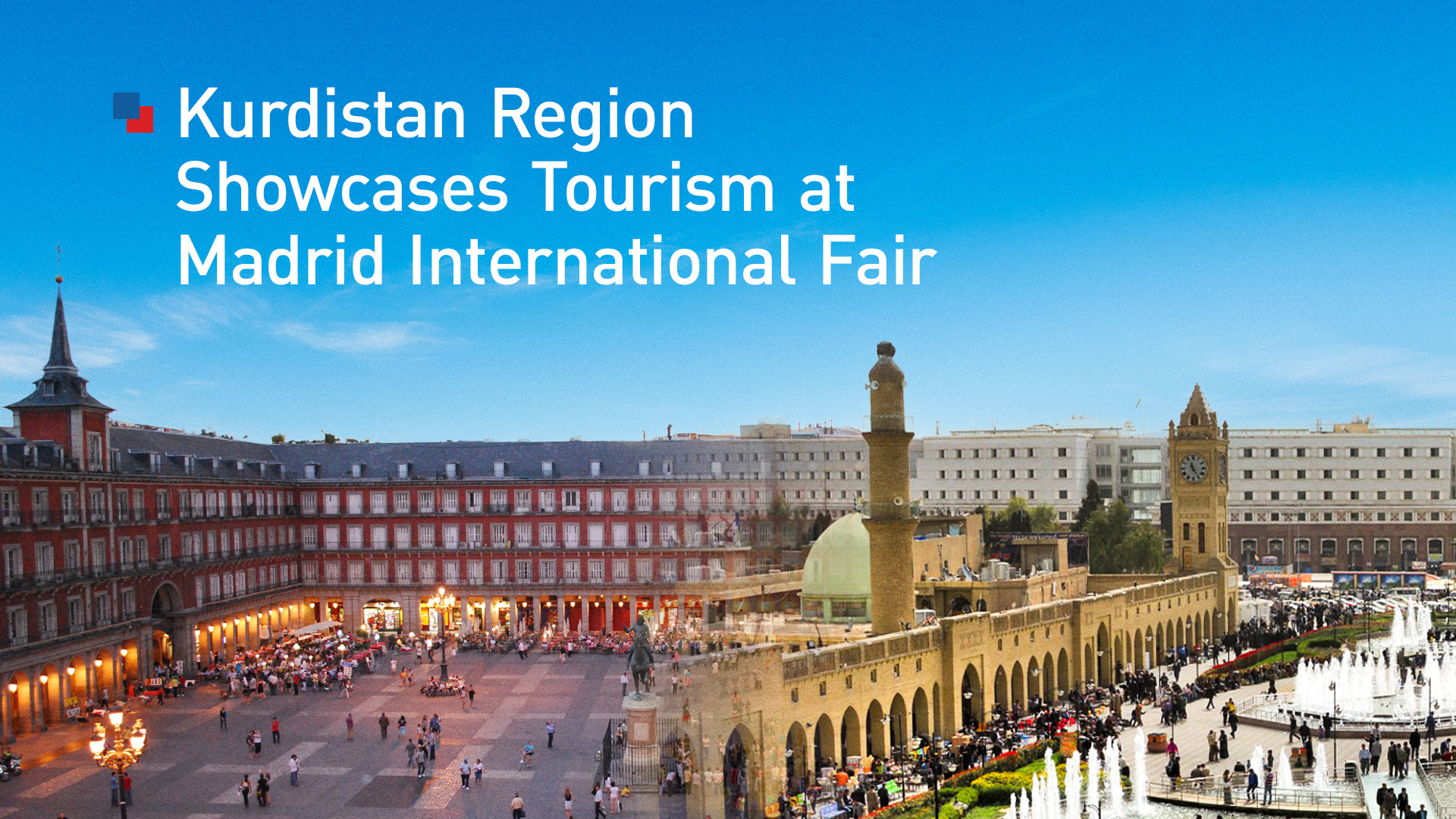
ERBIL (Kurdistan24) - The General Board of Tourism of the Kurdistan Region announced on Sunday that a joint delegation of public and private sector representatives will travel to Spain to participate in the Madrid International Tourism Fair, a move officials describe as a critical step in a broader strategy to internationalize the Region’s tourism industry.
The announcement follows the release of new government data indicating that the implementation of dozens of infrastructure projects under the Ninth Cabinet has coincided with a shift in visitor demographics, with foreign arrivals now accounting for a quarter of all tourists.
On Sunday, January 18, 2026, Ibrahim Abdulmajid, the Spokesperson for the General Board of Tourism of the Kurdistan Region, spoke with a Kurdistan24 reporter to outline the objectives of the upcoming diplomatic and commercial mission.
According to Abdulmajid, the participation in the Madrid exhibition represents a continuation of the administration's policy to actively engage in international forums.
He stated that the delegation from the Tourism Board will include stakeholders from both the government and the private sector, aimed at presenting a unified front to potential international partners and visitors.
The decision to attend the event in Madrid places the Kurdistan Region on a prominent global stage.
Abdulmajid detailed the scale of the fair, noting that the Kurdistan Region will be exhibiting alongside representatives from 155 other countries. The event is expected to host approximately 10,000 tourism companies and institutions from around the world.
Furthermore, the Spokesperson indicated that organizers anticipate more than 250,000 visitors will attend the exhibition. Abdulmajid emphasized that this level of exposure holds "great importance" for the Board’s ongoing efforts to introduce the Kurdistan Region to a global audience and attract the attention of international tourists.
The push for international visibility is underpinned by what the Tourism Board describes as a "historic turning point" for the sector domestically.
Abdulmajid told Kurdistan24 that the Ninth Cabinet of the Kurdistan Regional Government has prioritized the tourism industry as a primary vehicle for economic development. He explained that this prioritization is rooted in a specific government strategy designed to revive the economy and diversify revenue sources beyond traditional sectors.
The Spokesperson stated that tourism was placed "at the forefront of the plans" to achieve this economic diversification, and he asserted that the current data proves the reality of this strategic focus.
Central to this growth has been a substantial investment in physical infrastructure.
The Spokesperson announced that the current administration has successfully implemented 80 large-scale tourism projects. These developments are not limited to hospitality venues but encompass broader civil engineering works that facilitate access and recreation.
Abdulmajid specifically highlighted the construction of dams and roads as being among the most important of these 80 projects.
He noted that these infrastructure improvements have been directly responsible for causing more tourists to visit the Kurdistan Region, as the ease of travel and the creation of new recreational water bodies have enhanced the destination's appeal.
The economic impact of these 80 projects was a key focus of the data released by the Board on Sunday. According to the figures provided by Abdulmajid, the development initiatives have generated significant employment benefits for the local population.
The Tourism Board reports that, apart from their direct tourism benefits, these projects have led to the creation of more than 20,000 job opportunities.
Crucially, the administration emphasized the localization of these economic gains, with the Spokesperson noting that more than 80 percent of the jobs created by these projects have been filled by local workers.
The shift in infrastructure and strategy appears to be correlating with a shift in the composition of visitors to the Region.
The Spokesperson for the Board of Tourism mentioned that the overall number of tourists traveling to the Kurdistan Region is significantly on the rise. However, he drew specific attention to the changing demographics of these visitors. According to the data released Sunday, the rate of foreign tourist arrivals has now reached 25 percent of the total.
Abdulmajid attributed this rise in international visitation directly to the government's dual strategy of improving domestic infrastructure while simultaneously aggressively marketing the Region abroad.
Abdulmajid indicated that the participation of the Tourism Board delegation in international forums and conferences has been a primary driver causing the sector to advance. By consistently attending major events to introduce the tourism sector to foreigners, the Board aims to sustain the momentum seen in the recent visitor statistics.
The upcoming mission to Madrid is viewed by the Board as a mechanism to capitalize on the recent domestic achievements, using the platform of one of the world's largest tourism exhibitions to convert the newly built capacity into further international market share.
The narrative presented by the Tourism Board on Sunday frames the current status of the industry as the result of a deliberate and multi-year policy enacted by the Ninth Cabinet.
By linking the completion of civil engineering projects like dams and roads directly to the rise in foreign visitor numbers, officials are arguing that the "historic turning point" is a structural change rather than a temporary fluctuation.
The administration asserts that the revitalization of the sector is evidence of the success of its diversification plans, moving the regional economy toward a model where tourism revenue plays a central, rather than peripheral, role.
As the delegation prepares to depart for Spain in the coming days, the focus remains on leveraging the gathering of 10,000 companies and quarter-million visitors to further integrate the Kurdistan Region into the global travel market.
The Board’s strategy relies on the premise that the 80 completed projects and the creation of 20,000 jobs provide a solid foundation for this international outreach, allowing the Region to compete for visitors alongside the 155 other nations present at the fair.
The officials maintain that the continued combination of domestic development and high-level international representation is essential to maintaining the upward trajectory of visitor numbers and ensuring the longevity of the sector's economic contributions.