Syrian Forces Seize Major Oil and Gas Fields After Advancing on Kurdish Positions
Damascus tightens grip on energy assets as fighting intensifies in Raqqa and eastern Syria.
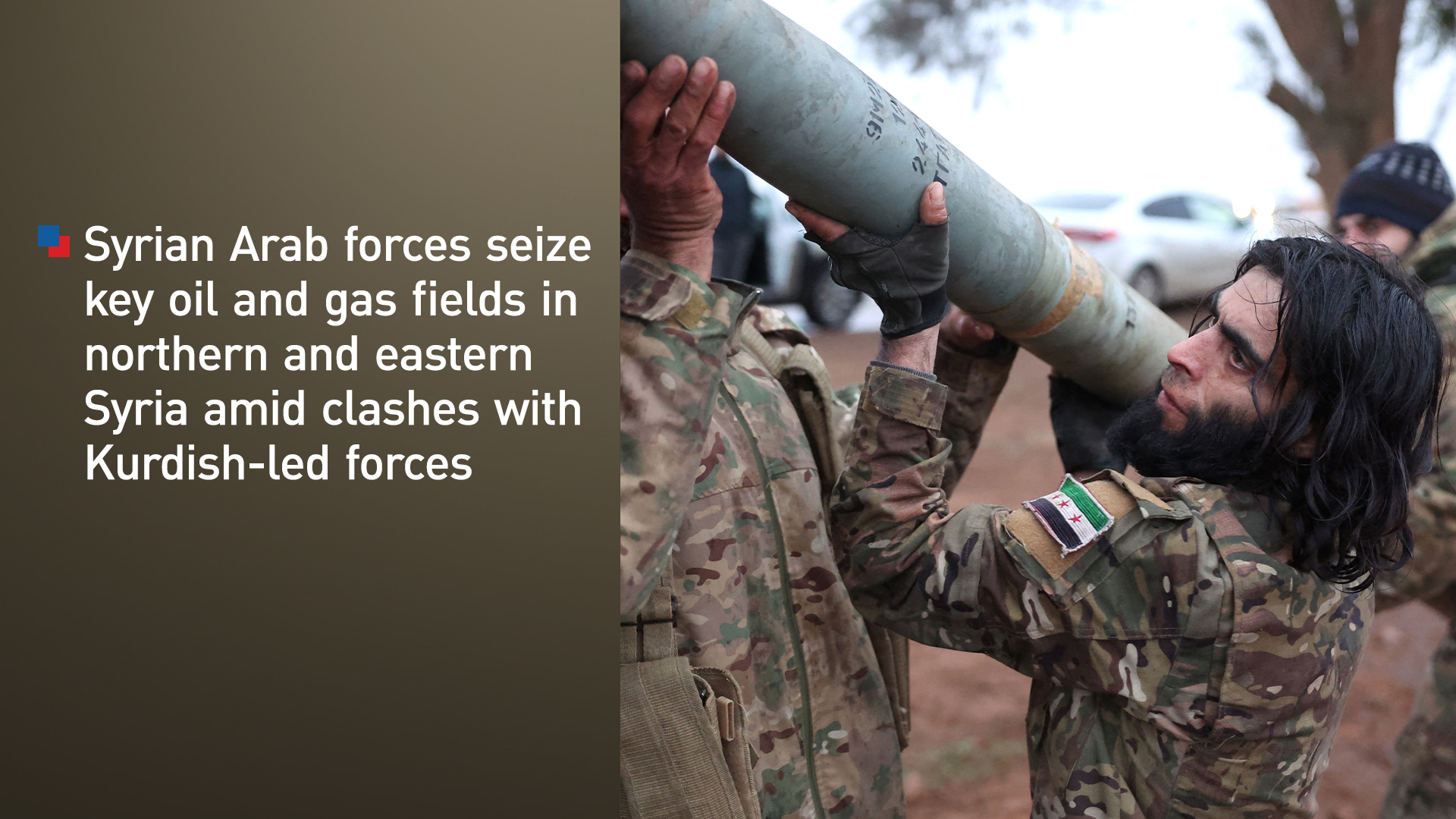
ERBIL (Kurdistan24) — Syrian government forces fighting Kurdish-led units on Sunday seized the Omar oil field, Syria’s largest, and the Conoco gas field in the country’s east, marking a significant escalation in Damascus’s push to retake strategic energy infrastructure, three Syrian government security sources told Reuters.
The advances followed earlier gains announced by Syrian authorities on Saturday, when the army said it had taken control of two oil fields in northern Syria previously held by Kurdish forces.
In a statement, the Defense Ministry said government troops had “exerted control over the Safyan oil field and the Al-Tharwa oil field near Al-Tabqa city” in Raqqa province.
The state-run Syrian Petroleum Company said it had taken over the facilities and was preparing to resume production, underscoring the government’s focus on restoring control over key revenue-generating assets amid ongoing conflict.
Military operations also expanded around Tabqa, where the Syrian army said it had captured the Tabqa military airport, previously under Kurdish control, consolidating its hold over a key hub near the Euphrates River.
A later statement confirmed that government troops had seized the airport and pushed Kurdish fighters out of the area.
Meanwhile, Syrian state media reported further infrastructure damage in Raqqa city. The Raqqa Media Directorate said early Sunday that the Kurdish-led Syrian Democratic Forces (SDF) had blown up both the old bridge and the newly constructed Al-Rashid Bridge over the Euphrates.
It added that the city’s water supply was completely cut off after the destruction of the main pipelines that had been laid along the old bridge.
The seizure of major oil and gas fields, combined with gains around Tabqa, represents one of the most significant shifts in control over Syria’s energy resources in recent years, as fighting between government forces and Kurdish-led units continues across the country’s north and east.
Syrian government forces have taken control of large swathes of northern Syria, dislodging Kurdish-led forces from territory they had administered with effective autonomy for more than a decade, in a major escalation that has unfolded alongside limited political concessions from Damascus.
The advance came days after President Ahmed al-Sharaa issued a landmark decree formally recognizing Kurds as an integral component of Syria and designating Kurdish a “national language.” While unprecedented, Kurdish authorities said the move fell short of their aspirations, particularly demands for constitutional recognition and self-governance.
The military escalation has unfolded in parallel with intensified diplomatic efforts in Erbil, where regional and international actors have stepped up engagement to prevent further deterioration of the situation in northern and eastern Syria.
With fighting spreading across energy-rich areas and key population centers, Erbil has emerged as a central hub for mediation and coordination involving Kurdish leaders, the United States, and other stakeholders concerned about stability along Syria’s northeastern front.
On Saturday, leader of the Kurdistan Democratic Party (KDP), President Masoud Barzani hosted a high-level meeting in Erbil, bringing together U.S. President Donald Trump’s Special Envoy to Syria, Tom Barrack; U.S. Consul General in Erbil Wendy Green; Commander of U.S. Forces in Syria General Kevin Lambert; Syrian Democratic Forces commander Mazloum Abdi; and Mohammed Ismail, president of the Kurdish National Council of Syria (KNCS).
Discussions focused on de-escalation, preventing further violence, and exploring political pathways toward stability, with participants underscoring dialogue, coexistence, and international coordination as essential pillars for shaping Syria’s future amid the rapidly evolving security landscape.