SDF's Abdi Emerges as Candidate for Governor of Hasakah Amid Implementation of Syrian Integration Deal
SDF Commander Mazloum Abdi is a top candidate for Governor of Hasakah, alongside academics and politicians. The move fulfills the new Syria-SDF deal, which also promises Kurds key ministry posts in the upcoming government.
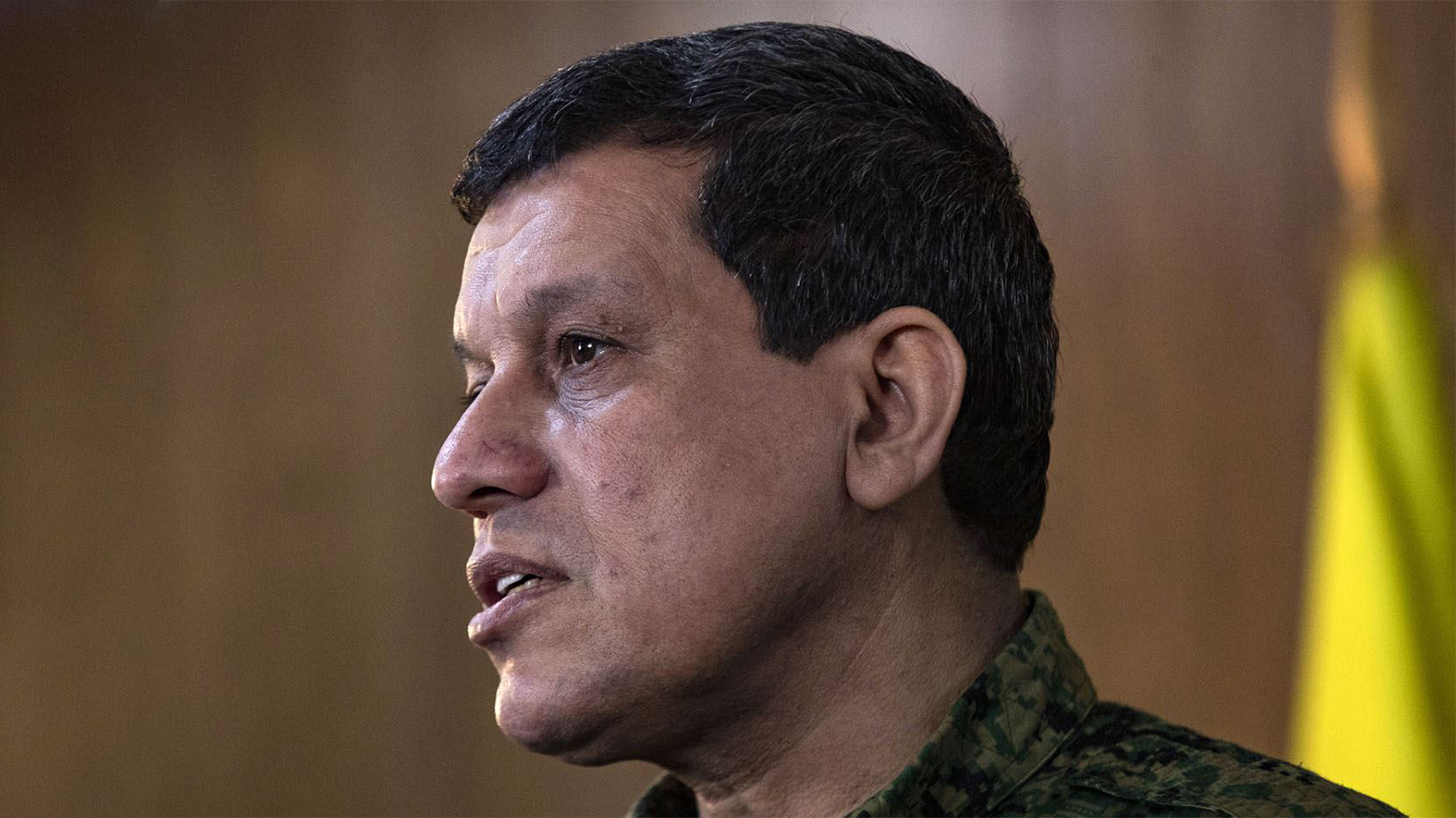
ERBIL (Kurdistan24) - General Mazloum Abdi, the General Commander of the Syrian Democratic Forces (SDF), has been named as a leading candidate for the position of Governor of Hasakah, a development that signals the rapid implementation of the political provisions contained in the newly signed integration agreement between the SDF and the Syrian government.
An informed source told Kurdistan24 on Monday, that work has been underway for several days to designate a new governor for the province in Western Kurdistan, marking a pivotal shift from military administration to formalized civil governance within the Syrian state structure.
The potential transition of the top Kurdish military commander into a civil administrative role highlights the depth of the restructuring currently taking place in northeast Syria.
According to the source speaking to Kurdistan24, General Abdi is one of three primary figures currently being vetted for the governorship. The other candidates include Dr. Farid Sadoun, a prominent academic and university professor, and Salah Badreddin, a well-known Kurdish politician.
The selection process is reportedly in its final stages as Damascus and Kurdish leadership move to fill key administrative posts stipulated in the peace accord.
The designation of a Kurdish governor for Hasakah is a direct fulfillment of the terms outlined in the 14-point agreement signed on Sunday between President Ahmed al-Sharaa and the SDF leadership. Specifically, the seventh clause of the agreement mandates the issuance of a presidential decree appointing a nominee to assume the position of Governor of Hasakah.
This provision was included as a guarantee of political participation and local representation for the Kurdish population as their autonomous institutions are absorbed into the central state apparatus.
Beyond the governorship, the informed source revealed that the political integration of the Kurds will extend into the central cabinet in Damascus.
A new government is scheduled to be formed in Syria next month (February), in which Kurdish representatives are expected to receive a number of significant portfolios.
Kurdistan24 has learned that in this future government, three specific posts are slated to be allocated to Kurdish officials: the Minister of Education or Higher Education, the Assistant Minister of Interior, and the Assistant Minister of Defense.
These appointments align with the broader framework of the integration deal, particularly the tenth clause, which calls for the adoption of a list of candidates submitted by the SDF leadership to hold high-ranking military, security, and civil positions within the central state structure.
The allocation of Assistant Minister positions in the Defense and Interior ministries also corresponds with the fifth clause of the agreement, which details the full integration of SDF military and security personnel into the Syrian state's security architecture on an individual basis.
The movement toward forming a new local administration in Hasakah comes as General Abdi oversees a complex military redeployment. In a televised address prior to the finalization of the deal, General Abdi stated that the SDF had decided to redeploy its forces from Deir ez-Zor and Raqqa to Hasakah.
While he initially framed this as a defensive measure to protect civilians and preserve regional gains, the subsequent political agreement has codified this concentration of Kurdish influence in Hasakah, while other governorates revert to direct central control.
The political elevation of SDF leadership and the recognition of Kurdish administrative rights have been facilitated by intense diplomatic engagement from the Kurdistan Region.
Syrian President Ahmed al-Sharaa publicly expressed gratitude to President Masoud Barzani on Sunday, citing him as "one of the key figures who played a significant role" in mediating the agreement. Following the announcement of the deal, President Barzani and President al-Sharaa held a telephone conversation in which they discussed the details of the agreement.
During that call, President Barzani highlighted the importance of guaranteeing the rights of the Kurdish people and welcomed President al-Sharaa’s issuance of Presidential Decree No. 13 of 2026.
This decree, which provides for the recognition of Kurdish cultural and linguistic rights and addresses the status of stateless persons, serves as the legal foundation for the new administrative appointments.
President Barzani viewed the decree as a positive step capable of establishing a strong foundation for Kurdish rights in Syria, a sentiment that appears to be materializing in the selection of a Kurdish governor for Hasakah.
The implementation of these political clauses is occurring alongside a fragile but holding nationwide ceasefire. On Sunday, the Syrian Ministry of Defense announced a comprehensive cessation of combat operations across all engagement zones to facilitate the return of state institutions.
The United States has formally backed this transition. U.S. Special Envoy to Syria Tom Barrack commended the constructive efforts of both parties, noting that the agreement allows for the "seamless integration" of the SDF into the Syrian state.
The agreement signed on Sunday dictates that while Deir ez-Zor and Raqqa will see a full administrative and military handover to the Syrian government, Hasakah retains a unique status through the integration of its civilian institutions and the specific appointment of a local governor.
Clause three of the agreement explicitly outlines the integration of all civilian institutions in Hasakah Governorate into the institutions of the Syrian state, a process that will likely be overseen by the incoming governor.
As the vetting process for the governorship concludes, General Abdi is also preparing for face-to-face talks with the Syrian leadership. A scheduled meeting between the SDF commander and President al-Sharaa in Damascus was postponed from Monday to Tuesday due to adverse weather conditions.
That meeting is expected to finalize the details of the implementation phase, including the confirmation of the governor and the submission of candidate lists for the upcoming cabinet formation in February.
The source indicated that parliamentary seats allocated to Hasakah Governorate are also currently being determined, ensuring that the legislative branch reflects the new political reality.
This multi-layered integration—spanning the governorship, cabinet positions, and military ranks—represents the most significant inclusion of Kurds in the Syrian state apparatus in the country's modern history, transitioning the SDF from an autonomous military entity into a political stakeholder within a unified Syria.
This article was updated on Monday, Jan. 19, 2026, at 01:07pm.