Kurds Rally Globally for International Intervention as Syria Conflict Escalates
Widespread protests erupted across Kurdistan and the diaspora Tuesday demanding a halt to Syrian attacks on Rojava. The rallies follow a mosque-led "conquest" call by Damascus, U.S. diplomatic warnings, and continued clashes despite a ceasefire deal.
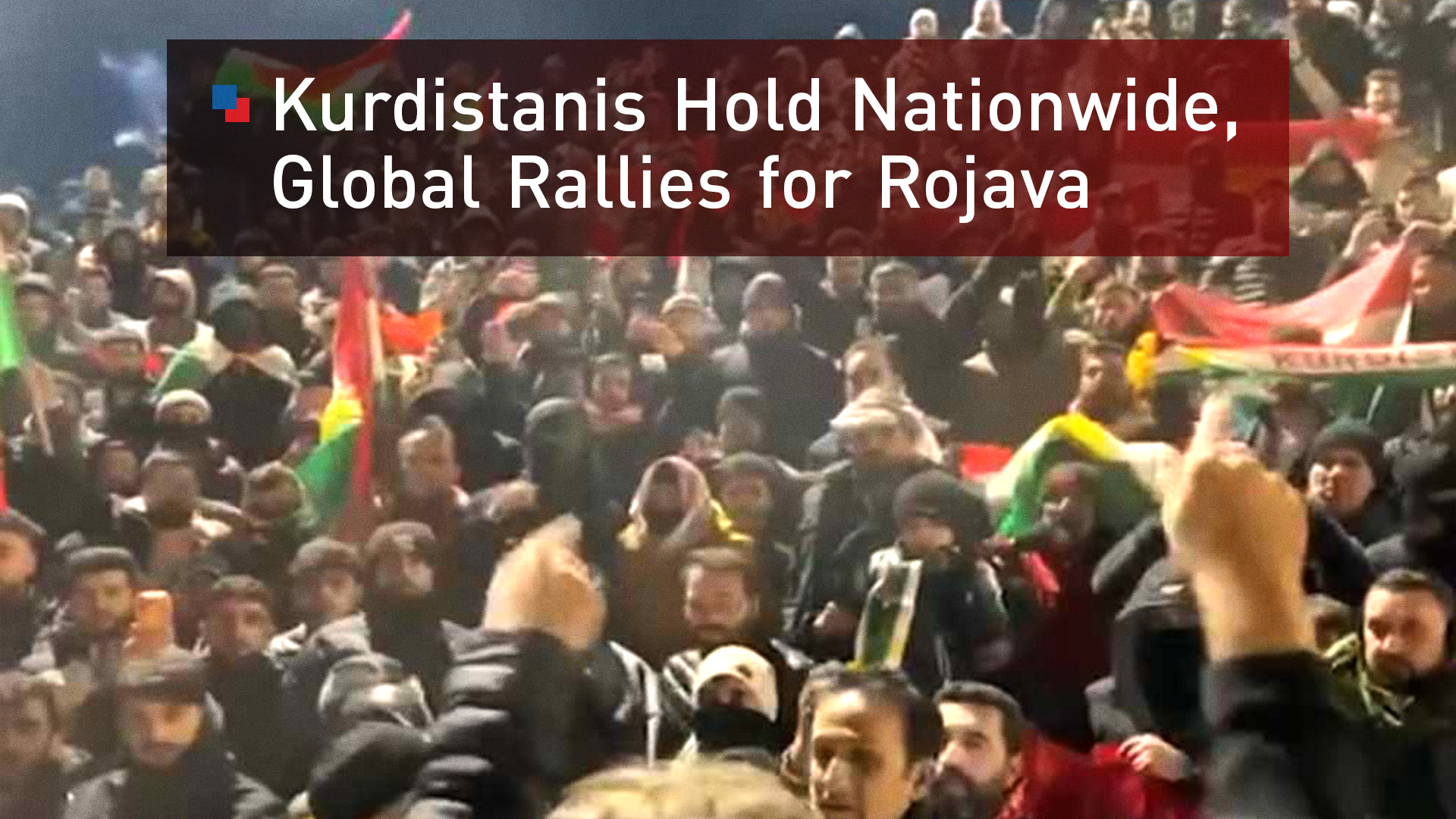
ERBIL (Kurdistan24) - Demonstrations swept through cities in Kurdistan and the global diaspora on Tuesday, as thousands of protesters took to the streets demanding immediate international intervention to halt the escalating military offensive by the Syrian government against Kurdish-held territories in the northeast.
The widespread mobilization, which spanned from Erbil to Bochum, Germany, reflects growing panic and anger within the Kurdish community over what activists describe as an unfolding campaign of ethnic cleansing in Western Kurdistan (Rojava).
On Tuesday, January 20, 2026, crowds gathered in Southern, Northern, and Western Kurdistan to call for the cessation of attacks by the Damascus government.
In Erbil, the capital of the Kurdistan Region, a massive demonstration converged in front of the Consulate General of the United States. Protesters, waving the flag of Kurdistan, chanted slogans against oppression and expressed "strong dissatisfaction" with Washington’s perceived silence.
Demonstrators emphasized that the United States, as an effective force in the region, bears a moral responsibility to prevent what they termed a massacre against civilians in Western Kurdistan (Rojava).
Similar scenes played out in Zakho, where large crowds reiterated their solidarity with their counterparts across the border.
Chanting "The day is our day," demonstrators sent a message of resilience to the fighters and residents of the affected areas, asserting a unified Kurdish stance against threats to their land.
The wave of protests also extended to the cities of Duhok, Ranya, Khanaqin, and Kalar, where participants emphasized the need to protect Kurdish achievements and prevent the return of tyranny.
Internationally, the Kurdish diaspora mobilized in European cities, most notably in Bochum, Germany. Protesters there urged European governments to pressure Damascus to halt its military operations.
The global outcry is driven by intense attacks involving tanks and artillery by the Syrian Army and affiliated armed groups, raising fears of a humanitarian disaster and mass displacement.
Escalating Rhetoric and Religious Mobilization
The demonstrations coincide with a sharp rhetorical escalation from Damascus. On Tuesday, the Syrian Ministry of Endowments (Awqaf), citing a verse from Surah Al-Anfal, issued a formal directive to mosques across the regions under its control instructing clerics to recite the Takbir and lead public prayers for the victory of the Syrian Arab Army.
The circular framed the offensive against the Syrian Democratic Forces (SDF) as a "conquest" necessary for the "unity and integrity" of the state, injecting a volatile religious dimension into the conflict.
Concurrently, Hamza Mustafa, the Minister of Information for the Syrian Transitional Government, declared on social media that Damascus would "not allow the creation of the Jazira Region in Syria," asserting that the territory is sovereign Syrian land.
This political stance aligns with the military push to dismantle the autonomous administration that has governed the northeast for over a decade.
International Diplomatic Maneuvering
As violence intensifies, international actors are attempting to mediate.
U.S. President Donald Trump reportedly urged Syrian interim President Ahmed Sharaa to halt the violence during a phone call on Monday.
According to sources cited by Al-Monitor, President Trump secured a pledge from Sharaa not to enter the city of Hasakah.
A readout of the call stated that both leaders stressed the need to guarantee the rights and protection of the Kurdish people within the framework of the Syrian state.
However, U.S. Senator Lindsey Graham warned of renewed sanctions if the military advance continues.
In a statement, Senator Graham threatened to push for the reactivation of the Caesar Act sanctions "on steroids," cautioning that Syrian authorities are ignoring warnings from U.S. officials.
Turkish President Recep Tayyip Erdogan, meanwhile, praised the Syrian Army's offensive as "carefully managed" and welcomed the ceasefire agreement aimed at integrating Kurdish fighters into state institutions.
"The principle of one state, one army is indispensable for stability," President Erdogan said, warning against delays in implementing the deal.
Security Deterioration and Prison Breaks
On the ground, the security situation remains fluid. The Syrian Ministry of Interior announced on Tuesday that security forces recaptured 81 Islamic State (ISIS) gunmen who escaped from Shaddadi prison in Hasakah.
Approximately 120 inmates had fled following heavy attacks that compromised the facility's security. The SDF acknowledged losing control of the prison due to the intensity of the assault and a lack of international support.
In the north, the SDF reported repelling intense attacks by pro-government groups near Sarrin, south of Kobani. The SDF Media Center claimed to have destroyed seven military vehicles and shot down four drones, inflicting heavy losses on the attackers.
Despite the announcement of a ceasefire and integration deal on Sunday, clashes have persisted.
The agreement, which mandates the integration of SDF forces into the Syrian military and the handover of administrative control in Raqqa and Deir ez-Zor, faces significant implementation challenges amidst the ongoing violence and deep mistrust between the parties.
Kurdish leaders, including Elham Ahmad of the Autonomous Administration, have called on the international community to break its silence, warning that failure to act will lead to a humanitarian catastrophe.
The Kurdish National Council in Syria (ENKS) also issued an urgent appeal for intervention, warning that imposing a fait accompli by force will only lead to further war and destruction.