Bernard-Henri Lévy Condemns Western ‘Betrayal’ of Kurds Amid Escalating Violence in Syria
Bernard-Henri Lévy condemned the West's "betrayal" of Kurds as SDF repelled attacks near Kobani and faced a water cut at Raqqa's Aqtan Prison. Former US diplomat Galbraith called the new integration deal a "surrender," warning of risks to minorities.
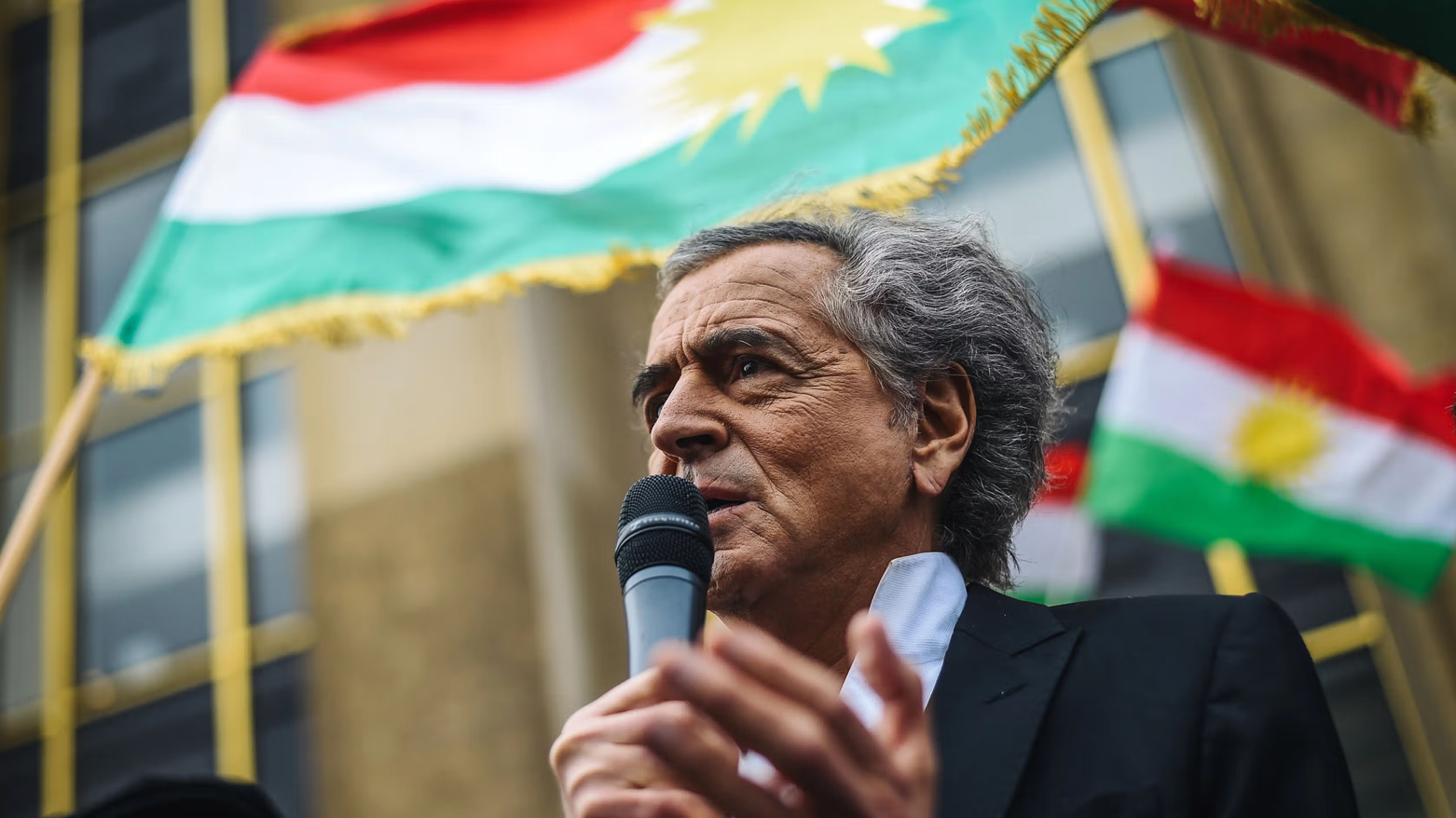
ERBIL (Kurdistan24) - French philosopher and public intellectual Bernard-Henri Lévy issued a sharp condemnation on Tuesday of the international community's inaction regarding the deteriorating situation in Syria, characterizing the treatment of Kurdish forces as a historic moral failure.
In a statement posted to the social media platform X on January 20, 2026, Mr. Lévy described the "betrayal of the Kurds by the West" as "one of the most disturbing shifts of our time," calling on the world to remember the pivotal role played by Kurdish fighters in defeating the Islamic State (Daesh).
Mr. Lévy’s comments come as the security landscape in northeast Syria fractures under intensified military pressure from government-affiliated forces.
"Never forget that General Mazlum’s heroic fighters defeated Daesh when Daesh threatened the world," Mr. Lévy wrote, referring to General Mazloum Abdi, the Commander-in-Chief of the Syrian Democratic Forces (SDF).
He further emphasized the ongoing security contribution of the Kurdish-led administration, adding, "Never forget too that they guard the prisons where the worst terrorists on earth are held."
The betrayal of the #Kurds by the West is one of the most disturbing shifts of our time. Never forget that General #Mazlum’s heroic fighters defeated #Daesh when Daesh threatened the world. Never forget too that they guard the prisons where the worst terrorists on earth are held pic.twitter.com/2gztZWXqvT
— Bernard-Henri Lévy (@BHL) January 20, 2026
SDF Repels Attacks in Kobani as Siege Tactics Tighten
The intellectual’s warning coincides with reports of fierce combat along the southern fronts of Kobani.
On Tuesday, the SDF Media Center announced that its units had successfully repelled multiple coordinated attacks by armed groups affiliated with the Damascus government.
According to the statement, confrontations began in the pre-dawn hours between 3:00 a.m. and 6:00 a.m., with hostile forces launching consecutive assaults on the Sarrin axis.
SDF units, including the Women’s Protection Units (YPJ), reportedly destroyed a significant number of military vehicles and armored carriers, inflicting "heavy losses" on the attackers.
Simultaneous engagements were reported on the "Abu Sra" axis and in the village of Khan Mamad in southeast Kobani, where the SDF claimed to have thwarted advances and forced a retreat.
The Media Center stated that all units remain on "maximum alert" to defend the territory. However, while the frontlines held in Kobani, the situation in neighboring Raqqa deteriorated sharply.
The SDF confirmed that armed groups affiliated with Damascus have cut off the water supply to Aqtan Prison, a facility housing a large population of Islamic State prisoners.
The SDF condemned this siege tactic as a "severe crisis" and a "blatant violation of human rights" that endangers the lives of detainees and risks destabilizing the facility.
Political Fallout and Calls for Resistance
The military escalation has drawn strong reactions from Kurdish political and militant leadership.
The Syrian Democratic Council (SDC) issued a public statement on Tuesday framing the violence as a threat to global security.
The council condemned the execution of captured YPJ fighters and warned that the targeting of Kobani constitutes an act of retaliation against those who defeated the terrorist group.
"The targeting of Kobani cannot be separated from the broader targeting of northeastern Syria in all its diversity," the SDC statement read, accusing the "transitional government" in Damascus of pursuing an exclusionary assault.
Murad Karayilan, a member of the Executive Committee of the Kurdistan Workers' Party (PKK), also weighed in, pledging full support for the Kurdish administration.
"We will do whatever is necessary for Rojava and to stand against these attacks," Karayilan stated, characterizing the offensive as an attack on "all of Kurdistan" and an attempt to sabotage the peace process in Türkiye.
He alleged that the gunmen involved are affiliated with "Hayat Tahrir al-Sham" and supported by Türkiye, a claim that adds a complex layer of regional accusation to the conflict.
Diplomatic Criticism and Fears of Surrender
The sentiment expressed by Mr. Lévy echoes the scathing critique offered by former U.S. diplomat Peter Galbraith in an interview with Kurdistan24 on Monday.
Galbraith described the newly signed integration agreement between the Syrian government and the SDF as a "surrender" and a "betrayal" facilitated by U.S. policy.
He argued that the deal, which mandates the dissolution of autonomous SDF units into the Syrian army, leaves the Kurdish population vulnerable to a regime with a history of violence against minorities.
"The role of the United States has not been helpful," Galbraith stated, criticizing U.S. Special Envoy Tom Barrack for embracing the Syrian leadership without understanding its nature. He warned that the centralized government model being imposed has historically brought misery to the region.
Galbraith’s assessment aligns with the fears of Kurdish civilians, who have mobilized in Western Kurdistan and the Kurdistan Region of Iraq, taking to the streets to demand international intervention and vowing to protect their land alongside SDF fighters.
As the conflict widens—marked by siege warfare at prisons, tank battles in Kobani, and high-level diplomatic recriminations—Lévy’s statement serves as a reminder of the global stakes involved in the stability of northeast Syria, where the guardians of thousands of ISIS terrorists are now fighting for their own survival.