Yazidi Survivor of IS Says World has Abandoned Kurds Who Battled 'Evil'
Nobel laureate Nadia Murad said the world is abandoning Kurds who fought ISIS, warning that international inaction in Syria is fueling chaos, as Kurdish forces withdraw from al-Hol amid rising security threats.
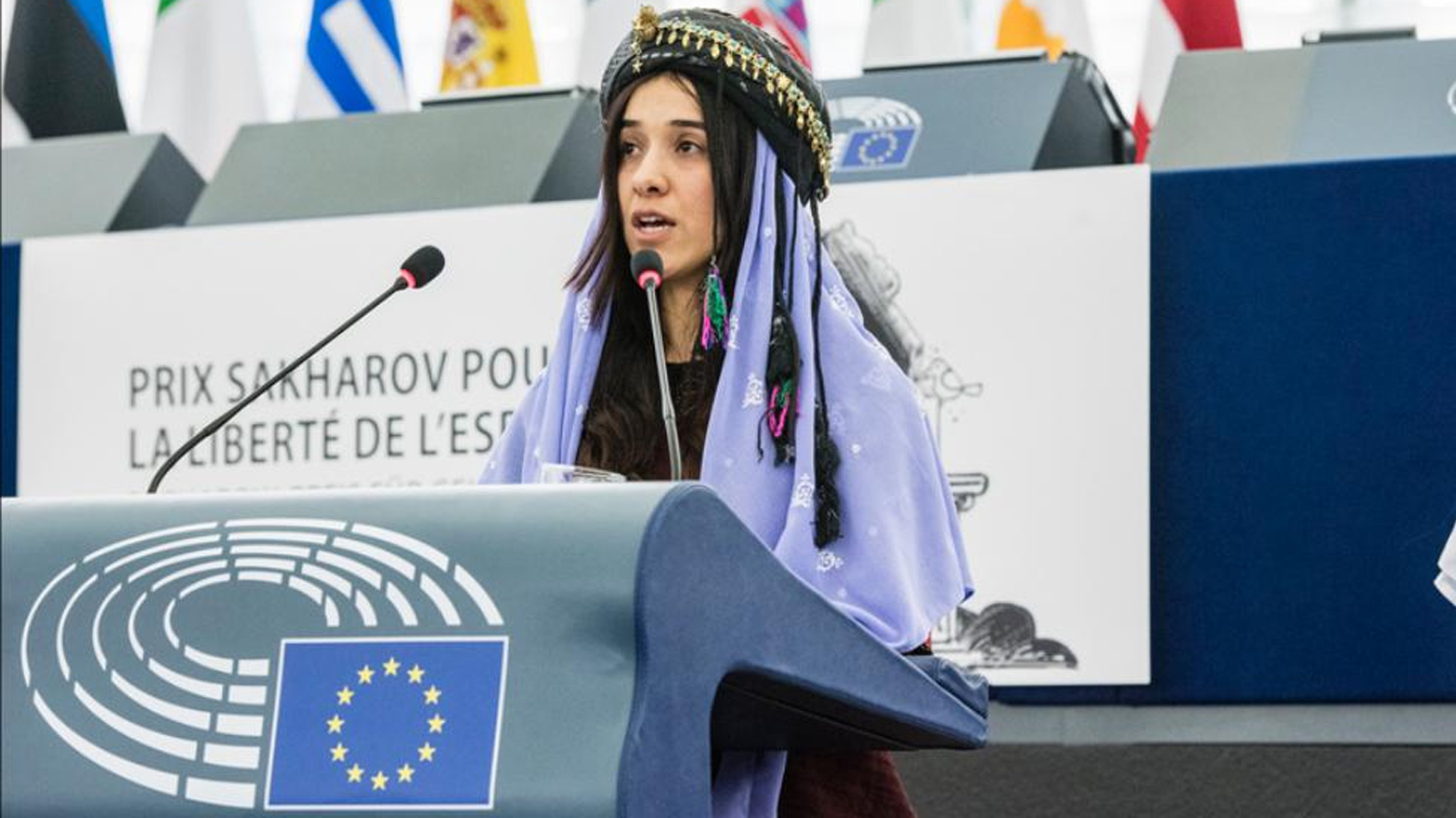
ERBIL (Kurdistan24) - Nadia Murad, the Yazidi survivor of ISIS captivity and Nobel Peace Prize laureate, issued a stark warning that the Kurds who fought on the front lines against ISIS are now being abandoned by the international community, as security conditions rapidly deteriorate in northern and eastern Syria.
In a statement published on X on Tuesday, Murad condemned what she described as global indifference at a critical moment for Kurdish forces and civilians alike.
“The US-led coalition relied on Kurdish forces in Rojava to fight and defeat ISIS,” Murad wrote. “Now, at a critical moment, those who stood on the front lines against evil are being abandoned.”
The international coalition relied on Kurdish forces in Rojava to fight and defeat ISIS. Now, at a critical moment, those who stood on the front lines against evil are being abandoned. What the international community is doing in Syria—and across the broader region—is chaos, and… https://t.co/dBw9qg4KHG
— Nadia Murad (@NadiaMuradBasee) January 20, 2026
She warned that the consequences of this disengagement would be severe, saying: “What the international community is doing in Syria — and across the broader region — is chaos, and innocent people will pay the price.”
Murad’s remarks come as Kurdish-led forces face mounting military and security pressures, prompting urgent operational decisions on the ground.
The comments followed an announcement by the Syrian Democratic Forces that they had withdrawn from the al-Hol camp in northeast Syria, citing rising threats and what they described as continued international failure to address the ISIS detainee crisis.
In an official statement issued by the SDF Media Center on Tuesday, the forces said they had redeployed away from al-Hol to focus on protecting cities facing increasing dangers.
“Due to the international community’s indifference towards the ISIS issue and its failure to assume its responsibilities in addressing this serious matter, our forces were compelled to withdraw from al-Hol camp and redeploy to areas surrounding cities in northern Syria that are facing increasing dangers and threats,” the statement said.
The SDF did not specify the scale or timing of the withdrawal but framed the move as a necessary response to escalating risks.
The decision came amid a sharp deterioration in security across northeastern Syria. Syria’s Interior Ministry said nearly 120 ISIS militants escaped from Shaddadi prison in the countryside of Hasakah province after heavy attacks caused a collapse in security at the facility, which was under SDF administrative and military control.
According to field-based information cited by the ministry, intense assaults on the prison enabled a large number of detained ISIS members to flee. Damascus warned that the escape of what it described as “highly dangerous” ISIS elements poses a serious threat to national security and regional stability.
Shaddadi prison is among the most significant detention centers holding ISIS inmates in northeastern Syria and has become a focal point of clashes in recent days. The SDF had previously acknowledged losing control of the facility due to the intensity of the attacks and the absence of sufficient international support.
The incident coincided with other attacks targeting ISIS detention facilities in Raqqa and Hasakah, heightening concerns over the potential reorganization and resurgence of ISIS cells.
In a separate statement, the Democratic Syrian Council warned of a sharp deterioration in security and military conditions across northern and eastern Syria. The council said the region is witnessing a dangerous escalation driven by attacks carried out by Syrian armed groups operating under the umbrella of the so-called interim government, explicitly targeting Kurdish civilians and local defense forces.
The council urged the international community to set clear limits on these attacks, warning that they undermine stability and risk reigniting terrorist threats.
Meanwhile, the SDF, in coordination with the Women’s Protection Units (YPJ), reported repelling a series of intense attacks by armed groups affiliated with Damascus near the town of Sirrin, south of Kobane. According to official figures released Tuesday, seven military vehicles belonging to the attacking groups were completely destroyed, while four armored vehicles were damaged and taken out of service.
The SDF and YPJ also said they shot down four attacking drones during five consecutive attacks targeting Sirrin’s countryside. The forces said clashes remain ongoing and that units are on high alert to prevent any territorial advances.
Sirrin, located south of Kobane, holds strategic geographic importance and has been repeatedly targeted in recent days, adding to the strain on Kurdish-led forces already stretched across multiple fronts.
Against this backdrop of escalating threats and shrinking international engagement, Murad’s warning underscores growing fears that the forces who played a decisive role in defeating ISIS are now facing mounting dangers alone, with regional stability and civilian lives increasingly at risk.