Art and Aid Converge as Kurdish Institutions Mobilize Support for Rojava
A Sulaimani art exhibition and an Erbil-led aid campaign on Friday highlighted cultural and humanitarian efforts supporting Western Kurdistan (Rojava), according to Kurdistan24 reports.
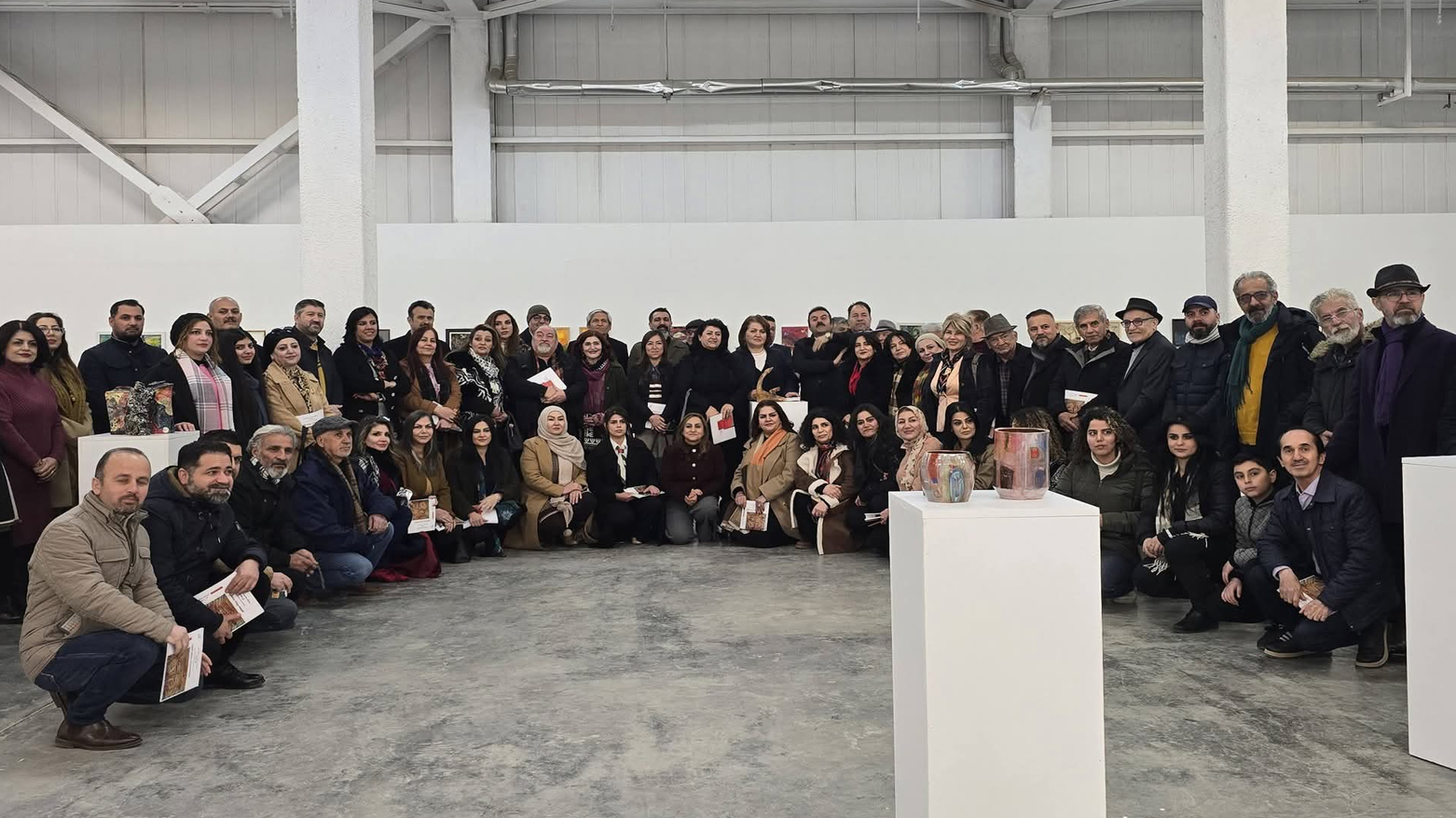
ERBIL (Kurdistan24) - A joint fine arts exhibition in Sulaimani and a coordinated humanitarian aid initiative in Erbil opened on Friday, reflecting parallel cultural and civic responses within the Kurdistan Region to developments affecting Kurds in Western Kurdistan (Rojava), according to statements and reports provided to Kurdistan24.
The exhibition, organized by the Sulaimani branch of the Artists Syndicate, brought together 20 experienced artists under the title “Small Size, Great Vision” at the Culture Factory Gallery.
On the same day, Erbil Governor Omed Khoshnaw announced that merchants, companies, and philanthropists in the capital had expressed readiness to provide urgent assistance to Rojava, following assessments by the Barzani Charity Foundation that identified immediate humanitarian needs.
The opening of the exhibition on Friday, Jan. 23, 2026, was described by participating artists as a deliberate act of solidarity. Parwin Ali, a visual artist involved in the show, told Kurdistan24 that the exhibition was dedicated to supporting people in Western Kurdistan.
She said the display included 50 paintings intended to convey messages of “expressions, thoughts, love, and harmony,” which she said could be felt throughout the joint exhibition.
According to Ali, the works on display ranged from depictions of Kurdistan’s landscape and natural beauty to paintings addressing what she described as the pain and suffering experienced by Kurds and Kurdish women.
She said the exhibition carried a collective message articulated by the artists as, “If they cut one braid, we will weave thousands more,” framing art as a means of response and resilience.
Ali further said that the participating artists viewed their work as a way to confront what she characterized as aggression against Kurdish identity through cultural expression rather than confrontation.
She said the exhibition aimed to present Kurdistan as a place of beauty and progress that could not be undone, emphasizing that the artists sought to demonstrate the persistence of Kurdish culture, art, and intellectual life through their paintings.
The exhibition was formally opened by the Sulaimani branch of the Artists Syndicate at the Culture Factory Gallery, according to the organizers. The show brought together artists with varying styles and themes, unified by the stated intention of supporting Rojava through artistic expression.
On the same day, developments in Erbil highlighted a separate but related form of mobilization.
Governor Omed Khoshnaw told Kurdistan24 that a broad wave of assistance had been initiated by merchants and philanthropists in the city, with contributors expressing full readiness to provide essential supplies for Rojava.
Khoshnaw said that teams from the Barzani Charity Foundation had conducted assessments in Rojava to determine the most urgent needs.
Based on those assessments, he said, the priority items included medicine, medical supplies, food, provisions, blankets, and mattresses. He added that outreach from donors had extended beyond individual citizens to include a large number of companies and merchants, some of whom had already prepared goods for delivery.
According to the governor, the process of collecting and sending aid was expected to expand further in the coming days.
He said that while the campaign had been launched on Thursday by the Erbil Governorate in coordination with the Barzani Charity Foundation, additional contributions were anticipated as awareness of the initiative spread.
The humanitarian campaign followed earlier reports of cultural and social responses within the Kurdistan Region related to events in Western Kurdistan.
Previous Kurdistan24 coverage documented a hair-braiding protest campaign launched by Kurdish women across the region and the broader Middle East, following the circulation of a video that appeared to show a Syrian Arab Army soldier desecrating the remains of a Kurdish female fighter by cutting off her braid.
That campaign, which included gatherings in Erbil and widespread participation on social media, framed the act of braiding hair as a symbol of resistance and identity.
Participants cited the braid’s cultural significance in Kurdish society, where it has been associated with dignity, strength, and continuity. The protests were described in those reports as a direct response to what many participants viewed as an attempt at cultural and gender-based intimidation.
The symbolism referenced in the Sulaimani exhibition echoed themes articulated during that campaign.
In her remarks to Kurdistan24, Ali said the exhibition’s message that “they cut our braids, we weave thousands more” reflected a shared understanding of art and symbolism as tools of resilience. She said the paintings sought to affirm that Kurdish culture and identity could not be diminished by acts of violence or humiliation.
Earlier Kurdistan24 reporting also highlighted artistic responses to the same developments, including the unveiling of a sculpture by Kurdish sculptor Saman Hidayat.
That work, titled “Kurdish Revolutionary Women Kazi (Braid),” was presented as an artistic tribute to women’s resistance and featured a braided form carved from oak wood. Hidayat told Kurdistan24 that the braid, or kazi, represents strength, identity, and continuity in Kurdish culture, themes that have become prominent in recent cultural expressions.
The convergence of these cultural initiatives with organized humanitarian assistance reflects what officials and artists alike have described as a multifaceted response.
While the exhibition in Sulaimani focused on symbolic and artistic solidarity, the aid campaign in Erbil emphasized material support, with officials stressing the urgency of meeting basic needs identified by charity teams on the ground.
Khoshnaw said that the involvement of merchants and companies underscored a willingness within the local business community to contribute resources. He said some donors had already prepared goods, and he expressed confidence that the scope of assistance would increase in the days ahead as collection and distribution efforts intensified.
The Barzani Charity Foundation, which coordinated the assessments cited by Khoshnaw, was also involved in launching the aid campaign alongside the Erbil Governorate. The governor said the initiative was intended to channel support efficiently, focusing on items deemed critical by assessment teams.
Within the cultural sphere, the Artists Syndicate in Sulaimani positioned the exhibition as both an artistic event and a statement of solidarity.
Ali said the participating artists viewed their work as an assertion of Kurdish cultural presence and continuity, emphasizing that art could serve as a form of resistance by highlighting beauty, creativity, and shared values.
She said the exhibition sought to show audiences “how beautiful and adorned our Kurdistan is,” adding that the artists aimed to convey confidence that such beauty and progress could not be undone. Her remarks framed the exhibition as a collective voice, asserting that Kurdish artists would continue to express their identity through creative work.
Taken together, the events in Sulaimani and Erbil illustrate how different sectors within the Kurdistan Region have responded through parallel channels—cultural expression and humanitarian action—using institutions such as artists’ unions, local government, and charitable foundations to organize their efforts.
While the exhibition and the aid campaign operate in distinct domains, both initiatives explicitly referenced Rojava as their focus. Organizers and officials emphasized support for people there, whether through symbolic messages conveyed in art or through the provision of urgently needed supplies.
As of Friday, organizers of both initiatives indicated that their efforts were ongoing. The exhibition in Sulaimani remained open at the Culture Factory Gallery, while officials in Erbil said the aid collection and dispatch process would continue and expand in the coming days.
The coordinated timing of these developments, as described in statements to Kurdistan24, underscores a broader pattern of engagement by cultural and civic institutions in the Kurdistan Region, reflecting a shared emphasis on solidarity, identity, and assistance within the limits outlined by organizers and officials.