Öcalan Warns of Coup Risk if Peace Process Fails, Parliamentary Minutes Show
Abdullah Öcalan warned Turkish lawmakers that a failure in the peace process would trigger a military coup, while rejecting separatism in favor of "local democracy" for both Türkiye and Syria.
ERBIL (Kurdistan24) - The Turkish Parliament on Friday released the official minutes of a landmark meeting between a multi-party delegation of lawmakers and Abdullah Öcalan, the imprisoned leader of the Kurdistan Workers’ Party (PKK), revealing a stark warning that a failure to reach a political settlement could trigger an imminent military coup against the nation’s current leadership.
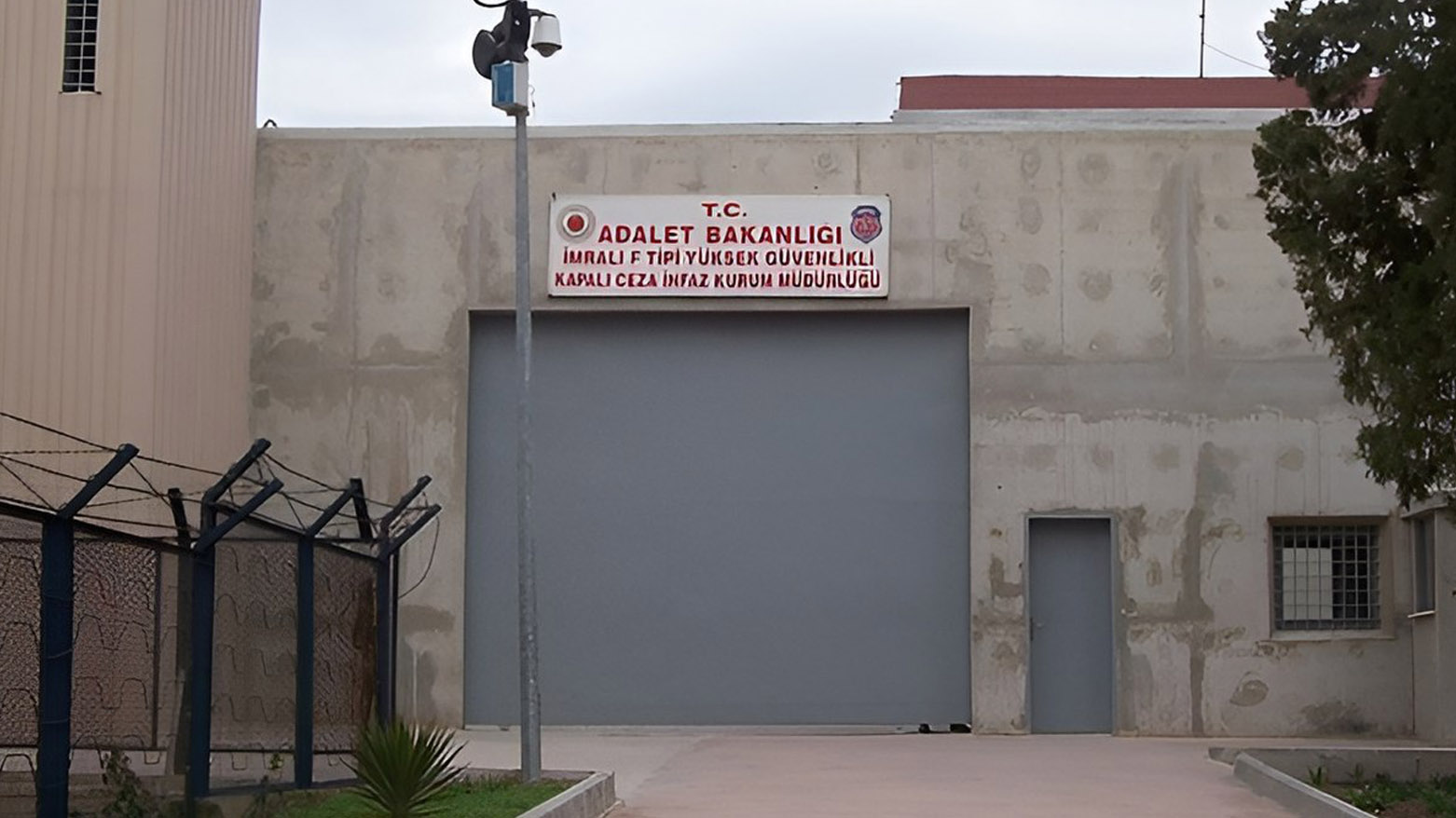
The transcripts, published by the Presidency of the Turkish Parliament on Jan. 23, 2026, provide the first comprehensive look at discussions held two months ago when the "Peace Process Committee" visited the Imrali island prison.
The delegation represented a broad spectrum of the Turkish political establishment, including members of the ruling Justice and Development Party (AKP), the Nationalist Movement Party (MHP), and the Peoples’ Equality and Democracy Party (DEM Party).
According to the disclosed documents, Öcalan utilized the meeting to articulate a significant shift in political objectives, formally distancing himself from aspirations for an independent Kurdish state or a federalist restructuring of Türkiye.
Instead, the PKK leader advocated for a model he termed "local democracy" as the primary framework for resolving the decades-long conflict.
Öcalan stated that he does not seek an "independent state, federalism, or autonomy" for the Kurdish people within Türkiye’s borders. He described the "local democracy" model not merely as a domestic solution but as a regional blueprint.
"What I want for Türkiye, we also desire for Syria; and that is local democracy, not federalism," Öcalan was quoted as saying in the parliamentary minutes.
The emphasis on local democracy over federalism appears to be a calculated effort to address the Turkish state’s longstanding concerns regarding territorial integrity.
By rejecting federalism—a system often viewed by Ankara as a precursor to secession—Öcalan suggested a path toward decentralized governance that remains within the existing unitary structure of the Republic.
A pivotal and potentially controversial aspect of the minutes involves Öcalan’s assessment of the current Turkish political landscape and the risks associated with the peace process.
He offered high praise for Devlet Bahçeli, the leader of the ultra-nationalist MHP, whose party has traditionally maintained a hardline stance against Kurdish political movements. Öcalan characterized Bahçeli’s willingness to engage in the current process as a demonstration of "rare courage."
However, this praise was coupled with a severe warning regarding the consequences of a diplomatic collapse.
Öcalan cautioned the delegation that if the peace efforts fail to produce a tangible result, the "coup mechanism" within the Turkish state will be activated.
He grounded this warning in a historical analysis of Turkish political crises, asserting that in the past, a coup had occurred "every time a solution was attempted" regarding the Kurdish issue. The implication of his statement is that anti-reformist elements within the state apparatus would view a failed peace process as a vacuum necessitating a military intervention against the civilian government.
Öcalan also expressed significant confidence in his own ability to influence the outcome of the negotiations. He told the parliamentary delegation that if the necessary conditions were provided to him, he possesses the "theoretical and practical power" to lead the process toward a final and lasting solution.
Central to his argument was the necessity of ending the conceptual framework of a "Kurdish-Turkish war." He argued that the two nations are inextricably linked and "cannot survive in the Middle East without one another," framing the peace process as an existential requirement for both ethnicities in an increasingly volatile region.
The discussions also extended to the situation in northern Syria and the role of the Syrian Democratic Forces (SDF). Öcalan indicated that he maintains the authority to influence Kurdish actors across the border.
He stated that if the opportunity were granted, he could contact the SDF and expressed a firm belief that the group's leadership would listen to his directives. He emphasized, however, that any settlement in Syria must ensure the protection of the rights of all local components, specifically naming Kurds, Arabs, and Turkmens.
This inclusive approach to Syrian governance mirrors his "local democracy" proposal for Türkiye, suggesting a desire to harmonize the political status of Kurds across both countries.
Regarding regional geopolitics, the minutes show that Öcalan addressed the policies of Iran and Israel. He stated that the government in Tehran must grant comprehensive democratic rights to its Kurdish and Azeri minorities and demanded an end to state-sanctioned executions.
His comments on Israel were more nuanced; he noted that Israel cannot establish regional hegemony without the cooperation of the region’s Kurds. Despite this observation, he reaffirmed his opposition to current Israeli policy and described the Turkish state as a "vital" component for maintaining the regional balance of power.
The issue of disarmament remained a primary focus for the visiting lawmakers. The parliamentary delegation reportedly pressed Öcalan for practical steps toward the PKK laying down its weapons.
In response, Öcalan argued that disarmament cannot occur in a vacuum. He insisted that the "mental and legal groundwork" must be established by the Turkish state before a formal end to armed activity can be realized.
Despite these prerequisites, he signaled a readiness to communicate with the PKK’s operational command in the Qandil Mountains. He told the MPs that if his messages are successfully conveyed to Qandil, the leadership there will take them into serious consideration.
"We can remove weapons from Türkiye's agenda forever," Öcalan stated, providing a potential endgame for the conflict that has cost tens of thousands of lives since the 1980s.
The publication of these minutes by the Turkish Parliament marks a rare moment of transparency in a process that is often conducted with extreme discretion.
By releasing the full text of the Imrali discussions, the government appears to be preparing public opinion for the complexities of the negotiations and the specific demands being made by the PKK leader.
The documents conclude with a reiteration of Öcalan’s central thesis: that the future of Türkiye is tied to a successful resolution of the Kurdish question through democratic reform.
The warning of an imminent coup serves as a stark reminder of the high stakes involved for Türkiye’s political leaders as they navigate the fragile path toward a comprehensive settlement.
This article was updated on Friday, Jan. 23, 2026, at 10:56pm.