UK MP Urges ‘Immediate and Decisive Action’ Amid Global Warnings Over Kurdish Crisis in Syria
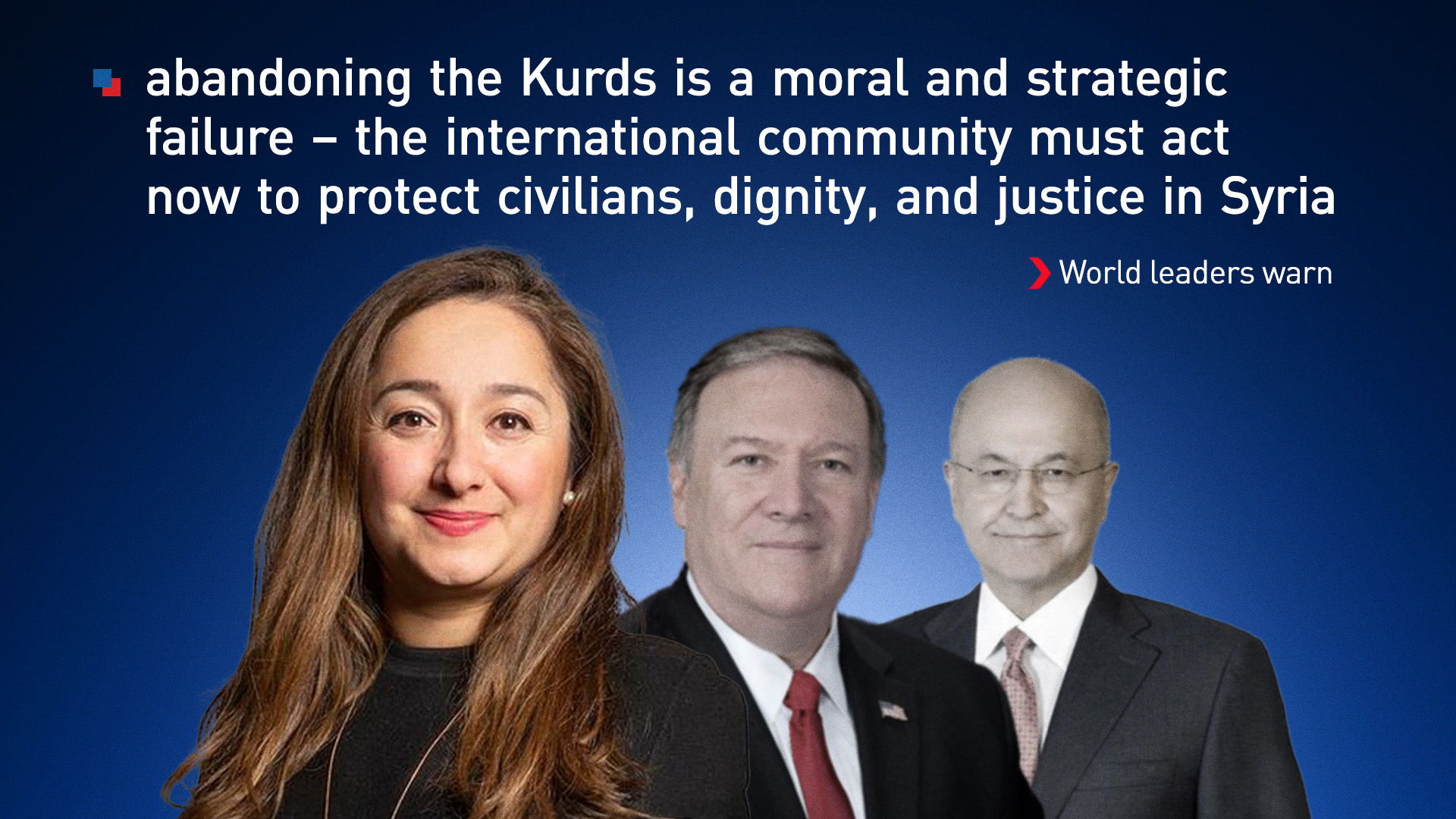
Former U.S. Secretary of State and CIA Director Mike Pompeo warned that abandoning Kurdish allies in Syria would be a “moral and strategic disaster,” endorsing calls for bipartisan U.S. Senate action to protect them.
ERBIL (Kurdistan24) — A British lawmaker has called on the UK government to take “immediate and decisive action” over escalating violence in northeast Syria, warning that Kurdish communities and other minorities are facing severe humanitarian and security risks amid renewed fighting and political uncertainty.
In a letter, Feryal Clark, the Labour Member of Parliament for Enfield North, urged Foreign Secretary Yvette Cooper to step up Britain’s response, citing large-scale displacement and credible reports of civilian harm.
Clark said Kurdish authorities estimate that more than 150,000 people have been displaced during the January escalation, while the BBC has reported that Syrian government forces moved into areas east of Aleppo following the withdrawal of the U.S.-backed Syrian Democratic Forces (SDF).
Syrian authorities have confirmed that at least 4,000 civilians fled parts of the area, amid warnings about landmines and unexploded ordnance. Clark also raised concerns about the conduct of Hayat Tahrir al-Sham-led authorities, accusing them of releasing Islamic State (IS) detainees and carrying out indiscriminate attacks on Kurdish communities—developments she said have revived fears of an “ISIS-era” threat under a new state-like structure.
While welcoming recent comments by Foreign Office minister Hamish Falconer calling for de-escalation and humanitarian access, Clark said the pace and scale of events demanded a stronger response.
She urged the government to issue a further public statement, including at the United Nations, condemn violence against civilians and minorities, pursue international accountability measures such as targeted sanctions, intensify diplomatic efforts with allies, and ensure humanitarian access is protected and adequately funded.
“The safety of Kurdish communities—and of minorities more broadly—is a matter of deep and immediate concern,” Clark wrote, adding that inaction risked normalizing violence and emboldening perpetrators.
International concern grows
The situation has also drawn renewed attention in Washington. Former U.S. Secretary of State and CIA Director Mike Pompeo warned that abandoning Kurdish allies in Syria would be a “moral and strategic disaster,” endorsing calls for bipartisan U.S. Senate action to protect them amid threats from Syrian government forces and affiliated factions.
Nadine Maenza, a Global Fellow at the Wilson Center and president of the International Religious Freedom (IRF) Secretariat, said the international community must demand the continuation of a ceasefire and insist that regime forces stay out of Kurdish-majority areas that are also home to Christians, Yazidis, and other minorities.
In a separate post, she called for immediate humanitarian access to Kobani, warning of shortages of food and fuel. Maenza formerly served as chair of the bipartisan U.S. Commission on International Religious Freedom.
The United Nations refugee agency, UNHCR, also underscored the need to pair humanitarian aid with dignity and long-term solutions, as displacement continues across Syria and the wider region.
"This was High Commissioner @BarhamSalih's #WEF26 message to government and business leaders alike. Life-saving aid is essential. But dignity is also essential. To guarantee both, we need everyone on board," UNHCR wrote on X.
Ceasefire extended, IS transfers underway
Against the backdrop of mounting pressure, Syria’s government and Kurdish forces said on Saturday they had agreed to extend their ceasefire by 15 days, citing support for a U.S.-led operation to transfer ISIS detainees from Syria to Iraq. The Syrian defence ministry said the extension took effect at 11 p.m. local time and was intended to facilitate the transfer of detainees held by the SDF.
The SDF confirmed the extension, saying it was reached through international mediation and that dialogue with Damascus was ongoing. The group said it remained committed to the agreement to help de-escalate tensions and protect civilians.
Washington has said up to 7,000 ISIS detainees will be moved to Iraqi prisons after Kurdish forces lost large areas to government troops. European nationals were among the first detainees transferred earlier this week, with Iraqi officials saying a second batch of up to 1,000 was moved on Saturday. Turkish Foreign Minister Hakan Fidan said extending the ceasefire “for a while longer” could be considered in light of the transfers.
The truce follows a broader understanding over Kurdish-majority areas in Hasakeh province and talks on integrating the Kurdish-led administration into the Syrian state. Kurdish sources say proposals submitted through U.S. envoy Tom Barrack include Damascus managing border crossings while allocating a share of revenues, including from oil, to Kurdish-majority areas.
Earlier this month, Syrian government forces recaptured key oil fields during advances against Kurdish positions. On Saturday, authorities said at least 126 minors held at an ISIS detention facility in Raqa province were released after the prison was taken over from Kurdish forces.
Despite the ceasefire extension, lawmakers and rights advocates say the situation remains fragile, warning that sustained international engagement will be needed to prevent further displacement and protect vulnerable communities.