Mazloum Abdi Arrives in Damascus for New Talks on SDF Integration
Mazloum Abdi arrived in Damascus with Elham Ahmad for direct talks with President Ahmed al-Sharaa on integrating the SDF and Autonomous Administration into the Syrian state, as displacement continues around Kobani despite a declared ceasefire.
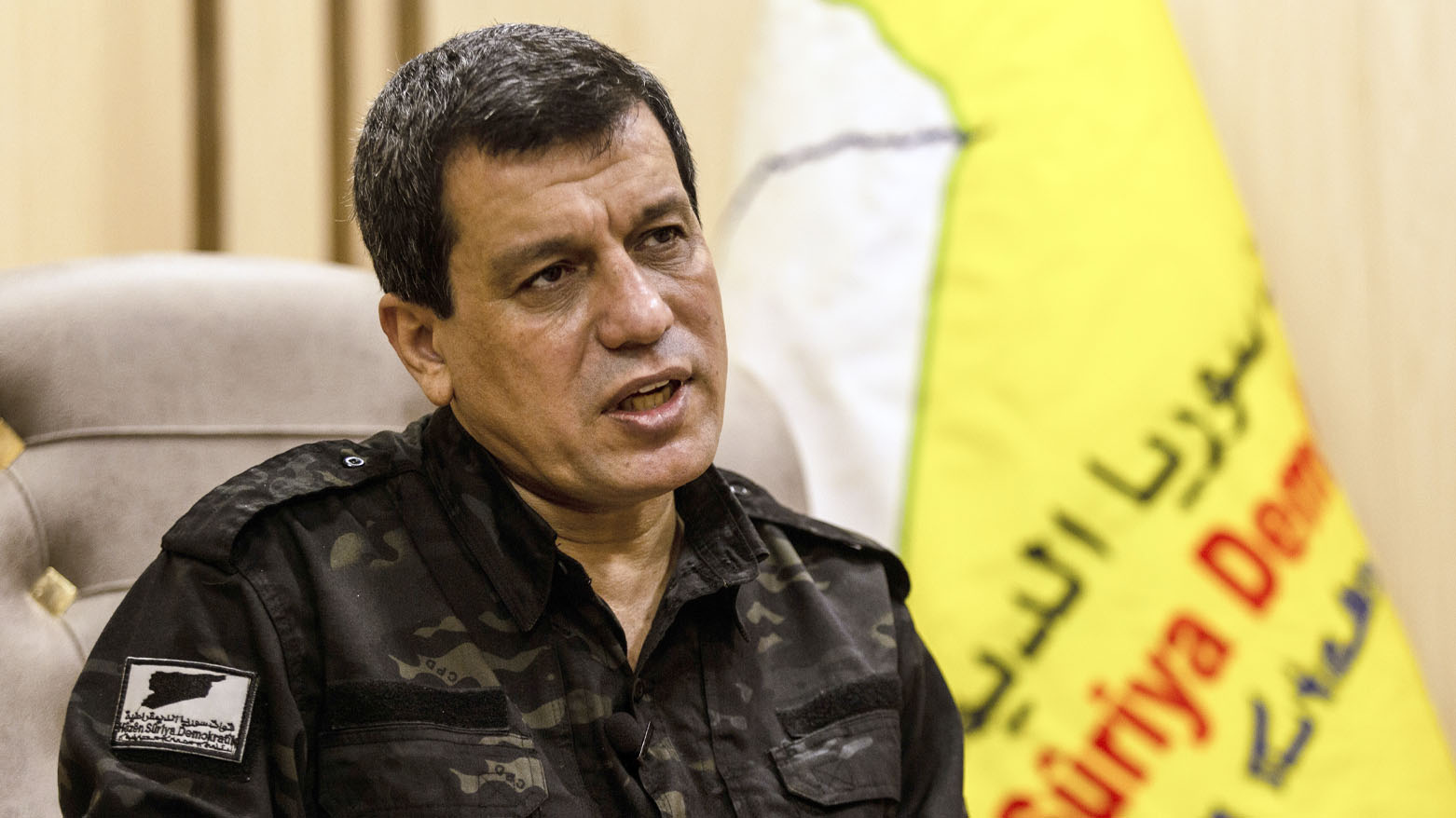
ERBIL (Kurdistan24) - In a pivotal political move amid continued military tensions in northern Syria, Mazloum Abdi, the General Commander of the Syrian Democratic Forces (SDF), has arrived in Damascus to begin direct negotiations with Syrian President Ahmed al-Sharaa on the integration of SDF forces into the Syrian army.
Kurdistan24’s correspondent reported that Abdi traveled to the Syrian capital alongside Elham Ahmad, Co-Chair of the Autonomous Administration’s Department of Foreign Relations, for face-to-face talks with the Syrian president. The visit marks the launch of a new round of negotiations focused on mechanisms for unifying the Autonomous Administration and its military forces with the Syrian government.
According to information obtained by Kurdistan24, the primary objective of Abdi and Ahmed’s visit is to initiate a new phase of dialogue aimed at reaching a final agreement on political and military integration. The discussions are expected to address detailed frameworks for coordination between the Autonomous Administration and Damascus following recent understandings.
The diplomatic development comes after several days of military escalation across the region. However, both sides have now opted for dialogue as a means of addressing outstanding disputes and reducing tensions.
This political movement unfolds against a deteriorating humanitarian situation around Kobani. As a result of drone strikes and intense artillery shelling by Syrian government forces on border villages surrounding the city, residents of seventy-five villages have been forced to flee their homes and are now living under harsh conditions.
Kurdistan24’s correspondent reported that the displaced civilians have sought refuge in the center of Kobani, with many sheltering inside unfinished shops that lack doors and basic infrastructure.
Diya Bouski, a displaced resident from the village of Blak, told Kurdistan24 that his village had fallen directly on the front line of the fighting, leaving residents with no choice but to abandon their homes. He appealed to the international community to intervene to halt the fighting so families could return to their lands.
Another displaced civilian, Rudi from the village of Dadali, described the severe hardship faced by families uprooted by the bombardment. “Our living conditions are extremely bad,” he said, calling on the international community and Kurds across all four parts of Kurdistan to come to their aid and support them.
The displacement comes after attacks by the Syrian army on Kurdish neighborhoods in Aleppo and their subsequent advance toward Western Kurdistan under the pretext of “territorial unification.” Following these developments, a ceasefire was announced on the basis of the March 10 agreement, with the truce formally declared on Jan. 18 between the Syrian Democratic Forces and the government in Damascus.
Despite the declared ceasefire, shelling and attacks on villages surrounding Kobani have continued, according to Kurdistan24’s reporting from the area.
As Mazloum Abdi and Elham Ahmad begin high-level talks in Damascus, the negotiations unfold against the backdrop of continued ceasefire violations and mounting humanitarian pressure around Kobani, underscoring the urgency of translating dialogue into lasting calm on the ground.