Kurdish Diaspora Group Mobilizes Global Petition to Support ‘Save the Kurds Act’ in U.S. Congress
Kurdistani Diaspora advisor Jihan Brifki reported over 151,000 signatures on a global petition supporting the U.S. "Save the Kurds Act," citing a strategic push for bipartisan congressional support.
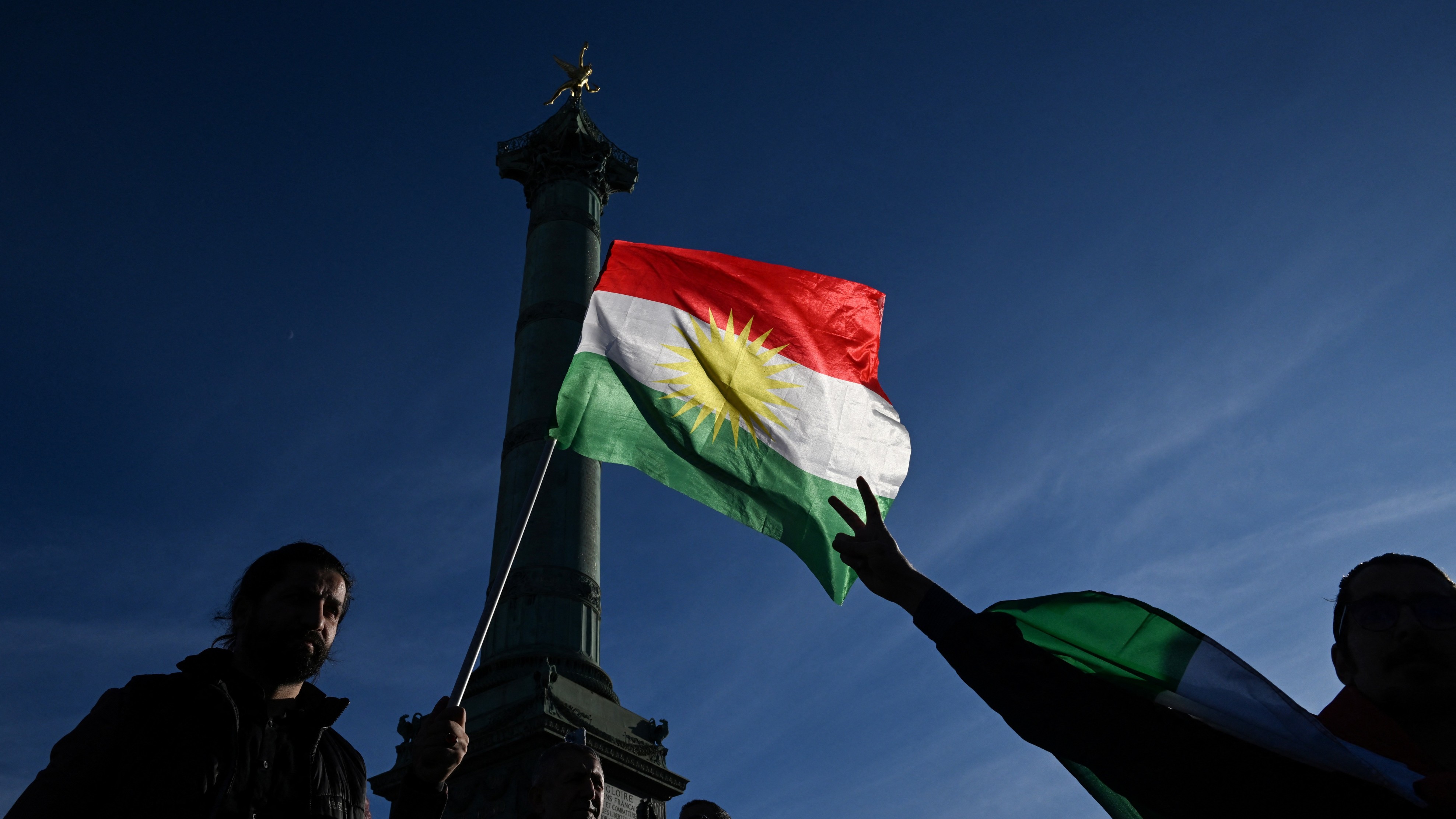
ERBIL (Kurdistan24) - An advisor to the Kurdistani Diaspora Confederation has reported a significant surge in global digital advocacy for a proposed U.S. legislative measure intended to protect Kurdish interests in northeastern Syria, with a formal petition surpassing 151,450 signatures as of Thursday.
Jihan Brifki, the organization’s advisor for the United States and Canada, stated that the campaign aims to leverage large-scale public support to apply diplomatic pressure on Washington as the regional security situation in Rojava remains volatile.
In an interview with Kurdistan24, Brifki detailed the origins and strategic objectives of the initiative, which was launched in response to a public call by U.S. Senator Lindsey Graham. According to Brifki, the movement began following a social media announcement by Senator Graham, who recently requested that fellow legislators vote in favor of the "Save the Kurds Act."
Brifki characterized the moment as a catalyst for urgent diaspora action, noting that the legislative proposal represents a critical mechanism for ensuring the safety of Kurdish civilians currently facing military threats.
The petition, hosted on the advocacy platform Change.org, has experienced rapid growth since its inception. Brifki confirmed that the signature count, which had earlier passed the 105,000 mark, has now extended to over 151,450 participants. The campaign has been structured to engage directly with high-level decision-makers in the American government.
Brifki noted that she has formally included President Donald Trump, Secretary of State Marco Rubio, and Senators Ted Cruz and John Kennedy in the petition as key figures with the influence to support the act.
While Brifki indicated that her team has not established direct communication with Senator Graham’s office at this stage, she clarified that the Kurdistani Diaspora Confederation is utilizing established diplomatic channels.
She identified Rahim Rashidi, a public relations representative for the confederation also known as "Mr. Kurd," as the primary liaison currently in contact with congressional staffers.
In addition to these efforts, Brifki stated that she has dispatched formal electronic correspondence to various legislative offices to communicate the urgency of the diaspora’s concerns.
Addressing potential skepticism regarding the efficacy of online petitions, Brifki argued that high-volume digital advocacy remains a potent instrument for institutional change. She noted that historical precedents suggest a successful correlation between reaching the 100,000-signature threshold and achieving tangible national or international policy outcomes.
Beyond the immediate goal of passing legislation, Brifki emphasized that the platform serves as an educational resource to inform the broader global community about the history and current status of Kurdistan. She described the tool as essential for generating media attention and forcing government officials to acknowledge constituent demands.
A central component of the campaign’s strategy is the pursuit of bipartisan consensus within the U.S. government. Brifki emphasized that her outreach efforts are not limited by party affiliation, stating that she is actively engaging with both Republican and Democratic senators.
"This is how we win," she remarked, asserting that securing support from both sides of the aisle is the only way to ensure the "Save the Kurds Act" remains a prioritized and durable policy for the United States, both in the present transition and in future administrative cycles.
The reach of the petition is notably international, allowing for participation from any individual regardless of their geographic location or citizenship status. Brifki explained that the platform requires only a full name, a valid email address, and a location, which has allowed the campaign to spread beyond the Kurdish-American community to the global stage.
She suggested that the broad eligibility encourages collective action, as the rising number of signatures facilitates wider distribution across digital networks.
Regarding potential opposition, Brifki reported that the campaign has proceeded with relative smoothness on a political level, though she acknowledged the presence of dissent in digital spaces.
She stated that while some individuals from neighboring regional groups have posted negative comments on her social media platforms—specifically those who oppose Kurdish rights or independence—she views her role as an American-Kurdish advocate as a point of personal and national honor.
She characterized her lifelong involvement in the Kurdish struggle as a foundation for her current efforts to protect her people from further suffering.
The campaign specifically seeks to amplify the narrative that the United States maintains a moral and strategic obligation to the Kurdish people.
Brifki aligned her messaging with Senator Graham’s previous assertions that Washington "owes" the Kurds for their instrumental role as a partner force in the territorial defeat of the Islamic State (ISIS).
The petition includes a formal letter addressed to American leadership, which outlines the importance of the Kurdish-American alliance and the necessity of continued U.S. support to prevent further instability.
As the legislative timeline remains a matter of concern, Brifki maintained that there is no fixed expiration for the petition’s influence. She argued that the continued accumulation of signatures only increases the political power of the movement, encouraging more people to advocate for the "Save the Kurds Act."
She suggested that the ongoing nature of the campaign keeps the Kurdish cause in the public discourse, which is vital for transforming the petition into a legislative reality.
Brifki concluded her remarks by highlighting the importance of cultural and economic bridges in strengthening Kurdish-American relations. She cited the recent friendship proclamation between her home city of Moorhead, Minnesota, and the city of Zakho in the Kurdistan Region as a successful model of local-level diplomacy.
This partnership, which focuses on education, agriculture, and economic development, followed a visit by Moorhead municipal leaders to Kurdistan earlier this year. According to Brifki, these American leaders were "truly impressed" by the culture of coexistence, security, and peace they witnessed in the region, a development she believes is essential for changing global perceptions of the Kurdish people.
The campaign for the "Save the Kurds Act" continues to serve as a focal point for diaspora mobilization, with organizers intending to present the finalized data to the U.S. Senate as evidence of a unified global demand for the protection of Kurdish rights in Syria.