Ukraine, Russia, US Open New Round of War Talks in Abu Dhabi Amid Escalating Violence
Deep divisions over Donbas withdrawals and Moscow’s demand for international recognition of seized territories dominate the Abu Dhabi negotiations.
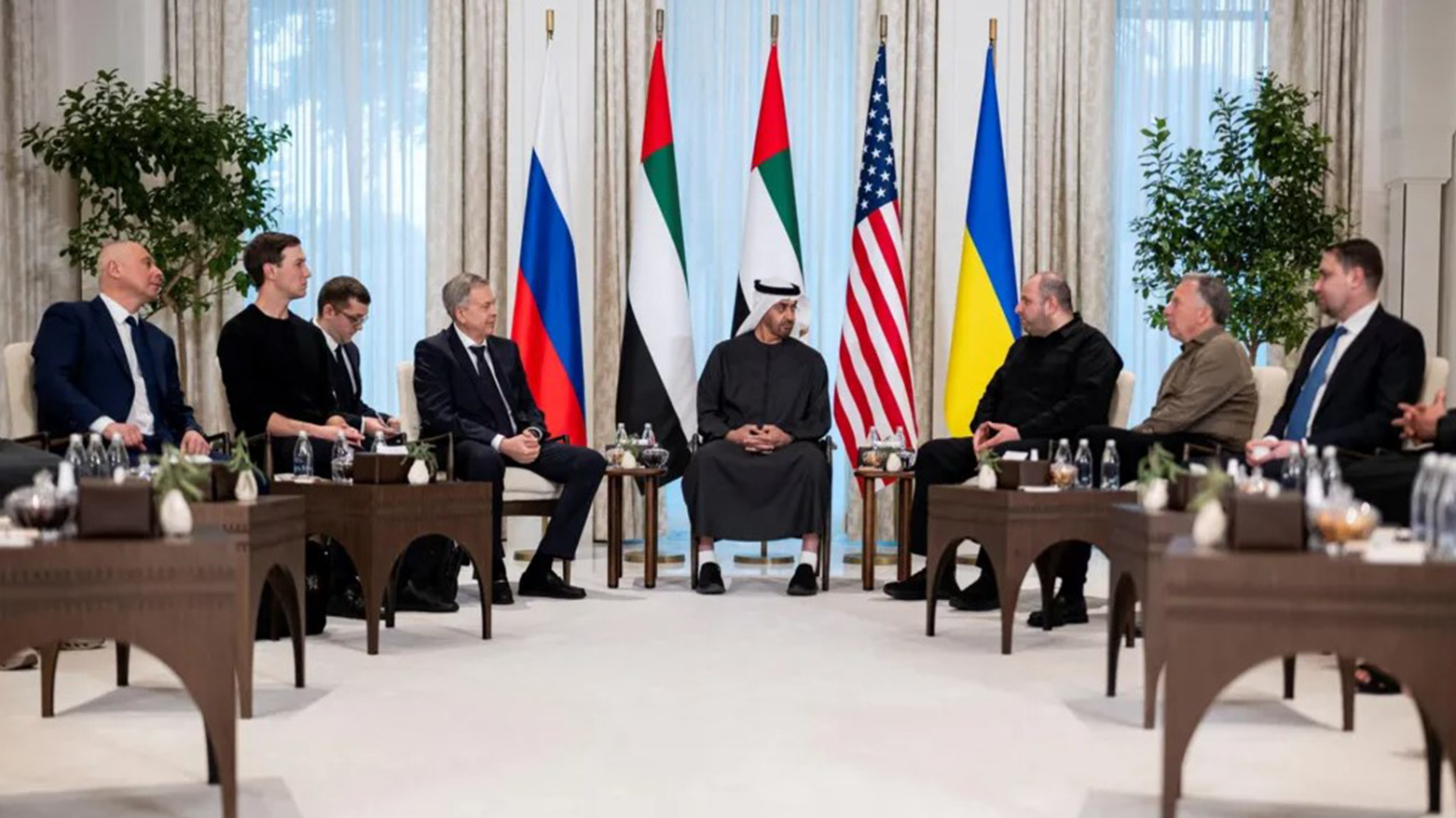
ERBIL (Kurdistan24) — Negotiators from Ukraine, Russia, and the United States are to convene in Abu Dhabi on Wednesday for a new round of high-stakes talks aimed at finding a pathway to end the nearly four-year war triggered by Russia’s full-scale invasion of Ukraine in February 2022. The talks were initially planned for last weekend but were postponed due to what the Kremlin described as scheduling issues among the three sides.
The discussions, scheduled to run through Thursday, come after several failed diplomatic efforts and amid a sharp escalation in fighting. Just days before the talks, Russia launched a massive barrage of drones and missiles targeting Ukraine’s energy infrastructure, knocking out electricity and heating supplies across large swathes of the country during sub-zero winter temperatures.
Ukrainian President Volodymyr Zelensky said the attacks cast serious doubt on Moscow’s commitment to diplomacy. “Each such Russian strike confirms that attitudes in Moscow have not changed: they continue to bet on war and the destruction of Ukraine, and they do not take diplomacy seriously,” Zelensky said on Tuesday.
He added that Ukraine would adjust the work of its negotiating team accordingly, without providing details.
The central obstacle in the Abu Dhabi talks remains the long-term fate of eastern Ukrainian territory. Moscow is demanding that Kyiv withdraw its forces from large parts of the Donbas region, including heavily fortified cities rich in natural resources, as a precondition for any agreement.
Russia is also seeking international recognition of territories it seized during the invasion as part of the Russian Federation.
Ukraine has firmly rejected these demands, proposing instead that the conflict be frozen along the current front lines. Kyiv has ruled out any unilateral pullback of troops, warning that conceding territory would embolden Russia and fail to deter future aggression.
Ukraine’s delegation is being led by National Security and Defense Council chief Rustem Umerov, widely regarded as a skilled and pragmatic negotiator. Russia is represented by Igor Kostyukov, the head of its military intelligence agency, who has been sanctioned by Western countries over his role in the invasion.
The United States is again playing a mediating role. During the previous round of talks in Abu Dhabi last month, the U.S. delegation was led by President Donald Trump’s envoy, Steve Witkoff.
Russia currently occupies around 20 percent of Ukrainian territory and has threatened to seize the remainder of the Donetsk region if negotiations collapse. Ukraine still controls roughly one-fifth of Donetsk, including major urban centers that are heavily fortified.
According to AFP analysis, at the current pace of advance, it could take Russia another 18 months to capture the entire region, albeit at high human cost. Beyond Donetsk, Moscow also claims the Lugansk, Kherson, and Zaporizhzhia regions and holds pockets of territory in at least three other eastern Ukrainian regions.
Opinion polls indicate that a majority of Ukrainians oppose any peace deal that would hand territory to Russia in exchange for an end to the fighting. Many view the idea of ceding land defended for years at immense cost as unacceptable.
On the battlefield, Russian forces have continued to make incremental gains, often suffering heavy casualties, while seeking to outlast Ukraine’s strained military. Zelensky has urged Western allies to accelerate weapons deliveries and intensify economic and political pressure on the Kremlin.
The impact of the war has been particularly severe for civilians. In Kyiv alone, hundreds of thousands have been left without heat and electricity this year after repeated Russian strikes crippled the capital’s energy grid.
Skepticism remains high among Ukrainians following the first round of U.S.-brokered talks in Abu Dhabi. “I think it’s all just a show for the public,” said Petro, a Kyiv resident. “We must prepare for the worst and hope for the best.”
As negotiations resume in the Emirati capital, expectations for a breakthrough remain low, with deep mistrust and irreconcilable positions continuing to overshadow diplomatic efforts.