Marco Rubio Says that the US and Europe 'Belong Together'
In Munich, Marco Rubio called for revitalizing the transatlantic alliance, saying the US and Europe “belong together,” as leaders discussed NATO, migration, strained ties, and the war in Ukraine.
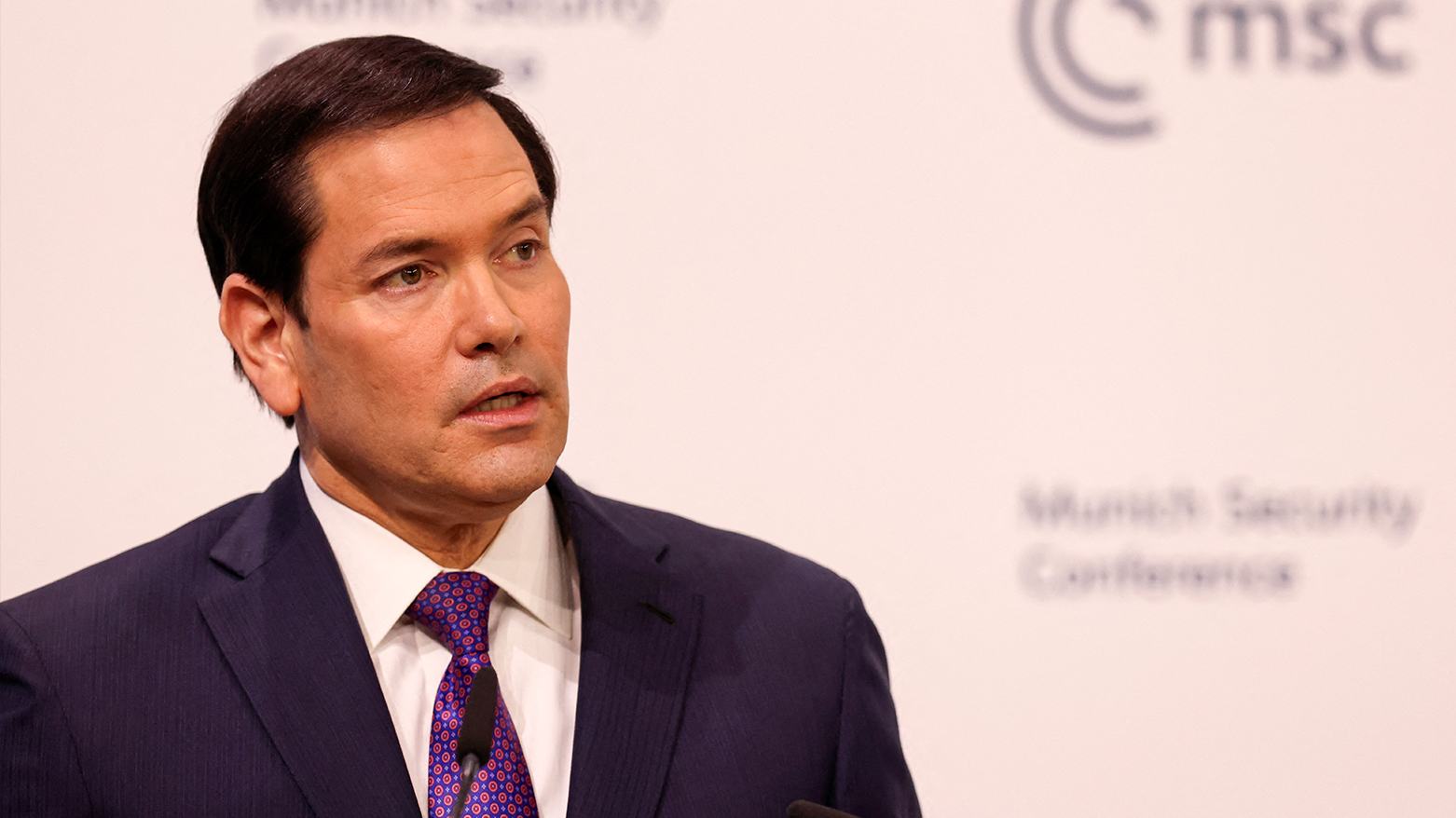
ERBIL (Kurdistan24) - Under the chandeliers of Munich’s security forum, where alliances are weighed and fractures laid bare, Marco Rubio stepped forward with a message aimed at steadying a shaken Europe: Washington, he said, does not seek separation, but renewal—together.
Speaking at a security conference in Munich, Rubio sought to reassure European leaders after months of turbulence in US-European relations. The strain followed vows by US President Donald Trump to seize Greenland and his often derisive remarks about Washington’s allies, which had unsettled transatlantic ties.
“We do not seek to separate, but to revitalize an old friendship and renew the greatest civilization in human history,” Rubio said. “What we want is a reinvigorated alliance.”
“We want Europe to be strong,” he said, adding that the continent and the United States “belong together.”
The United States, Rubio said, will be “driven by a vision of a future as proud, as sovereign, and as vital as our civilization’s past.”
“It is our hope to do this together with you, our friends here in Europe,” he said.
Echoing the Trump administration’s position on immigration, Rubio said “mass migration” was “a crisis which is transforming and destabilizing societies all across the West.”
“We want allies who are proud of their culture and of their heritage, who understand that we are heirs to the same great and noble civilization and together with us are willing and able to defend it.”
“Acting together in this way, we will not just help recover a sane foreign policy... It will restore to us a clear sense of ourselves. It will restore a place in the world, and in so doing, it will rebuke and deter the forces of civilizational erasure that today menace both America and Europe alike.”
Rubio’s speech marked a sharp contrast to that of JD Vance a year earlier, when he used the same stage to attack European policies on immigration and free speech, shocking European allies.
Aside from the immigration issue, Rubio largely avoided MAGA flashpoints and culture-war themes that Friedrich Merz said on Friday had deepened a “rift” between the United States and Europe.
US-Europe relations were further strained by the Trump administration’s new National Security Strategy, which charged that Europe faced “civilizational decline.” Ties plunged further last month when Trump stepped up threats to annex Greenland, an autonomous territory of NATO member Denmark, prompting European nations to stand firm in protest.
European leaders gathered at the Munich Security Conference pledged to shoulder more of the burden of shared NATO defenses. Several leaders stressed that this was essential for Europe to counter a hostile Russia.
NATO chief Mark Rutte said that “a strong Europe in a strong NATO means that the transatlantic bond will be stronger than ever.”
European Commission chief Ursula von der Leyen told the gathering on Saturday that “Europe needs to step up and has to take on its responsibility” for its security and called for closer ties with Britain, saying “ten years on from Brexit our futures are as bound as ever.”
British leader Keir Starmer was expected to tell the conference that Europe is “a sleeping giant” and must rely less on the United States for its defense.
French President Emmanuel Macron said on Friday that “this is the right time for a strong Europe,” that would be “clear in the support of Ukraine” and “building its own architecture of security.”
The high-powered meeting of government leaders, diplomats, defense and intelligence chiefs came shortly before Russia’s full-scale war on Ukraine is set to enter its fifth year. Volodymyr Zelensky, in Munich since Friday and meeting multiple allies, was expected to address the conference on Saturday. No Russian officials were invited.
At the White House on Friday, Trump urged Zelensky to “get moving” to end the war. “Russia wants to make a deal... He has to move,” he said.
Rubio said, “We don’t know if the Russians are serious about ending the war.”
Macron said a new framework was needed to deal with “an aggressive Russia” once the fighting in Ukraine ends.
“If it makes sense to talk, we are willing to talk,” said Merz, adding that “Russia is not yet willing to talk seriously.”
The remarks came amid months of strained transatlantic relations, sharpened by US policy rhetoric, threats regarding Greenland, and a National Security Strategy that accused Europe of facing civilizational decline, while European leaders now pledge greater responsibility for collective defense.
From alliance renewal to security burdens and the war in Ukraine, Rubio’s message in Munich framed a future he said must be built together—across the Atlantic.