At Munich Conference, Iraq Pushes Direct Vienna Flights, Water Cooperation with Netherlands, ISIS Detainee Coordination
FM Fuad Hussein Holds Talks with Austria, Netherlands, and Maldives on Security, Migration, and Regional Stability.
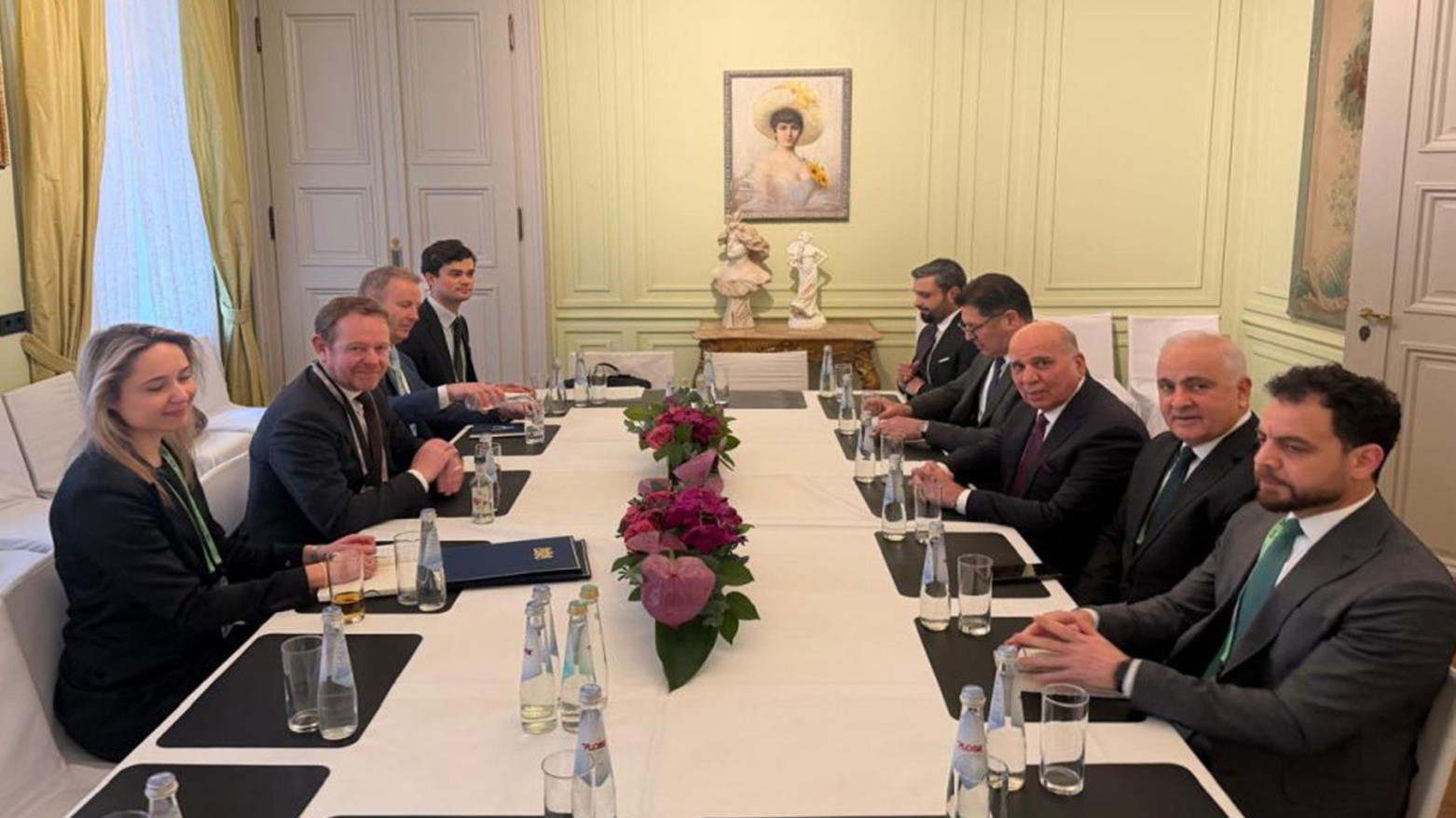
ERBIL (Kurdistan24) — Iraq’s Deputy Prime Minister and Foreign Minister, Fuad Hussein, on Saturday held a series of high-level meetings on the sidelines of the 62nd Munich Security Conference, underscoring Baghdad’s efforts to consolidate bilateral partnerships while navigating complex regional dynamics.
Over two days of discussions in Munich, Hussein met with Austria’s Interior Minister Gerhard Karner, Dutch Foreign Minister and Minister for Asylum and Migration David van Weel, and Maldives Foreign Minister Abdulla Khaleel, addressing a broad agenda spanning counterterrorism, migration, climate resilience, and evolving Middle East security developments.
Austria: Security, Migration, and Direct Air Links
In his meeting with Karner on Saturday, Hussein praised the positive trajectory of Iraqi-Austrian relations, particularly in counterterrorism, migration management, and combating organized crime. He emphasized the importance of strengthening coordination mechanisms between the two interior and security institutions.
Hussein also called for the resumption of direct flights between Baghdad and Vienna, citing Iraq’s marked improvement in security conditions in recent years. Restoring the air route, he said, would facilitate business, tourism, and people-to-people exchange, reflecting growing confidence in Iraq’s stabilization.
For his part, Karner welcomed the level of bilateral cooperation and expressed readiness to further develop ties, including through a prospective visit to Iraq to meet with Iraqi security officials.
The talks also covered Iraq’s internal political developments, including ongoing efforts to form a new government in line with constitutional rights, as well as broader regional security trends—particularly the evolving political and security situation in Syria.
Austria has been an active European partner in migration discussions involving Iraq, especially following the surge in asylum applications during the height of the ISIS conflict. As Iraq seeks to reposition itself as a stable actor, migration cooperation remains closely linked to broader European security frameworks.
Maldives: Multilateral Cooperation and OIC Summit
On Saturday, Hussein also met with Maldives Foreign Minister Abdulla Khaleel, highlighting historical and cultural ties between the two countries and the importance of expanding cooperation in trade and mutual diplomatic support.
Hussein noted Iraq’s preparations to host the 52nd session of the Council of Foreign Ministers of the Organization of Islamic Cooperation, framing it as a reflection of Iraq’s renewed regional engagement and commitment to collective Islamic diplomacy.
A central issue in the talks was coordination regarding Maldivian nationals previously transferred from Syrian detention facilities to Iraq over alleged ISIS affiliation. Hussein underscored the need for information-sharing and legal coordination between Iraq and countries whose citizens are involved, including the Maldives.
Khaleel reaffirmed his country’s interest in strengthening economic ties and expanding cooperation within international forums, expressing willingness to conduct an official visit to Iraq in the near future.
Netherlands: Water, Climate, and ISIS Detainees
In a separate meeting on Friday, Hussein met with Dutch Foreign Minister David van Weel to discuss advancing bilateral relations, with a particular focus on water resource management and climate adaptation.
Iraq, facing acute water scarcity due to upstream dam construction, reduced rainfall, and climate change, has increasingly sought technical cooperation with countries possessing advanced water governance models. The Netherlands—renowned globally for its expertise in water management—was cited by Hussein as a key partner whose experience could help Iraq address long-term environmental vulnerabilities.
The discussion also addressed Iraq’s internal security stabilization, despite challenges affecting neighboring states. Hussein briefed his Dutch counterpart on political efforts to form a new government and on procedures related to the transfer of ISIS members from Syrian prisons to Iraq, in line with security and legal obligations.
The fate of ISIS detainees remains a sensitive international issue. Thousands of suspected militants and affiliated individuals have been held in northeastern Syria since the territorial defeat of ISIS in 2019. Iraq has coordinated with international partners regarding the repatriation and prosecution of its nationals, while also urging other countries to assume responsibility for their citizens.
Regionally, Hussein and van Weel reviewed developments in the Middle East, including ongoing negotiations in Muscat between Iran and the United States. Hussein warned of potential destabilizing consequences should talks fail, stressing that diplomatic solutions are essential to preserving regional stability.
Hussein’s meetings in Munich reflect Iraq’s broader diplomatic strategy: balancing security cooperation with European states, deepening technical partnerships in development sectors, and trying to assert an active role in regional diplomacy.
As Baghdad continues government formation negotiations and manages complex security files—including ISIS detainees and cross-border instability—Iraq’s leadership has increasingly sought to present the country as a stabilizing actor rather than a theater of proxy confrontation.
The Munich discussions signal Baghdad’s attempt to convert improved internal security conditions into tangible diplomatic and economic gains, while navigating a volatile regional landscape shaped by Syria’s fragility, Iran-US tensions, and shifting migration dynamics across Europe.