Tehran Signals Strong Retaliation if Washington Conducts Military Action
Iran has warned that any U.S. strike, even limited, would trigger a ferocious response, as Washington weighs military options ahead of Geneva nuclear talks.
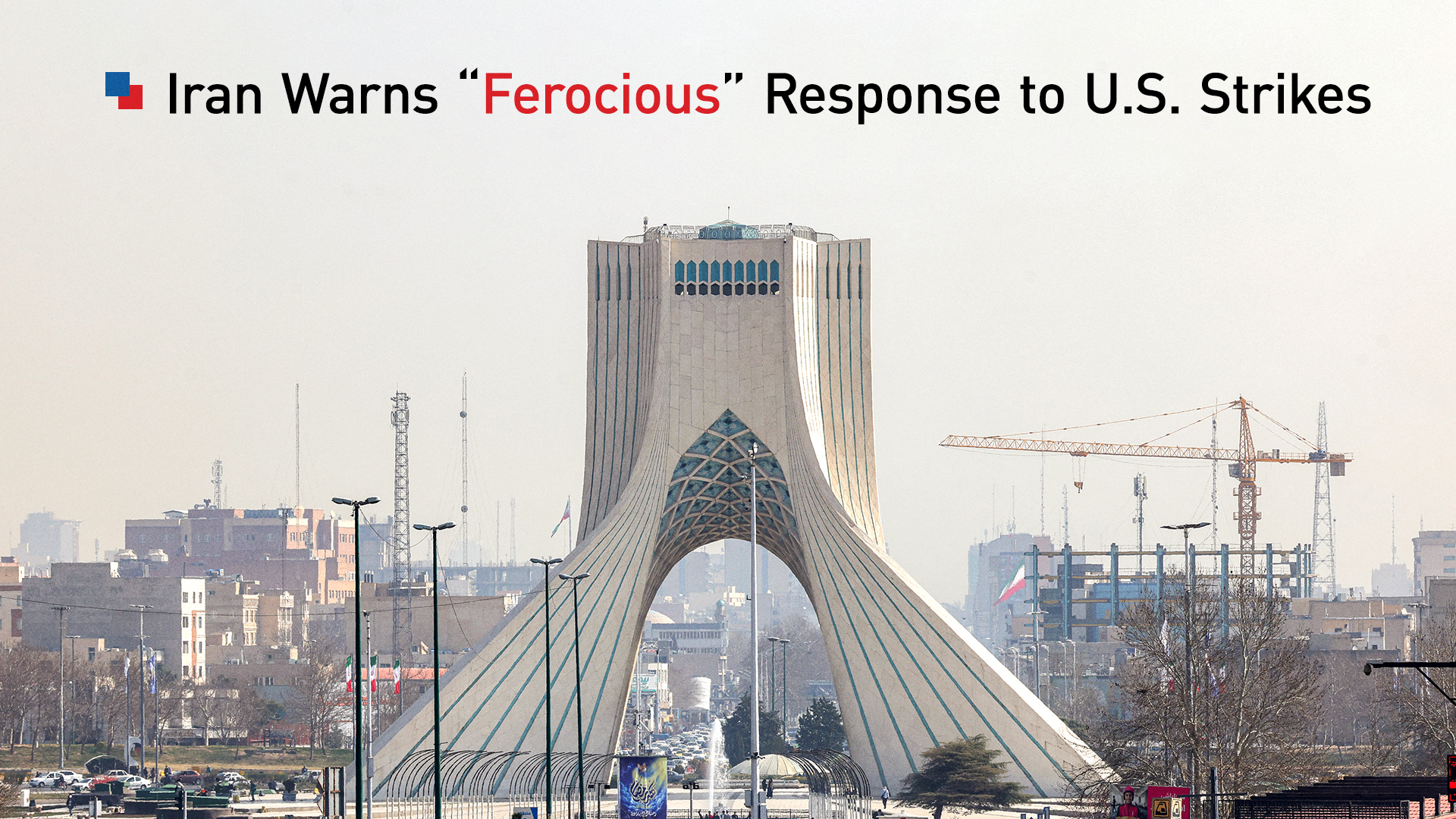
ERBIL (Kurdistan24) - Iran on Monday warned that any U.S. military strike, including limited attacks, would be met with a “ferocious” response, after President Donald Trump signaled he was considering targeted action if negotiations fail, AFP reported.
The warning came amid heightened U.S. military deployments in the region and ahead of a new round of Geneva talks mediated by Oman, scheduled for Thursday, aimed at resolving disputes over Tehran’s nuclear program.
During a briefing in Tehran attended by AFP, Iranian Foreign Ministry spokesman Esmaeil Baqaei stated that “any strike, even limited, would be regarded as an act of aggression. Period. And any state would react to an act of aggression as part of its inherent right of self-defence ferociously so that’s what we would do.”
The remarks followed U.S. troop deployments intended to pressure Iran ahead of the resumption of talks, according to AFP.
The United States has positioned two aircraft carrier groups, along with fighter jets, bombers, refueling aircraft, and antimissile batteries in the region, described by officials as the largest concentration of American forces in the Middle East since the preparations for the 2003 Iraq invasion, according to reporting by The New York Times.
The military presence coincides with U.S. deliberations on potential targeted strikes if diplomatic efforts fail, including attacks on Iran’s nuclear facilities, ballistic missile programs, and Islamic Revolutionary Guard Corps installations.
Trump has directed senior advisers to weigh both targeted and broader strike options. Officials noted that the president emphasized the possibility of escalating to a larger-scale operation later in the year if limited strikes or diplomatic measures fail, with the ultimate objective including measures aimed at targeting high-ranking officials within the regime, The New York Times reported.
White House discussions involved Vice President JD Vance, Secretary of State Marco Rubio, Gen. Dan Caine, CIA Director John Ratcliffe, and Chief of Staff Susie Wiles, focusing on operational feasibility, intelligence assessments, and the risks of different options.
Iran’s officials have insisted that only discussions regarding its nuclear program are on the table during the mediated talks.
The European Union has called for a diplomatic solution ahead of the Geneva negotiations, with EU foreign policy chief Kaja Kallas stating, “We don’t need another war in this region. We already have a lot. It is true that Iran is at its weakest point that they have been. We should be really using this time to find a diplomatic solution,” AFP reported.
The current round of talks follows a second round of indirect discussions in Switzerland under Omani mediation, which concluded on Tuesday. Iranian Foreign Minister Abbas Araghchi is leading Tehran’s delegation, while the United States is represented by envoy Steve Witkoff and Jared Kushner.
AFP noted that the U.S. deployment and ongoing deliberations are intended to encourage Iran to reach an agreement without resorting to force.
AFP reported that Iran has faced recent domestic and regional pressures, including mass protests peaking in January, a 12-day conflict with Israel last year, and the weakening of its regional proxy networks. Despite these challenges, Baqaei emphasized that Iranians had “never capitulated at any point in their history,” rejecting claims by U.S. officials that military pressure might force compliance.
The heightened military posture has prompted several foreign governments to advise their citizens to leave Iran.
AFP reported that India, Sweden, Serbia, Poland, and Australia have issued travel guidance, citing security concerns amid rising tensions and the potential for conflict. India’s foreign ministry estimated that approximately 10,000 Indian nationals are in the country.
U.S. advisers have considered limited proposals for Iran to continue a very restricted nuclear enrichment program solely for medical purposes, while shuttering facilities capable of weaponization, a plan advanced by the International Atomic Energy Agency’s director general Rafael Grossi, according to The New York Times.
It remains unclear whether either Washington or Tehran would formally accept this proposal. The United States has also explored multiple pathways short of full-scale war, including targeted strikes, as part of a broader strategy to pressure Iran into compliance on nuclear matters.
The New York Times reported that U.S. and Western intelligence agencies are monitoring potential Iranian proxy actions, warning that Hezbollah, Hamas, Houthi forces, and Al Qaeda affiliates could carry out attacks against American targets in Europe or the Middle East if strikes occur.
Officials noted that such operations could target less-defended areas, even as Patriot antimissile batteries and other defenses have been deployed to protect U.S. personnel in the region. Analysts have indicated that proxy retaliation could significantly raise the operational and strategic risks of any U.S. campaign.
Security discussions within the White House also account for logistical and operational complexities. Officials highlighted that any U.S. commando raids on deeply buried nuclear or missile facilities would involve higher risks than previous operations, including a January attempt to capture Venezuelan President Nicolás Maduro.
Concerns were raised over the readiness of U.S. forces and the ability to sustain operations across multiple domains, including air, land, and missile defense, The New York Times reported.
U.S. lawmakers have expressed caution regarding the potential for conflict. Senator Jack Reed, top Democrat on the Senate Armed Services Committee, urged transparency from the administration and cautioned that military action could destabilize the region and endanger U.S. personnel, according to The New York Times.
European officials attending security forums similarly questioned whether military pressure alone could compel Iran to reduce its nuclear program, emphasizing the limits of force in complex diplomatic negotiations.
Despite the looming threat of military action, Iran maintains that negotiations remain central. Foreign Minister Araghchi told CBS’s Face the Nation, “I believe that still there is a good chance to have a diplomatic solution… So there is no need for any military buildup, and military buildup cannot help it and cannot pressurize us,” The New York Times reported.
AFP noted that the ongoing talks and the possibility of U.S. military strikes have fueled widespread concern among Iranians, with scattered protests continuing across the country and universities observing commemorations for victims of prior unrest. The combination of internal unrest, heightened regional tensions, and foreign pressure contributes to a volatile security environment in Iran and the broader Middle East.