Kurdistan Observes 38 Years Since Halabja Attack, Highlights City’s Reconstruction
38 years after Halabja’s 1988 chemical attack, the Kurdistan Region commemorates victims while highlighting recovery: new hospitals, infrastructure, agriculture, tourism, and 24-hour electricity signal ongoing reconstruction and development.
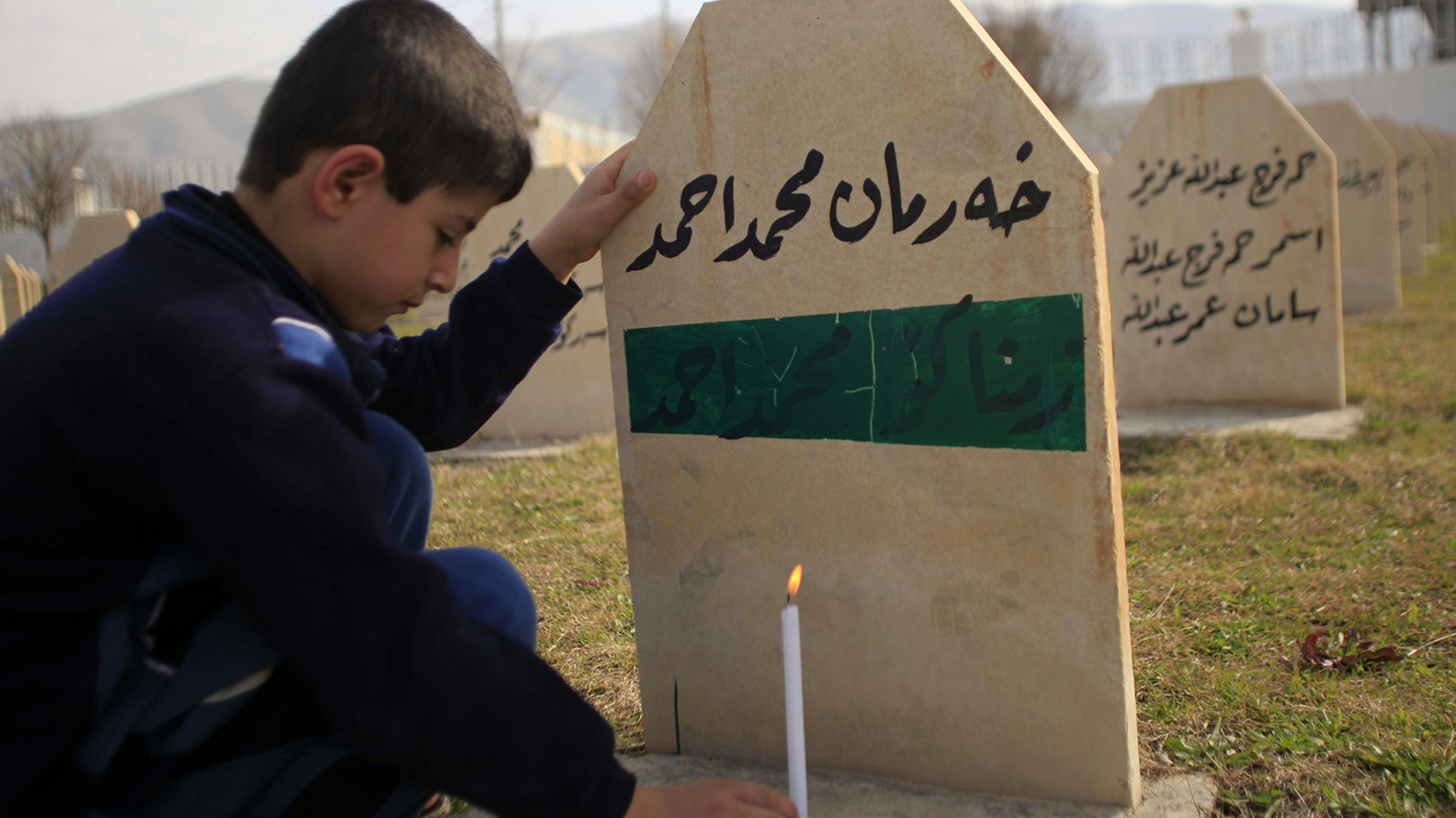
ERBIL (Kurdistan24) - The Kurdistan Region on Monday marked the 38th anniversary of the chemical bombardment of the city of Halabja, an attack carried out on March 16, 1988, during the final phase of the Iran-Iraq War, in which the Iraqi regime used toxic gases against the civilian population, leaving lasting effects on survivors and shaping the city’s history in the decades since.
Across the Kurdistan Region, other parts of Kurdistan, and Kurdish communities abroad, commemorative activities were held to remember the victims of the attack. Residents and officials observed moments of silence and organized memorial events to pay respect to those who lost their lives during the bombardment.
The chemical attack on Halabja occurred toward the end of the eight-year Iran-Iraq War. On March 16, 1988, the Iraqi regime carried out aerial bombardments of the city using multiple types of chemical agents. The gases used in the attack included mustard gas, cyanide, sarin, and tabun.
The use of those substances resulted in the deaths of large numbers of civilians and caused long-term medical consequences for many who survived the attack. Even decades later, the effects of the chemical agents remain visible among the population, with many survivors continuing to experience physical complications linked to exposure to toxic gases.
The traces of the lethal gases used against the population remain visible on the bodies of many residents. Survivors continue to face medical challenges, and many of the wounds suffered during the attack have not fully healed.
Medical treatment for survivors remains an ongoing concern. Some individuals who were exposed to the chemical agents continue to rely on medication and require regular visits to hospitals both within the Kurdistan Region and abroad. According to information cited by Kurdistan24, approximately 400 chemical attack survivors in Halabja currently receive continuous treatment.
The attack also resulted in large-scale displacement of the city’s population. The chemical bombardment led to the displacement and exile of approximately 140,000 people. Many families fled the city and surrounding areas in the aftermath of the attack, seeking refuge in neighboring regions.
In addition to those displaced, hundreds of people were separated from their families during the events surrounding the bombardment. Some individuals remain missing decades later.
The destruction inflicted on Halabja and surrounding areas was extensive. The Iraqi regime destroyed large parts of the city and neighboring localities, including the sub-districts of Sirwan, Khurmal, Byara, and Said Sadiq.
Entire neighborhoods and villages were leveled during the campaign, forcing residents to leave their homes. In Halabja alone, approximately 25,000 houses were destroyed and razed during the attacks and the subsequent campaign that targeted the area.
Many of those who fled the chemical bombardment attempted to reach Iran. However, individuals who later returned faced arrest and torture. Some of those detained were transferred to the Nugra Salman fortress prison.
Years after the attack, legal proceedings addressing the events in Halabja were pursued in Iraq. Following the fall of the Ba’ath regime in 2003, the case of the Halabja chemical attack was referred to the Supreme Iraqi Criminal Tribunal.
In 2010, the tribunal issued a ruling recognizing the Halabja chemical attack as an act of genocide. The decision was subsequently approved by Iraq’s Council of Representatives and by the federal government.
Despite that ruling, successive governments formed after the fall of the Ba’ath regime have not provided material or moral compensation to victims of the attack or their relatives.
23 years after the fall of the Ba’ath regime, families affected by the attack have yet to receive compensation.
In March 2025, the General Secretariat of the Federal Council of Ministers announced that March 16, 2025, would be observed as an official holiday in Iraqi institutions. The announcement came instead of measures aimed at implementing compensation for the relatives of victims, according to the report.
Medical care for survivors remains a key issue for many residents of Halabja. On March 7, 2019, a specialized hospital dedicated to treating survivors of chemical weapons exposure was opened in the city.
The facility was established to address the long-term medical needs of individuals affected by the attack. However, the hospital does not currently possess all of the medicines required to treat every survivor.
As a result, some patients continue to seek treatment in hospitals located in other cities in the Kurdistan Region or abroad.
Administrative changes have also taken place in Halabja in the years since the attack. On March 13, 2014, the Kurdistan Regional Government’s Council of Ministers decided to grant Halabja provincial status.
The decision elevated Halabja from a district to a province in an effort to provide improved administrative services for the city and surrounding areas. Since that time, a number of general directorates and institutions have been established in the province.
Halabja is now the fourth province of the Kurdistan Region. The province covers an area of approximately 889 square kilometers and includes a number of administrative units.
The population of Halabja city exceeds 140,000 residents. The province includes 156 villages as well as three sub-districts—Sirwan, Bamo, and Byara—and one district town, Khurmal.
Khurmal was elevated to the status of a district town in July of last year through a decision issued by Kurdistan Regional Government Prime Minister Masrour Barzani.
The province also possesses agricultural resources that form a key part of the local economy. Halabja contains more than 110,000 dunams of farmland, with around 60,000 dunams planted with wheat annually.
Several agricultural and livestock projects operate within the province. These include 38 poultry projects and 11 livestock and fish farming projects.
In addition, Halabja hosts 68 greenhouse projects and several industrial and agricultural initiatives. Among them are the Rasan food complex project and the Sharazor tomato paste factory project.
Infrastructure projects have also been introduced in the province in recent years, including an industrial zone project, a modern wholesale market for fruit and vegetables, the Lower Prisi pond project, and the Hawraman road forest project.
Tourism represents another sector associated with Halabja’s development. The province’s location and natural environment have contributed to its status as a tourist destination within the Kurdistan Region.
Among the most prominent tourist sites in the province are Chawg, Bawakochak, Gulan, Awesar, and Zalim. Approximately 300,000 domestic and international tourists visit these locations each year.
One of the most widely known cultural events in the province is the Pomegranate and Autumn Festival. Ten editions of the festival have been held to date, drawing tens of thousands of visitors annually.
During the festival, more than 900 artisans, farmers, and orchardists present local products and agricultural goods.
Investment and infrastructure development have also been implemented through projects approved by the Kurdistan Regional Government’s Ninth Cabinet.
Decisions were issued during the cabinet’s tenure to implement more than 132 projects in Halabja province. The majority of those projects have been completed.
The projects span 11 different sectors. Among them are 57 road and transport projects and 20 water and sewage projects. Additional initiatives include 14 projects in the education sector and 14 infrastructure and service projects.
Other sectors include eight government and civil society projects, five agriculture projects, four energy production projects, and four health projects.
Three tourism projects and two construction projects have also been implemented, along with one project related to banking and financial services.
Electricity supply has also been addressed through regional initiatives. As part of the Kurdistan Regional Government’s “Runaki” project, which aims to provide continuous electricity across the Kurdistan Region, Halabja became the first city in the region to receive 24-hour electricity service.
Through the project, the entire city’s electricity supply was made continuous.
Thirty-eight years after the chemical bombardment, the anniversary of the Halabja attack continues to be observed with commemorations across the Kurdistan Region and beyond.
The anniversary events held on March 16 included moments of silence and memorial activities honoring those who lost their lives during the 1988 attack.