Iran Says Strait of Hormuz Open Under Conditions, Bars 'Hostile' Vessels
Iran’s Foreign Ministry said the Strait of Hormuz remains open under conditional transit rules, permitting passage for authorized vessels while restricting ships considered hostile.
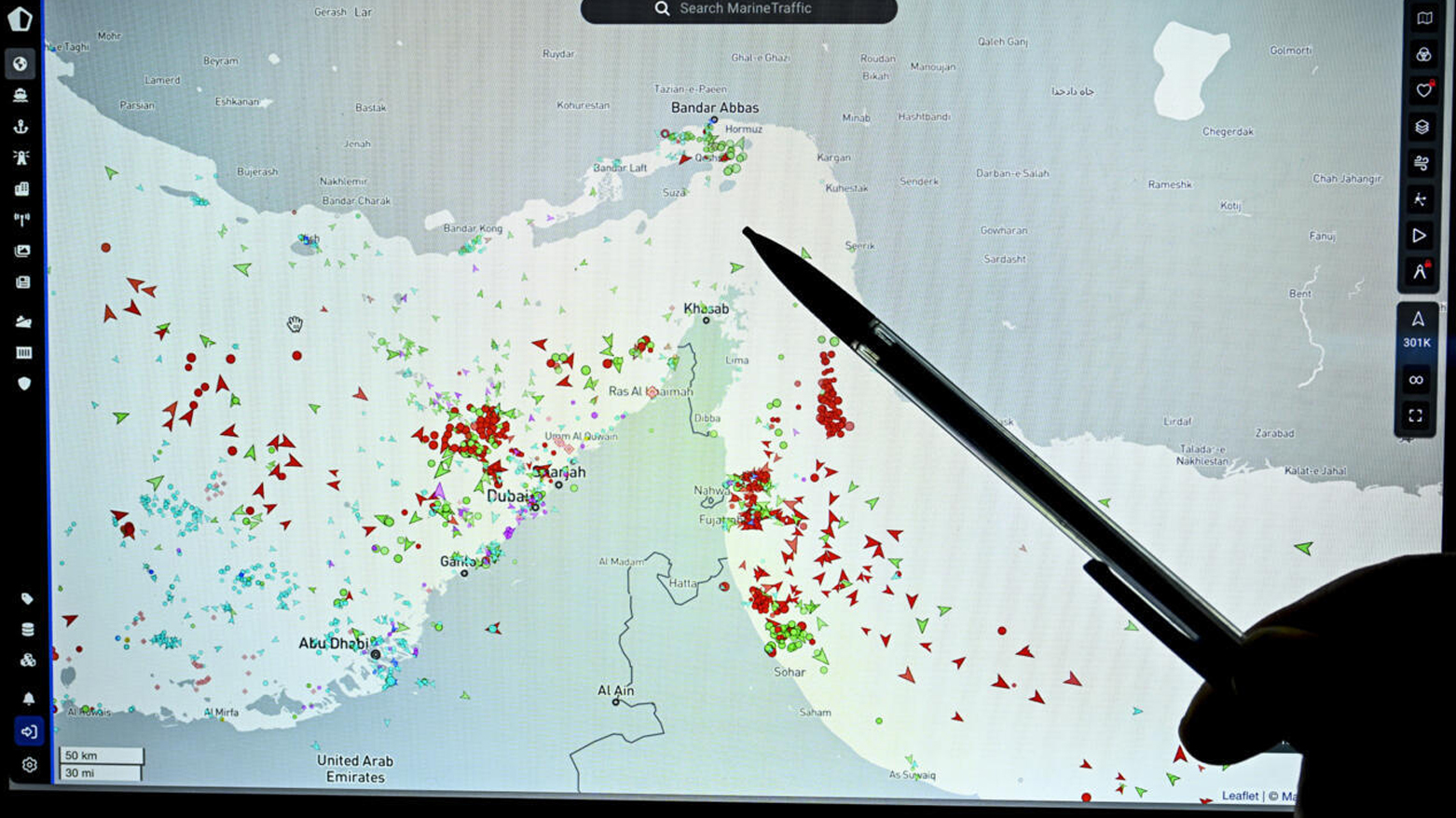
ERBIL (Kurdistan24) - Iran’s Foreign Ministry said Monday that the strategic maritime corridor remains accessible to international shipping under specific conditions, while vessels considered hostile to Iran are barred from using the passage amid the ongoing conflict involving Iran, the United States, and Israel.
Esmaeil Baqaei, spokesperson for Iran’s Ministry of Foreign Affairs, said in a press release issued Monday that the strait has not been fully closed but that navigation is regulated under conditions set by Iranian authorities to address security concerns during the war.
“The United States, Israel, and their supporters cannot utilize the Strait of Hormuz to inflict harm on Iran,” Baqaei said in the statement, adding that the principle is consistent with international law.
According to the statement, vessels belonging to countries or entities not participating in military operations against Iran are permitted to pass through the strait if they coordinate with Iranian authorities and obtain authorization from the Iranian armed forces.
Baqaei said Tehran had previously called on countries in the region not to allow their territory to be used for military attacks against Iran.
He added that maritime transit through the strait is being conducted according to specific security arrangements designed to prevent hostile activity while maintaining navigation for vessels that comply with the conditions set by Iran.
“The transit of ships is conducted safely and according to specific conditions aimed at protecting Iran's security and preventing any hostile acts,” Baqaei said. “The use of the strait by hostile forces or vessels is strictly prohibited.”
The statement was issued amid disruptions to maritime traffic and energy markets linked to the ongoing war and restrictions affecting shipping through the Strait of Hormuz, a key route for global oil and gas supplies.
Tehran’s practical closure of the waterway in response to U.S. and Israeli airstrikes has disrupted global trade and energy flows, contributing to a sharp increase in oil prices and heightened concern among governments and energy markets.
European Commission President Ursula von der Leyen said the conflict has already had measurable effects on energy markets within the European Union.
According to von der Leyen, during the first ten days of the war, gas prices in the EU rose by 50%, while oil prices increased by 27%.
European officials have also expressed concern about the economic implications of the war and the disruptions affecting the maritime corridor.
During remarks to Kurdistan24 correspondent Barzan Hassan on Monday, senior European officials said the conflict and the disruption of maritime transit through the Strait of Hormuz are contributing to rising global energy prices and uncertainty in international markets.
Germany’s Federal Minister for Foreign Affairs Johann Wadephul said European governments are monitoring the impact of the conflict on markets while emphasizing the need for diplomatic engagement to address the situation.
“No, of course, we, we do see the repercussions and the effects that, that we see not only in the German or the European markets,” Wadephul said in response to a question about whether Europe is facing an immediate energy crisis.
“So we are still working on a solution, which only could come to a sustainable situation in that region through negotiations, which includes the neighboring countries, but ultimately, of course, also Iran,” he said.
Wadephul added that progress toward negotiations would depend on developments in the ongoing military campaign.
“We will come to that stage as soon as the United States of America and Israel have defined that they have achieved their military goals,” he said. “But we are not there currently.”
He also said European governments expect to be informed by their partners about developments related to the conflict.
“But we expect from the United States and Israel to inform us, to include us into what they are doing there and to tell us if these goals are achieved,” Wadephul said.
European Union foreign policy chief Kaja Kallas also addressed the issue of rising oil prices and the broader impact of the war on global energy markets.
“Well, it is clearly affecting the overall oil price in the market,” Kallas said. “So it raises the prices. That's very clear.”
Kallas said that although European countries do not rely heavily on energy supplies directly originating from the region affected by the conflict, the global nature of energy markets means that disruptions can still have widespread consequences.
“Even if we are not so much dependent on these sources that come from the region,” she said, “these are all global issues. So of course we are very concerned.”
She added that European institutions are reviewing possible measures to address the price increases and maintain stability in energy markets.
“At the same time when we have the FAC, there's also the meeting of energy ministers, and I was in contact also with the energy commissioner that what can we do in this regard to actually keep the oil price on the global market down because it affects everything,” Kallas said.
Austria’s Foreign Minister Beate Meinl-Reisinger also warned about the potential implications of disruptions to shipping through the Strait of Hormuz.
“Well, listen, I am as concerned as I have been three weeks ago, because it was very clear from the beginning that if you go on a war with Iran, this could be an outcome,” Meinl-Reisinger said.
“The blockade of the Strait of Hormuz leading to a massive energy crisis and price crisis,” she added.
Meinl-Reisinger noted that a significant share of global crude oil exports moves through the waterway.
“You don't have enough oil on the worldwide energy market for the moment,” she said. “Twenty percent of crude oil is coming out of this area. It has to go through this passage of the Strait of Hormuz.”
She added that shipments of liquefied natural gas also rely on the same maritime corridor.
“The same applies to LNG,” she said, adding that disruptions could have broader economic consequences, including impacts on food security.
She also pointed to recent developments in energy markets.
“So what we see now, or what we're seeing right now, price is above $100 per barrel. I think this is just the beginning,” Meinl-Reisinger said.
The Austrian minister also referred to the release of emergency oil reserves by the International Energy Agency in an effort to stabilize markets.
“We just released 400 million barrels of crude oil last week,” she said.
“And you could see that it had almost no effect on the prices,” she added.
European governments are also examining policy responses to mitigate the economic impact of rising energy costs.
European Union energy ministers were scheduled to meet Monday to discuss possible emergency measures to address the surge in oil and gas prices linked to the war and disruptions in maritime trade, according to a report by Reuters.
The European Commission is drafting proposals that could include state aid for industries, national tax reductions, and adjustments to the European Union carbon market to increase the supply of emissions permits, Reuters reported, citing EU officials familiar with the discussions.
Reuters also reported that European Commission President Ursula von der Leyen is considering additional measures, including the possibility of capping gas prices, as part of the bloc’s response to the rising cost of energy.
The discussions come as governments across Europe seek ways to shield consumers and businesses from increasing energy costs while markets remain affected by disruptions linked to the conflict and the restrictions affecting the Strait of Hormuz.
Iran’s Foreign Ministry reiterated in its statement that maritime transit through the strait remains possible under conditions established by Iranian authorities, while access is denied to vessels deemed hostile.