Macron Urges Iraq to Curb Armed Groups, Says They “Have Blood on Their Hands”
The French President said France had clearly asked Iraq to confront armed groups that target French interests, warning that such actions undermine Iraq’s stability and sovereignty
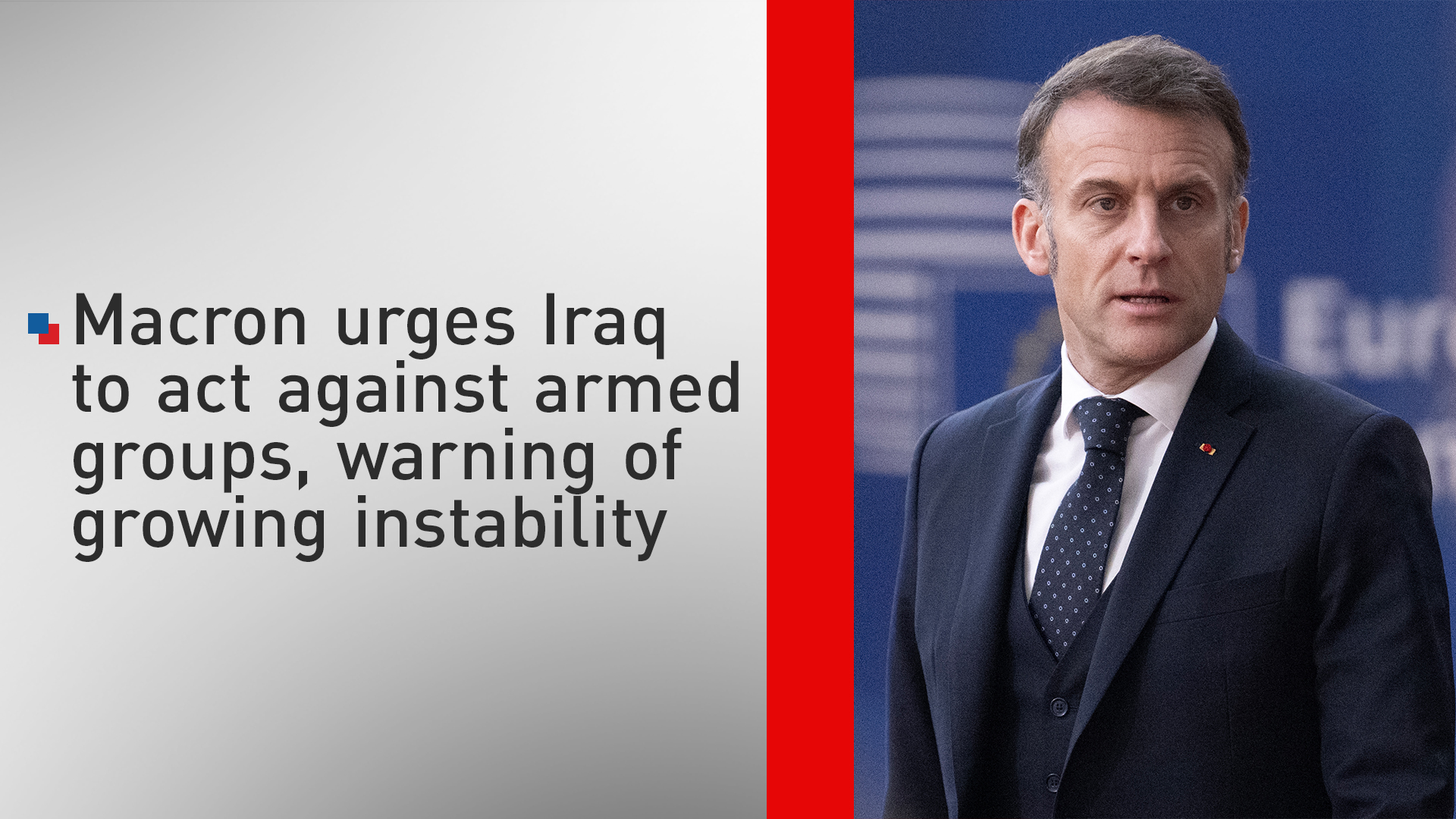
ERBIL (Kurdistan24) — French President Emmanuel Macron on Thursday called on Iraqi authorities to restrain armed groups from targeting diplomatic missions, while also urging an immediate moratorium on strikes against energy infrastructure, as regional tensions continue to escalate.
Speaking on the sidelines of the European summit in Brussels, Macron said France had clearly asked Iraq to confront armed groups that target French interests, warning that such actions undermine Iraq’s stability and sovereignty.
His remarks came as security tensions deepen across the region, alongside escalating attacks on critical energy facilities in Iran and Qatar.
Macron said he had recently held discussions with Iraqi Prime Minister Mohammed Shia al-Sudani and Kurdistan Region President Nechirvan Barzani, reaffirming France’s support for Iraq’s sovereignty and territorial integrity.
He stressed that Baghdad must take responsibility for curbing armed factions, adding that Iraq should not be drawn into the broader regional conflict.
France, he noted, has been engaged in Iraq since 2015 as part of efforts to combat ISIS and continues to take pride in its commitment to supporting the country’s stability. However, Macron warned that attacks by armed groups on foreign personnel and interests are not in Iraq’s interest and risk further destabilizing the country.
The French president also emphasized the need to protect Iraq’s sovereignty during wartime and called on all Iraqi actors to act responsibly. He stated that armed groups “have blood on their hands,” referring to attacks that have targeted French forces and personnel in the Kurdistan Region.
In parallel, Macron revealed he had spoken with Qatar’s Emir Sheikh Tamim bin Hamad Al Thani and U.S. President Donald Trump following strikes on key gas facilities in Iran and Qatar.
He called for “an immediate moratorium on strikes targeting civilian infrastructure, particularly energy and water supply facilities,” stressing the need to protect civilians and global energy security.
The appeal came after Iran targeted Qatar’s Ras Laffan industrial complex—part of the world’s largest gas field shared between the two countries—in retaliation for earlier strikes on its own facilities.
The escalation has raised concerns about disruptions to global energy markets, particularly as the Strait of Hormuz remains a critical chokepoint.
Macron underscored the importance of keeping the Strait of Hormuz open, saying efforts are ongoing to shield global energy markets from further crisis.
Iran’s Foreign Minister Abbas Araghchi, however, criticized Macron, accusing him of double standards for failing to condemn earlier U.S. and Israeli strikes on Iran while reacting strongly to Tehran’s retaliation.
In a post on X, Araghchi said Macron “has not uttered one word of condemnation of the Israel-U.S. war on Iran,” adding that his concern only followed Iran’s response.
The conflict, which began on February 28 with coordinated U.S. and Israeli strikes on Iran, has since expanded across the region, with Tehran warning it would target energy infrastructure if its own facilities are attacked—raising the stakes for both regional stability and global energy security.