NATO Relocates Iraq Mission Staff to Europe Amid Regional Conflict
NATO said it had fully relocated its Iraq mission personnel to Europe due to the regional conflict, while maintaining ongoing cooperation with Iraqi authorities.
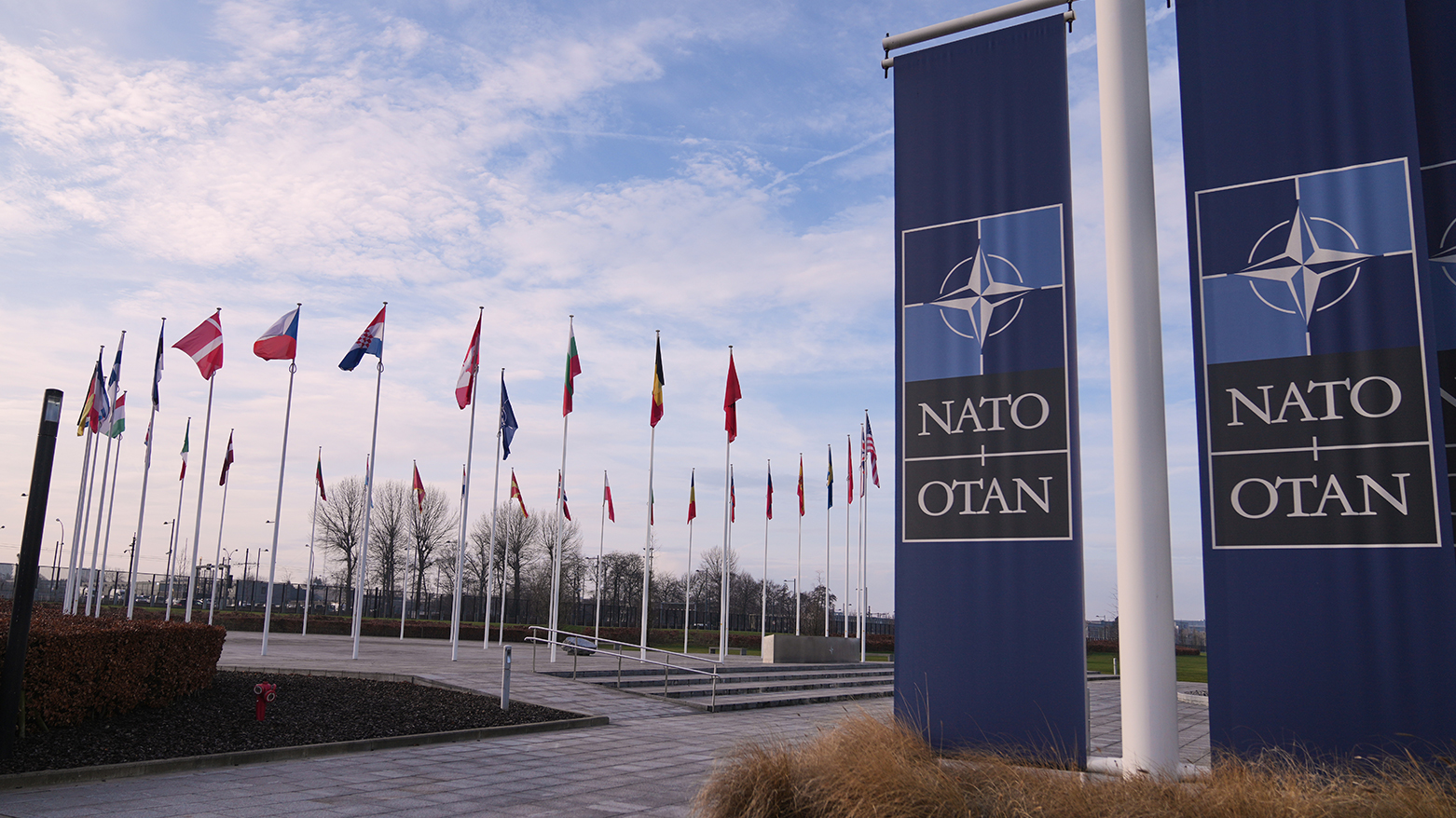
ERBIL (Kurdistan24) - NATO has relocated all personnel from its non-combat mission in Iraq to Europe due to the ongoing Middle East war, the alliance said on Friday, confirming that the final staff members departed the country as security concerns escalated.
The move follows weeks of heightened tensions linked to the conflict involving the United States, Israel, and Iran, during which locations in Baghdad’s Green Zone, including areas near the U.S. embassy, have been targeted multiple times. The NATO mission had been stationed at an Iraqi military base within the Green Zone.
In a statement issued by NATO’s European command, the alliance said that “NATO Mission Iraq has adjusted its posture, safely relocating all its personnel from the Middle East to Europe.” The relocation marks a temporary shift in operations for the mission, which consists of several hundred personnel.
NATO Mission Iraq, established in 2018, provides advisory, training, and assistance support to Iraqi security forces engaged in counter-jihadist operations, with a particular focus on preventing the resurgence of the Islamic State militant group. Despite the relocation, NATO officials said the mission will continue to function from the alliance’s regional command in Naples, Italy.
General Alexus Grynkewich, NATO’s Supreme Allied Commander Europe, expressed appreciation for the cooperation of Iraqi authorities and partner nations in facilitating the withdrawal. “I would also like to thank the dedicated men and women of NATO Mission Iraq, who continued their mission throughout this period. They are true professionals,” he said in a statement.
Earlier in the day, NATO had indicated that it was “adjusting” its mission posture in Iraq, without initially confirming a full relocation. A French military source later confirmed that the redeployment was temporary and linked directly to the evolving security environment in the region.
“A decision was taken to relocate them in line with NATO’s posture regarding non-combat missions,” the French source told AFP. “Given the current threat environment, it is less relevant to keep them in place.”
Alliance spokesperson Allison Hart emphasized that NATO’s engagement with Iraq would continue despite the relocation. “NATO and Iraq’s political dialogue and practical cooperation, including through NATO Mission Iraq, will continue,” she said, underscoring that the operational shift does not signal a termination of the mission.
According to NATO’s official information, the mission includes personnel from member states as well as partner countries such as Austria and Australia. It has been led since May 2025 by French General Christophe Hintzy.
An Iraqi security official told AFP that the relocation had been carried out in coordination with the Iraqi government and described the move as a “temporary withdrawal” necessitated by current regional conditions. The official added that there had been “no disagreement” between NATO and Baghdad over the decision.
The redeployment reflects broader concerns about the safety of international personnel in Iraq amid the ongoing conflict, which has raised the risk of further attacks in sensitive areas such as the Green Zone. NATO’s presence in Iraq has remained non-combat in nature, focusing on institutional capacity-building rather than direct military engagement.
The alliance’s decision aligns with its stated policy of adapting mission posture in response to changing security dynamics, particularly for non-combat operations. Officials indicated that relocating personnel allows the mission to continue its work while reducing exposure to immediate threats on the ground.
NATO confirmed that operations will continue from Europe, ensuring continuity in advisory and coordination roles with Iraqi counterparts. The relocation is framed as a precautionary measure rather than a strategic withdrawal from Iraq.