Iran Denies Direct Negotiations with U.S. as Military Tensions Continue
Iran confirms receipt of U.S. messages via mediators but denies any direct talks, asserting that military retaliation will follow attacks on its energy systems, while the U.S. maintains that discussions with a senior Iranian figure are ongoing during a temporary pause in strikes.
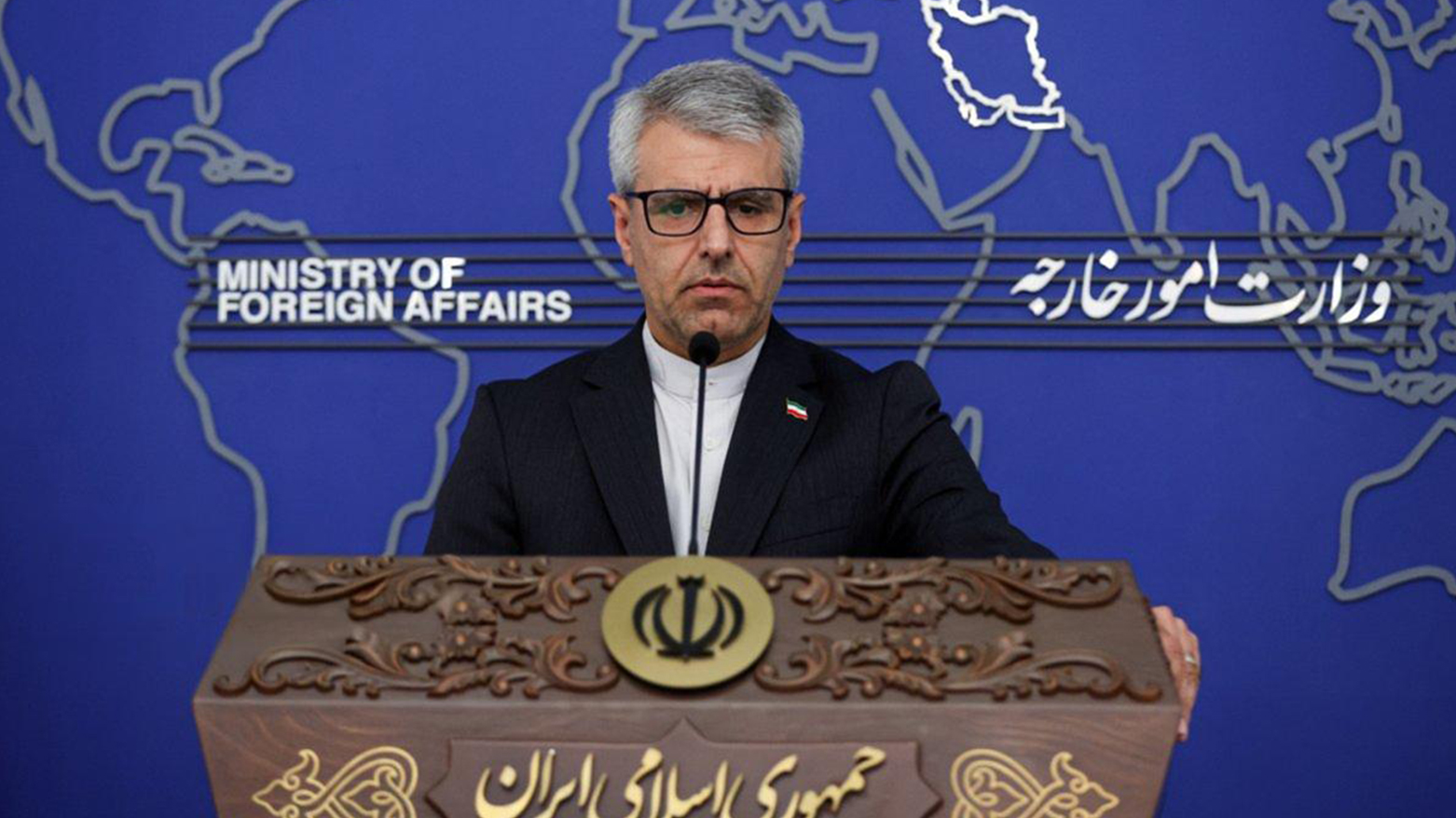
ERBIL (Kurdistan24) - Iran has denied conducting any direct negotiations with the United States, despite messages exchanged via third-party mediators, and reiterated that any attack on the country’s energy infrastructure would be met with an immediate and decisive response, the Iranian Foreign Ministry spokesperson said on Monday, March 23, 2026.
Esmail Baqaei, the spokesperson for the Iranian Ministry of Foreign Affairs, told reporters that Tehran has received messages through “several friendly and allied countries” in which Washington requested negotiations aimed at ending the ongoing conflict. Baqaei emphasized that while the Islamic Republic responded to those communications “in an appropriate manner and within the framework of its fundamental positions,” no formal dialogue or direct talks with the United States have taken place.
“We have not conducted any kind of dialogue or negotiation with the United States of America,” Baqaei stated. He added that Iran has issued a stern warning regarding potential attacks on its energy and electricity infrastructure, declaring that any such action would prompt a “decisive, immediate, and effective response from our armed forces.” Baqaei reaffirmed that Tehran’s stance on the Strait of Hormuz and the conditions previously outlined for ending the war remain unchanged.
The Iranian statement contrasts sharply with remarks by U.S. President Donald Trump on Monday. Speaking to reporters before boarding Air Force One, Trump confirmed that discussions with an unnamed senior Iranian official had begun on Sunday and continued into the evening. He characterized the official as “a top person” and “the most respected and the leader,” while clarifying that the Supreme Leader of Iran was not personally involved in the talks.
Trump indicated that a five-day delay on U.S. military strikes against Iran would remain in effect as part of a structured pause contingent on reaching a settlement. “We’re doing a five-day period. We’ll see how that goes. And if it goes well, we’re going to end up with settling this. Otherwise, we’ll just keep bombing our little hearts,” he told reporters. The President noted logistical constraints preventing in-person meetings and said further communication would likely occur by telephone.
The U.S. President also detailed his perception of the current Iranian leadership structure, noting significant attrition among senior officials. “You know, it’s a little tough. They’ve wiped out — they’ve wiped out everybody,” he said. He further asserted that numerous points of agreement have been reached with Iran, particularly regarding nuclear weapons, stating, “They’re not going to have a nuclear weapon—that’s number one. That’s number one, two, and three. They will never have a nuclear weapon—they’ve agreed to that.”
Despite the U.S. characterization, Iranian officials maintained that the messages delivered via mediators were not part of formal negotiations. A senior Iranian security official, cited by Tasnim News Agency, stated that “no negotiations with Trump are taking place” and that the postponement of U.S. strikes on Iranian infrastructure was not due to diplomatic progress but rather a response to credible military deterrence. The official added that economic pressures, including risks to U.S. financial markets and bond yields, contributed to Washington’s decision to delay action.
The Iranian representative also warned that disruptions in the Strait of Hormuz and energy markets would continue, describing the situation as a form of “psychological warfare” that would prevent a return to pre-war conditions. “With this method of psychological warfare, neither will the situation in the Strait of Hormuz return to its pre-war state, nor will calm return to the energy markets,” the official said.
The statements from both Tehran and Washington come during the fourth week of the ongoing conflict involving U.S., Israeli, and Iranian forces. U.S. military operations in the region have included the deployment of three warships and approximately 2,500 Marines, while Iran has conducted missile and drone strikes targeting the United Arab Emirates, Saudi Arabia, and southern Israel, causing structural damage and casualties in Arad and Dimona.
Earlier this month, the U.S. issued an ultimatum demanding the full reopening of the Strait of Hormuz within 48 hours and threatened to target Iranian power generation facilities if its conditions were not met. Following these threats, the Department of War was ordered to postpone planned strikes for five days, a pause President Trump attributed to “in depth, detailed, and constructive conversations.”
Baqaei’s comments emphasize Tehran’s position that the exchange of messages through mediators does not constitute negotiation. He insisted that Iran’s fundamental conditions for ending hostilities, including its security interests and control over the Strait of Hormuz, remain in effect. The spokesperson underscored that any offensive action against Iran’s energy infrastructure would provoke a direct military response.
The conflicting accounts from Washington and Tehran illustrate a divergence in perception regarding the nature and status of diplomatic communications. While the U.S. administration frames the messaging as part of an effort to reach a settlement, Iranian officials consistently describe the interactions as defensive and procedural, with no formal dialogue taking place.
These developments unfold amid heightened regional military tensions. Iran’s missile and drone activities have targeted U.S. and allied interests, while Israel has faced strikes on southern cities, resulting in infrastructure damage and civilian casualties. The U.S. has responded with deployments and operational measures aimed at both deterring further Iranian actions and protecting its regional facilities.
The discrepancy between U.S. and Iranian statements regarding ongoing contacts reflects the complex dynamics of the conflict and the delicate interplay of military deterrence, economic pressures, and regional strategy. Both sides continue to communicate through indirect channels, though Tehran maintains that no formal negotiation has begun and that its military readiness remains a central factor in shaping U.S. policy decisions.
The situation remains fluid, with both Tehran and Washington maintaining distinct narratives about the nature of contacts, the timing of potential agreements, and the framework for ending hostilities. Iranian authorities continue to emphasize their defense posture and the inviolability of their energy infrastructure, while the U.S. administration signals a conditional pause in operations pending further communication with senior Iranian officials.