Trump Says NATO ‘Was Not There’ During U.S. Operations Against Iran
“We spend hundreds of billions of dollars a year on NATO, hundreds of billions protecting them. And we would have always been there for them. But now, based on their actions, I guess we don’t have to be doing that, do we?” U.S. President Donald Trump said.
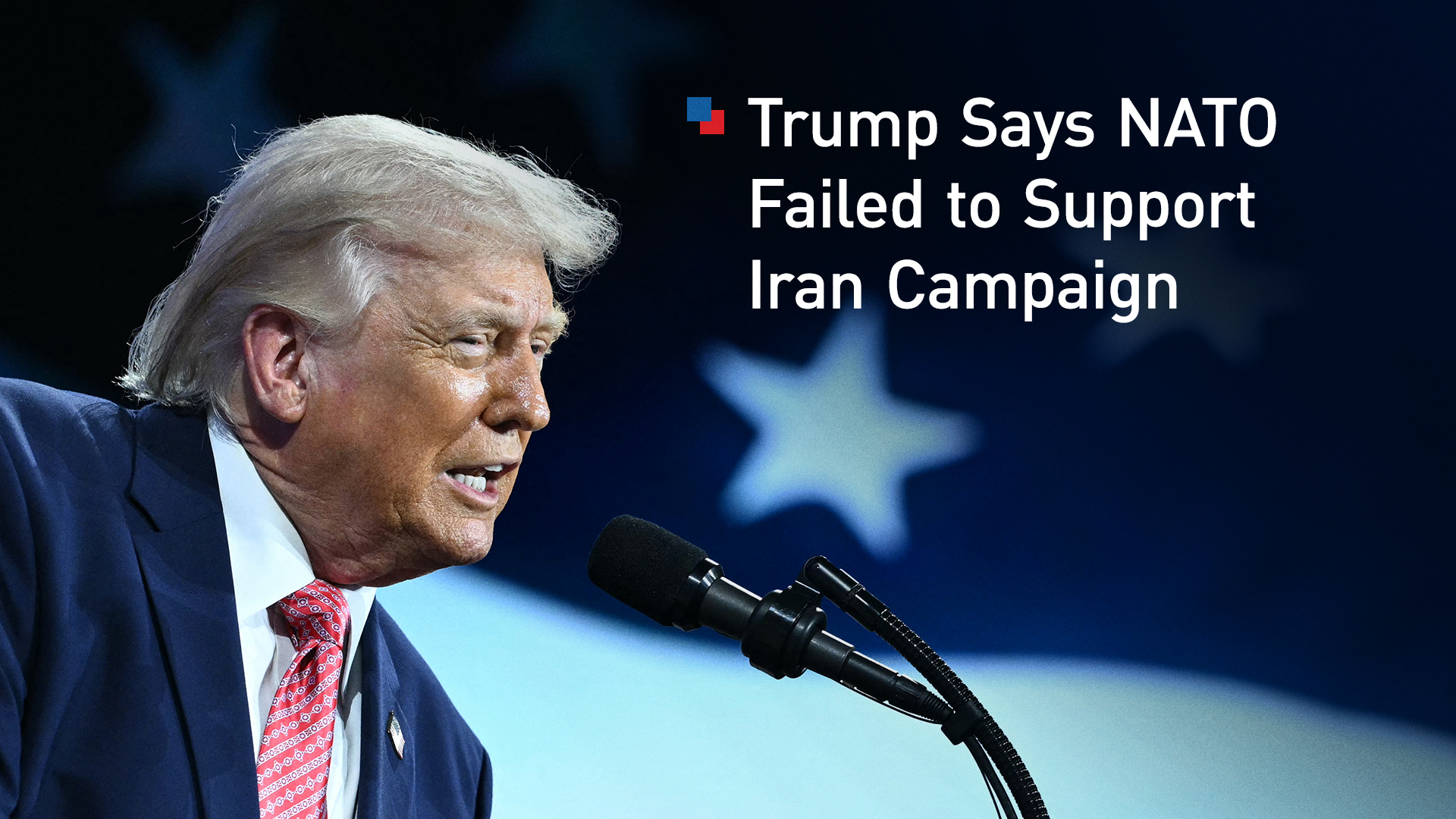
ERBIL (Kurdistan24) - U.S. President Donald Trump on Friday criticized NATO allies for what he described as a lack of support during ongoing U.S. military operations against Iran, stating that member countries “were not there” when assistance was requested.
Speaking at the Future Investment Initiative, Trump said the United States had sought support from NATO partners but did not receive timely commitments, according to remarks delivered at the event. He stated that he had raised the issue directly with several allied leaders, including French President Emmanuel Macron and the British prime minister.
“We’re very disappointed, by the way, with NATO. They didn’t come to our aid,” Trump said during the remarks. He added that while he had approached allies about contributing military support, their responses indicated assistance would come only after the conclusion of hostilities.
Trump said he had asked Macron whether France would support U.S. operations, recounting that the French leader responded affirmatively but indicated that assistance would be provided “as soon as the war is over.” Trump said he rejected that timeline, stating he had sought support before the conflict began.
Referring to the United Kingdom, Trump said he had also raised the issue of support with British leadership, noting that discussions included the potential use of aircraft carriers. According to his remarks, British officials indicated that assets might be available “in a month or two” and similarly suggested support would follow the conclusion of the conflict.
“This is NATO, and I’ve always said it’s a paper tiger,” Trump said, adding that the alliance had failed to respond during what he described as a critical moment. He further stated that NATO’s actions reinforced his longstanding view that while the United States contributes extensively to the alliance, reciprocal support is not guaranteed.
Trump also referenced Germany in his remarks, stating that its leadership had indicated the conflict was not within its scope of involvement. He said the German position reflected a broader lack of alignment among NATO members regarding the U.S. military campaign.
“The Chancellor of Germany said, ‘This is not our war. We have nothing to do with it,’” Trump said, adding that the United States has provided support in other conflicts not directly involving its territory.
The president’s comments were delivered in the context of ongoing U.S. military operations targeting Iran, which are being conducted under the authority of U.S. Central Command. The campaign has involved strikes on Iranian military infrastructure and has prompted retaliatory actions by Iranian forces across the region.
According to earlier reporting by CBS News, U.S. officials have confirmed that American forces have sustained casualties during the conflict, including injuries from attacks on regional bases. Iranian strikes have targeted facilities hosting U.S. personnel in Gulf countries, including Saudi Arabia, as part of a broader pattern of retaliation.
Trump said the lack of NATO support during the conflict represented a strategic misstep by the alliance. “I think that NATO made a terrible mistake when they wouldn’t send a small amount of military armament — when they wouldn’t even acknowledge what we were doing for the world and taking on Iran,” he said.
He also stated that the United States has historically borne a significant share of NATO’s defense expenditures. “We spend hundreds of billions of dollars a year on NATO, hundreds of billions protecting them. And we would have always been there for them. But now, based on their actions, I guess we don’t have to be doing that, do we?” Trump said, adding that the alliance’s response could influence future U.S. commitments.
Despite his criticism, Trump did not announce any formal policy changes regarding NATO or U.S. participation in the alliance. His remarks focused on past interactions and his assessment of allied responses during the current conflict.
In response to a reporter’s question about leadership decisions, Trump said that a lack of unity among allied nations represented the “biggest mistake” being made. “Not sticking together,” he said, describing coordination among allies as a central issue.
Trump also addressed broader risks associated with military conflict, stating that while he did not initially consider the campaign against Iran to be highly risky, uncertainty remains inherent in wartime conditions. “War is always a risk,” he said, adding that “a lot of strange things happen in war.”
He emphasized the unpredictability of conflict outcomes, noting that wars can produce unexpected results regardless of initial expectations. “You think a country is going to wipe somebody out and they end up getting wiped out themselves,” Trump said.
The president also commented on the ongoing war in Ukraine during his remarks, though those comments were separate from his discussion of NATO’s role in the Iran conflict. He described the situation in Ukraine as severe, citing high casualty figures and ongoing hostilities between Russian and Ukrainian forces.
Trump stated that he believed the Ukraine conflict could have been avoided under different leadership, though he did not provide further details regarding specific policy alternatives. He also characterized the relationship between Russian President Vladimir Putin and Ukrainian President Volodymyr Zelensky as marked by “extreme” hostility.
In the same exchange, Trump cited weekly casualty figures, stating that tens of thousands of soldiers had been killed in recent weeks. These figures were presented as part of his broader remarks on the scale of the conflict.
The president’s comments on NATO were delivered as part of a wider discussion on international security and U.S. military engagements. While he reiterated his view that NATO had failed to provide support during the Iran conflict, he did not indicate whether additional requests for assistance had been made or were under consideration.
Separately, U.S. military operations in the region continue alongside diplomatic efforts aimed at reducing tensions. According to the Associated Press, U.S. officials have pursued indirect negotiations with Iran through intermediaries, including proposals related to ceasefire arrangements and maritime security.
Iranian officials have responded with their own conditions, and no agreement has been reached, according to the same report. International actors, including Pakistan and Türkiye, have been involved in facilitating discussions between the parties.
The conflict has also affected regional infrastructure and economic activity, particularly in maritime routes such as the Strait of Hormuz. According to reporting by the Associated Press, Iran has allowed certain humanitarian and agricultural shipments to pass through the strait following a request from the United Nations.
At the same time, disruptions to shipping traffic have contributed to broader economic pressures, including increased energy prices and supply chain concerns, the report said.
The president’s remarks did not address specific operational details of U.S. military activities or provide new information regarding troop deployments. Instead, they focused on his assessment of allied responses and the broader implications for international cooperation.
Officials have not publicly responded to Trump’s statements regarding NATO’s role during the conflict. No official statements from NATO leadership were included in the remarks or accompanying materials.
The comments come as the United States continues to coordinate military and diplomatic efforts across multiple theaters, with ongoing operations targeting Iranian capabilities and continued engagement with regional and international partners.