President Barzani Extends Akitu Greetings, Wishes Peace and Prosperity Worldwide
The message underscores unity and religious freedom as Chaldean, Syriac, and Assyrian communities in the Kurdistan Region mark the ancient New Year festival
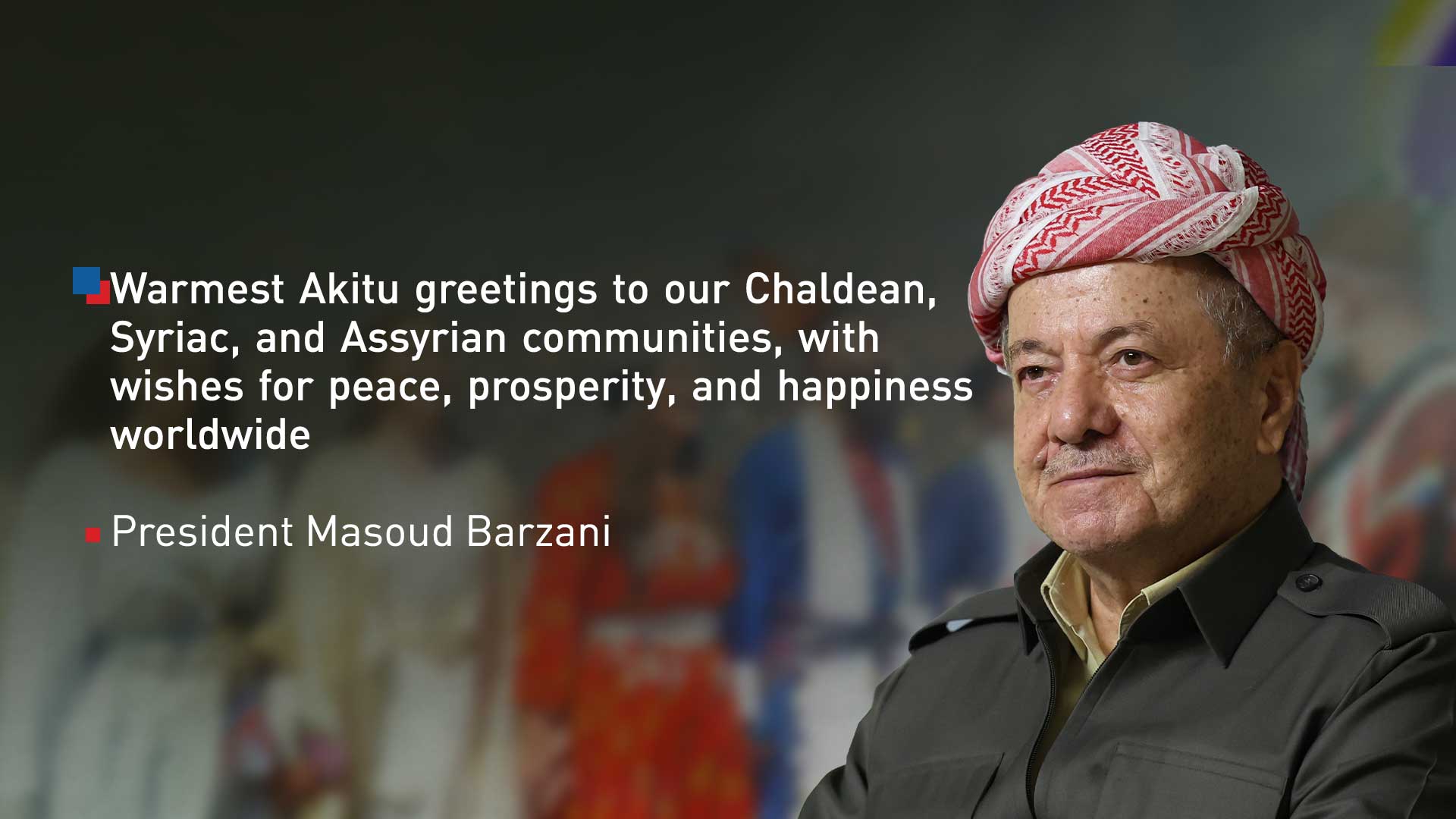
ERBIL (Kurdistan24) — President Masoud Barzani on Wednesday extended his congratulations to the Chaldean, Syriac, and Assyrian communities on the occasion of Akitu, emphasizing hopes for peace and stability amid ongoing regional turmoil.
“In the name of God, the Most Gracious, the Most Merciful… I extend my warmest congratulations to our Chaldean, Syriac, and Assyrian brothers and sisters in Kurdistan, Iraq, and across the world, wishing them joy and happiness,” Barzani said in an official statement marking the annual festival.
He added that he hoped “war and turmoil remain far from our region, and that peace, prosperity, and happiness prevail throughout the entire world.”
Akitu, celebrated on April 1, is one of the oldest known festivals, dating back thousands of years to ancient Mesopotamian civilizations. For Assyrian, Chaldean, and Syriac communities, it represents renewal, cultural identity, and continuity.
In the Kurdistan Region, the festival is observed with public gatherings, traditional clothing, music, and parades, particularly in areas with significant Christian populations such as Ankawa.
President Barzani’s message reflects a broader legacy of promoting peaceful coexistence and religious freedom in the Kurdistan Region. Under his leadership, the Region has cultivated a reputation as a safe haven for diverse ethnic and religious communities, including Christians, Yazidis, Turkmen, and others, especially during periods of instability in other parts of Iraq.
The Kurdistan Region’s governance model has emphasized protection of minority rights, freedom of worship, and cultural expression. Churches, mosques, and other places of worship operate openly, and religious festivals such as Akitu, Christmas, Eid, and Yazidi celebrations are publicly recognized and supported.
This environment has been particularly significant following the rise of extremist violence in Iraq over the past decade, when many displaced families from the Nineveh Plains and other areas sought refuge in the Kurdistan Region.
Local authorities, with backing from the region's leadership, facilitated humanitarian assistance and later reconstruction efforts to help communities return to their homes. Observers often point to this approach as a key factor in maintaining relative stability and social cohesion in the Region.
The emphasis on coexistence has not only strengthened internal unity but also positioned the Kurdistan Region as a model of pluralism in an area frequently affected by sectarian divisions.
Barzani’s Akitu message, therefore, carries both cultural and political significance, reaffirming the Kurdistan Region’s commitment to diversity, mutual respect, and peaceful coexistence at a time when much of the broader region continues to face conflict and uncertainty.