Shehbaz Sharif: Iran and US Along with Allies Reach Ceasefire Deal
Prime Minister Shehbaz Sharif declared that Iran, the United States, and their allies have agreed to an immediate ceasefire across all fronts, including Lebanon, inviting both delegations to Islamabad on April 10 for final negotiations toward a conclusive agreement.
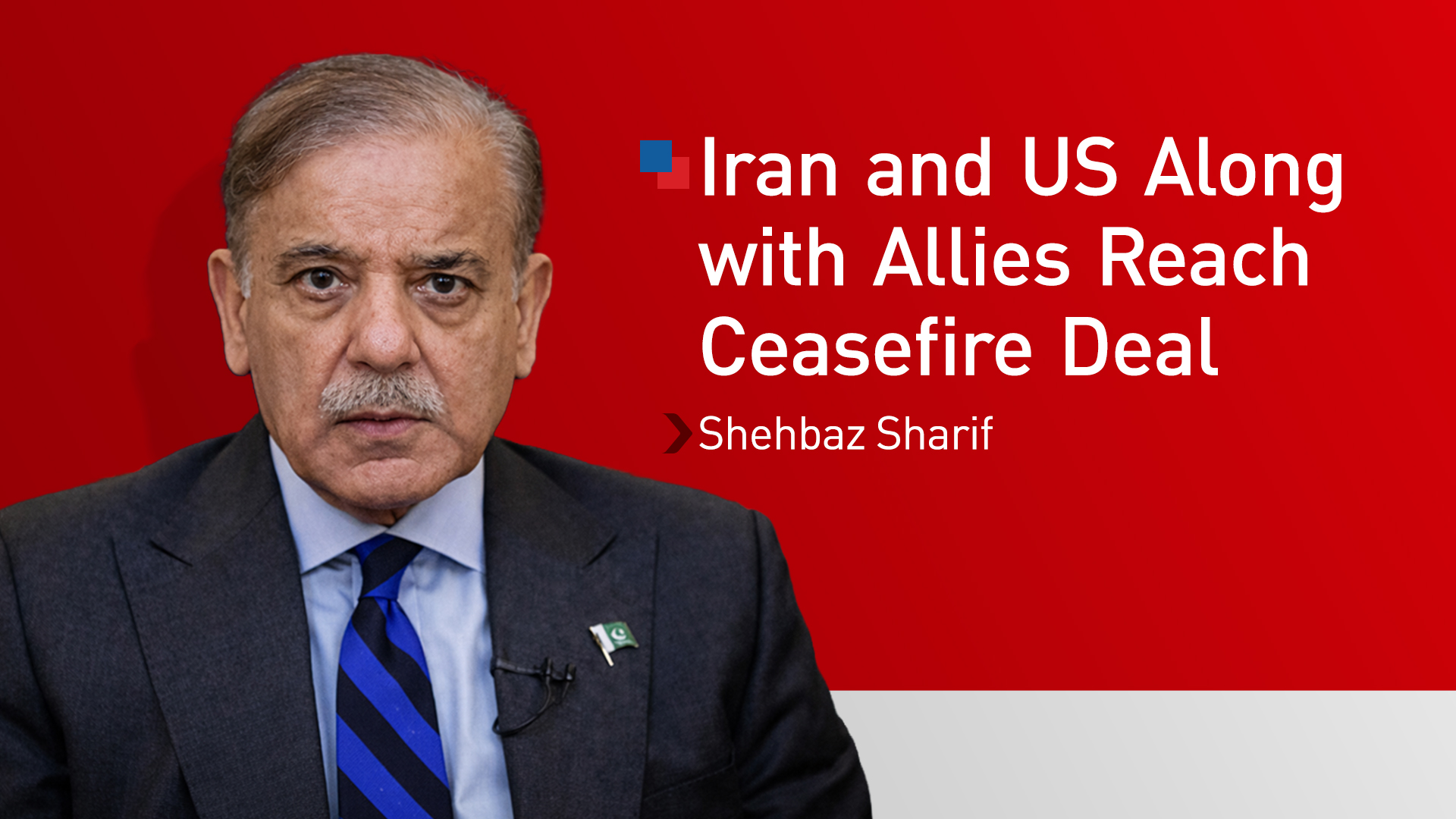
ERBIL (Kurdistan24) - After weeks of escalating strikes, midnight deadlines, and the spectra of total war, a ceasefire has been declared. Pakistan's Prime Minister Shehbaz Sharif announced on Wednesday that Iran and the United States, along with their allies, have agreed to an immediate halt to hostilities across all fronts — including Lebanon.
In a statement posted on his official X account, Sharif wrote: "With the greatest humility, I am pleased to announce that the Islamic Republic of Iran and the United States of America, along with their allies, have agreed to an immediate ceasefire everywhere including Lebanon and elsewhere, EFFECTIVE IMMEDIATELY."
Sharif extended his gratitude to the leadership of both countries and invited their delegations to Islamabad on Friday, April 10, 2026, to continue negotiations toward a conclusive agreement that would settle all outstanding disputes. "Both parties have displayed remarkable wisdom and understanding and have remained constructively engaged in furthering the cause of peace and stability," he said, expressing hope that the Islamabad Talks would achieve sustainable peace.
Trump suspends strikes, cites military objectives met
The announcement followed a declaration by US President Donald Trump, who stated that he had agreed to suspend planned bombing and attacks on Iran for a period of two weeks, following conversations with Sharif and Pakistan's Chief of Army Staff Field Marshal Asim Munir.
Trump tied the suspension to Iran's agreement to the "complete, immediate, and safe opening of the Strait of Hormuz," describing the arrangement as a "double-sided ceasefire." In a statement on his Truth Social account, Trump said: "Based on conversations with Prime Minister Shehbaz Sharif and Field Marshal Asim Munir, of Pakistan, and wherein they requested that I hold off the destructive force being sent tonight to Iran, and subject to the Islamic Republic of Iran agreeing to the COMPLETE, IMMEDIATE, and SAFE OPENING of the Strait of Hormuz, I agree to suspend the bombing and attack of Iran for a period of two weeks."
Trump stated that the US had already met and exceeded all military objectives and was far advanced in negotiations toward a long-term peace agreement with Iran. He revealed that Washington had received a 10-point proposal from Tehran, describing it as "a workable basis on which to negotiate," and said that almost all points of contention had been agreed upon, with the two-week window allowing the agreement to be finalized. "On behalf of the United States of America, as President, and also representing the Countries of the Middle East, it is an Honor to have this Long-term problem close to resolution," Trump said.
Iran reopens Strait of Hormuz, halts military operations
Iranian Foreign Minister Abbas Araghchi confirmed on Wednesday that Iran had agreed to halt military operations and reopen the Strait of Hormuz for two weeks. Araghchi said the decision came as a positive response to Pakistan's mediation and to Trump's formal acceptance of the general framework of Iran's 10-point proposal as a basis for negotiations. Iran has also shown readiness to engage with the US's 15-point proposal, signaling the emergence of a shared negotiating framework.
Araghchi expressed deep appreciation to Sharif and Field Marshal Munir, crediting Pakistan's persistent efforts with bringing the two sides closer. Representing Iran's Supreme National Security Council, he outlined the conditions tied to the ceasefire: "If attacks against Iran are halted, our powerful armed forces will suspend their defensive operations." He confirmed that safe passage through the Strait of Hormuz would be ensured for two weeks, though he stressed the process would be carried out in full coordination with Iranian armed forces and in accordance with technical limitations arising from the wartime situation.
Islamabad talks on the horizon
With the ceasefire now in effect and both sides having accepted overlapping negotiating frameworks, attention turns to Islamabad, where delegations from Iran and the United States are expected to convene on April 10. Pakistan, which had only days earlier formally requested a two-week extension of Trump's strike deadline and urged Tehran to reopen the strait as a goodwill gesture, has emerged as the pivotal mediating force that brought the two sides back from the edge.