Vance Flies to Islamabad as US-Iran Nuclear Talks Hang in the Balance
The US vice president arrived in the Pakistani capital Friday as a two-week ceasefire between Washington, Israel, and Tehran showed early signs of strain — and Tehran's delegation had yet to confirm its arrival.
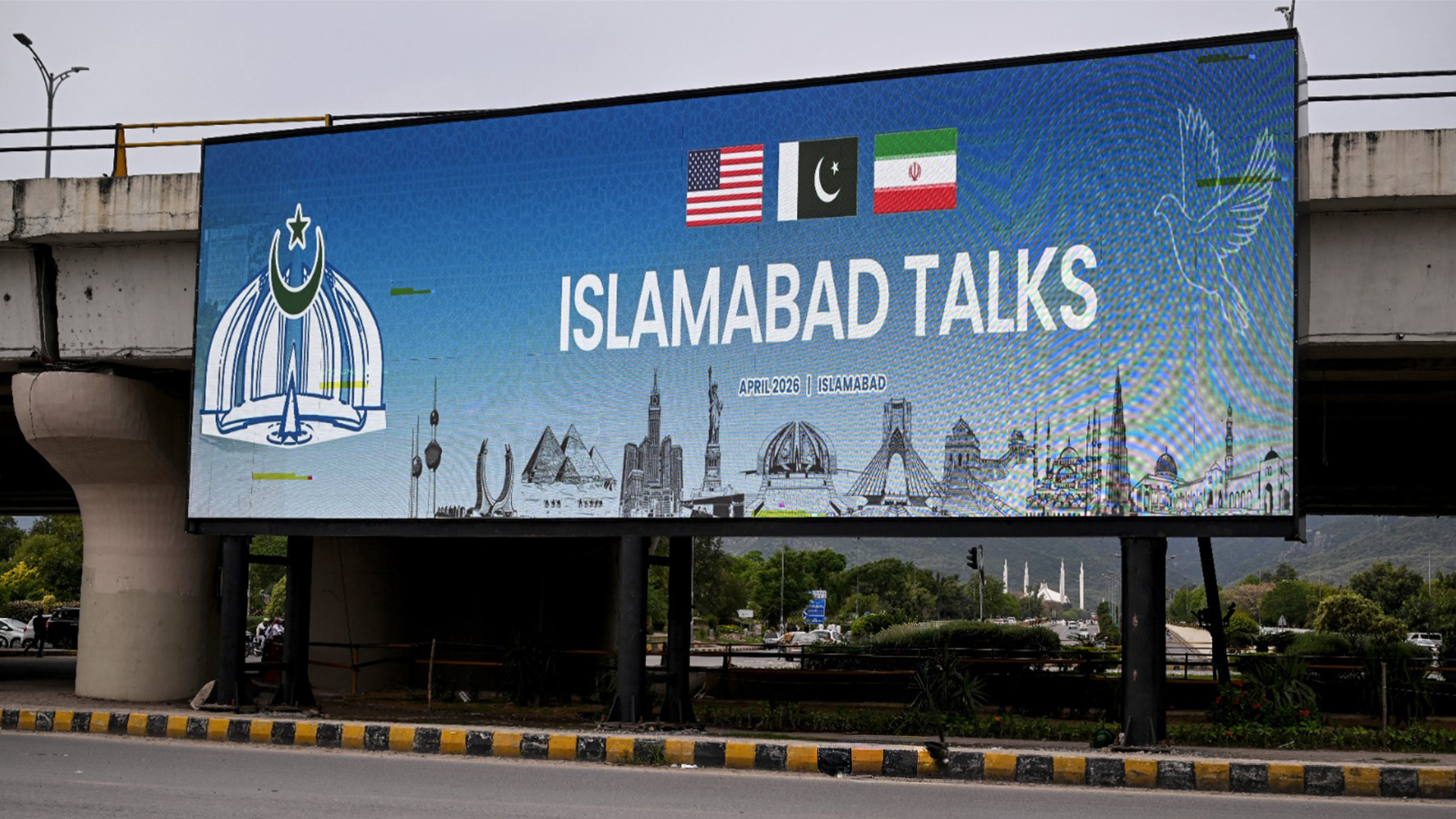
ERBIL (Kurdistan24) - With rockets still arcing across the Lebanese sky and the Strait of Hormuz barely breathing again, US Vice President JD Vance boarded a plane on Friday and flew toward what may be the most consequential diplomatic negotiations of the year.
Departing from Andrews Air Force Base outside Washington, Vance told reporters he would "try to have positive negotiations" with Iran — though whether Iran would even show up remained, as of Friday, an open question.
A delegation bound for Islamabad — and a warning
Vance traveled to the Pakistani capital alongside Steve Witkoff, President Donald Trump's special envoy, and Jared Kushner, Trump's son-in-law, according to the White House. Islamabad, meanwhile, had transformed into a ghost city — streets emptied under heavy security, Thursday and Friday declared official public holidays, and the Serena Hotel, adjacent to the Foreign Ministry in the fortified Red Zone, already cleared of its guests since Wednesday.
The talks, if they proceed, are expected to follow an indirect format: the two delegations seated in separate rooms, with Pakistani officials shuttling between them — a structure mirroring earlier rounds mediated by Oman.
Yet the very presence of an Iranian delegation remained in dispute. Iran's Tasnim News Agency cited an unnamed source Friday flatly denying that any Iranian negotiating team had arrived in Islamabad. "As long as the United States does not honor its ceasefire commitments in Lebanon, and the Zionist entity continues its attacks, negotiations will be suspended," the source said.
Iranian Foreign Ministry spokesman Ismail Baghaei echoed the condition, stating that holding talks aimed at ending the war depended entirely on Washington respecting its ceasefire obligations "on all fronts, especially in Lebanon."
The two-week ceasefire between Tehran and the US-Israeli side took effect from Tuesday night into Wednesday, following roughly forty days of war that erupted after a US-Israeli strike on Feb. 28. Pakistan brokered the agreement and initially announced it covered all fronts, including Lebanon — a claim both Israel and the United States subsequently denied.
That contradiction now sits at the heart of the diplomatic impasse. Iran has made Lebanon a precondition; Washington and Tel Aviv have refused to accept that framing.
Trump himself sharpened the tension Thursday, accusing Iran of doing "a bad job" on reopening the Strait of Hormuz — a condition embedded in the ceasefire terms. "This is not the deal we have!" he wrote on Truth Social.
Traffic through the strait, a vital corridor for a fifth of the world's oil supply as well as vast quantities of natural gas and fertilizers, remained nearly halted. One non-Iranian tanker — the first since the ceasefire — did pass through Thursday.
And even as negotiators prepared to meet, Iran's atomic energy chief Mohammad Eslami ruled out Thursday any restrictions on uranium enrichment, directly contradicting a central US and Israeli demand expected to feature in the talks.
Lebanon: the front that won't quiet down
While diplomacy inched forward in Islamabad, the front lines around Lebanon showed no sign of cooling. Air raid sirens sounded across Israel — including Tel Aviv — on Friday morning, after rockets were fired from Lebanese territory. Hezbollah claimed a series of missile and drone attacks overnight, including two strikes targeting Israeli soldiers on both sides of the border and assaults on Israeli border towns.
The group also announced Friday that it had struck a naval military base in the Israeli city of Ashdod with "precision rockets," describing the attack as retaliation for Wednesday's Israeli airstrikes on Beirut, which killed more than 300 people.
Lebanese official media reported Friday that eight members of the State Security apparatus were killed in an Israeli strike on the southern city of Nabatieh. The Israeli military, for its part, announced it had "dismantled" more than 4,300 Hezbollah positions since the war began more than a month ago.
Arab and European states are pressing Israel to halt further strikes on the Lebanese capital, a Western diplomat told AFP.
In Kuwait, air defenses were activated Friday to intercept drones targeting vital installations — the first such incident in the Gulf since the ceasefire took effect. Iran's Revolutionary Guard, however, stated firmly Friday that it had launched no rockets since the truce entered into force.
Separate negotiations between Israel and Lebanon are expected to be held in Washington at the State Department next week, a US official said Thursday. Israeli Prime Minister Benjamin Netanyahu announced he had ordered the start of "direct negotiations" with Lebanon — though a Lebanese government official indicated Beirut wants a ceasefire before any talks begin.
Hezbollah Secretary-General Naim Qassem urged Lebanese officials Friday to stop offering Israel "free concessions" ahead of the anticipated negotiations.
The United Nations expressed deep concern over the continued Israeli strikes on Lebanon, while the World Food Program warned of rapidly accelerating food insecurity amid the ongoing conflict.
In Tehran, ordinary Iranians watched the diplomatic choreography with skepticism. "I don't think this temporary agreement and these negotiations will last even a single week," said Amir, an artist based in the city, speaking to AFP.
With Vance in the air and Iran's position still officially unconfirmed, the next few hours in Islamabad may determine whether the ceasefire holds — or whether forty days of war simply become the prelude to something longer.