Britain To Send Hundreds of Missiles to the Middle East as US Reaffirms NATO Commitment
UK Defense Secretary Healey confirmed Friday that Britain will send hundreds of missiles to the Middle East within weeks, while the White House revealed a contingency plan exists to secure the Strait of Hormuz if Iran talks fail.
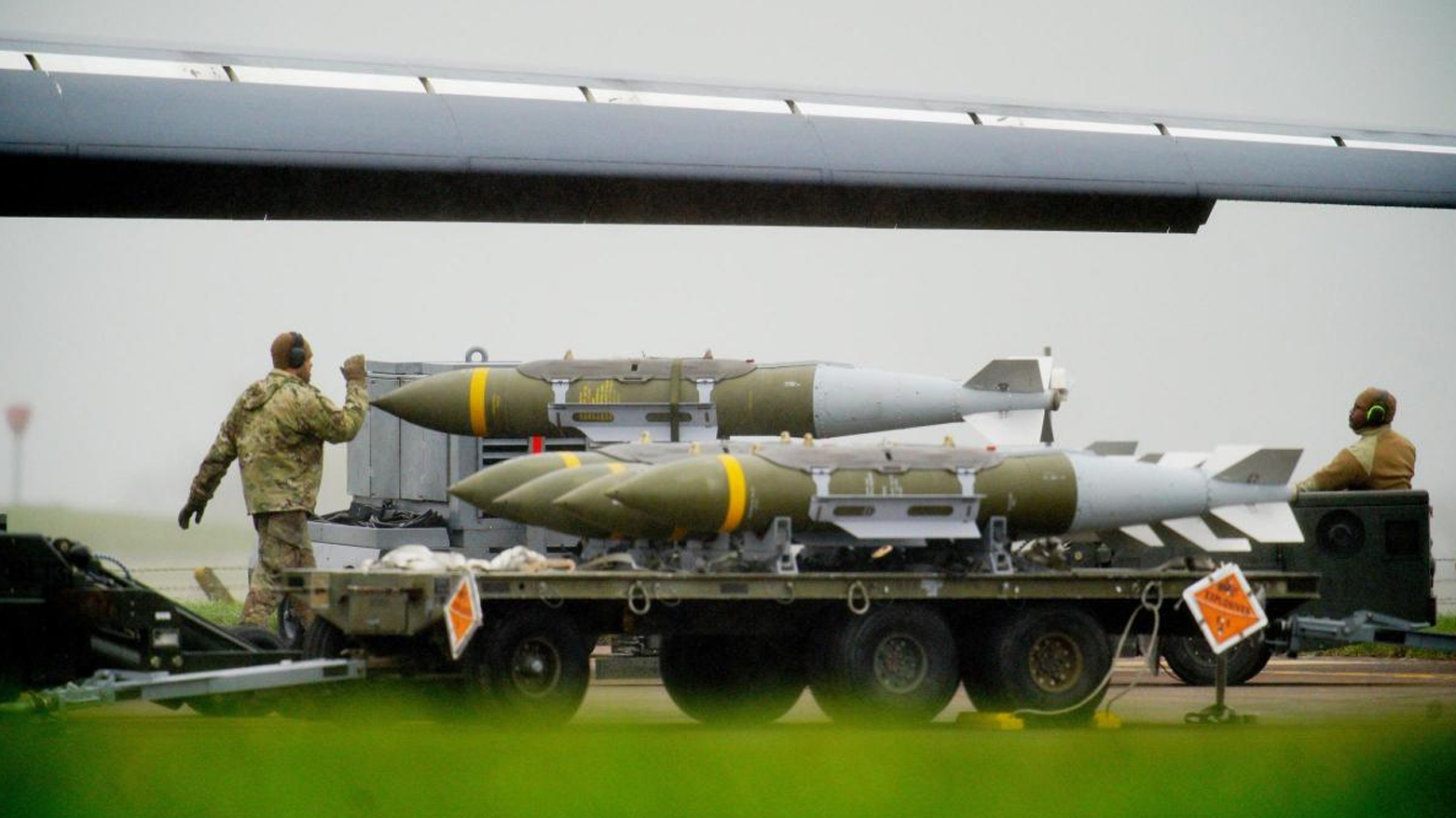
ERBIL (Kurdistan24) - From the floor of the London defense Conference on Friday, Britain's defense secretary delivered a message that was equal parts military commitment and political reassurance: hundreds of missiles are heading to the Middle East, and NATO — despite the noise — is not falling apart.
John Healey told the conference that the United Kingdom will, within the coming weeks, supply hundreds of defensive missiles and missile launch platforms to its forces and allies operating in the Middle East. The announcement came against a backdrop of escalating regional tensions and growing anxiety within the alliance about Washington's long-term commitments.
Washington and NATO: still committed, but Europe must do more
Healey moved to quell speculation triggered by a string of media reports suggesting US President Donald Trump had been exploring the possibility of withdrawing some American forces from Europe. "The United States remains committed to staying within NATO," he said, emphasizing Washington's continued and significant role within the alliance.
At the same time, Healey was direct about the need for change. He argued that while Washington's relationship with NATO is built on mutual benefit and substantial contribution, European nations must take on a larger and more effective role within the alliance. "We need to make greater efforts," he said. "We are working now and will continue at the European level to strengthen our defense capabilities" — a signal, he made clear, of Europe's broader push to reduce its complete military dependence on the United States.
His remarks came in the wake of Trump's repeated criticisms of NATO member states during the war against Iran, including a pointed declaration that NATO now resembled "a paper tiger" — a signal that the alliance no longer held its former value in Trump's eyes. The refusal of NATO member states to join the war against Iran has further strained transatlantic relations, with Trump warning that those countries "will see what happens in the future."
White House: a contingency plan for Hormuz
In a parallel development Friday, the White House confirmed that the United States has a contingency plan for the Strait of Hormuz in the event that negotiations with Iran collapse. A White House statement indicated that Washington has prepared for all scenarios and that, should the Islamabad talks fail, an alternative plan to secure the strait is in place.
The statement also noted that the reopening of the Strait of Hormuz — a waterway critical to the movement of a fifth of the world's oil supply — has already produced a positive shift in global energy markets. Before the US-Iran ceasefire was announced, Iran's Revolutionary Guard had closed the strait to oil tankers, triggering a sharp rise in fuel prices on world markets.
The ceasefire between Washington and Tehran, which brought a 39-day war to a halt in the early hours of Wednesday, April 8, 2026, was announced by President Trump and is set to hold for two weeks. Under its terms, both sides agreed to conditions, with formal negotiations scheduled to begin Saturday, April 11, 2026, in the Pakistani capital, Islamabad.
Whether those talks will proceed — and whether the strait will remain open — now depends on what happens next between Washington, Tehran, and a region that has yet to catch its breath.