Lebanon Pushes Forward with Israel Talks Despite Hezbollah Opposition
Second round in Washington set for Thursday as ceasefire strains under continued violence
ERBIL (Kurdistan24) — Lebanon's President Joseph Aoun said late Monday that planned negotiations with Israel aim to end hostilities and the "occupation" of southern Lebanon, even as Hezbollah and its supporters strongly oppose the talks.
The Iran-backed group has sharply criticized the Lebanese government’s decision to proceed with negotiations, which are set to enter a second round on Thursday in Washington, D.C.
A U.S. State Department official confirmed that the talks will involve the two countries’ ambassadors, following a first round of direct engagement on April 14—the first such talks in decades.
After the initial meeting, Donald Trump announced a 10-day truce, pausing more than six weeks of fighting between Hezbollah and Israel, a major front in the broader Middle East conflict.
Hezbollah lawmaker Hassan Fadlallah said it would be in Lebanon’s interest to withdraw from the negotiations, while still supporting the continuation of the ceasefire. He warned that direct bilateral talks risk undermining domestic consensus, suggesting that indirect negotiations—potentially mediated by the United States—would be more appropriate.
“Going into direct bilateral negotiations, alone, amid deep Lebanese divisions and internal disagreements, constitutes a threat to internal consensus,” Fadlallah said, adding that regional actors, including Iran, Pakistan, and Saudi Arabia, could provide a broader diplomatic framework.
Aoun, however, defended the talks, stating their goal is to “stop hostilities, end the Israeli occupation of southern regions and deploy the Lebanese army to the internationally recognized borders.”
He stressed that Lebanon is acting independently, declaring: “We are no longer a pawn in anyone’s game.”
Despite the ceasefire, violence has continued. Lebanon’s National News Agency reported an Israeli drone strike in Qaqaiyat al-Jisr on Monday that wounded six people, according to the health ministry. Artillery shelling was also reported in the border town of Hula.
The Israeli military said it had targeted “terrorists” in the Bint Jbeil and Litani areas who allegedly violated the ceasefire, adding that its air force had “eliminated” them.
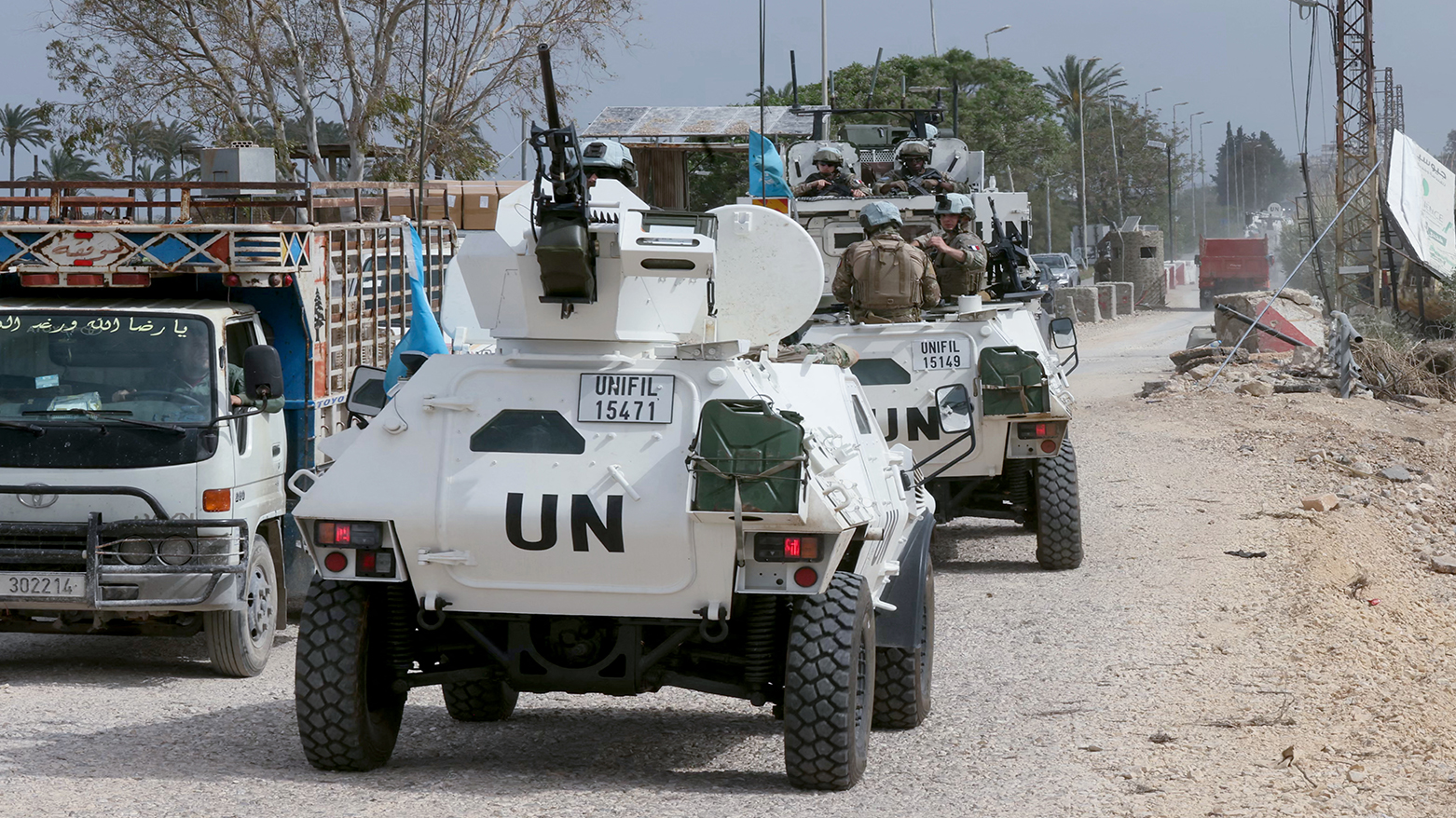
The United Nations Security Council on Monday condemned the killing of a French peacekeeper serving with the United Nations Interim Force in Lebanon (UNIFIL), who was killed in an ambush over the weekend. The Council reaffirmed its full support for the mission.
The killing of the French soldier marks the second French fatality linked to the broader regional conflict in recent weeks, following the death of another serviceman in the Kurdistan Region in a drone attack, which French officials attributed to Iran-backed Iraqi militias amid escalating hostilities linked to the wider U.S.-Israel-Iran war.
Meanwhile, public anger among Hezbollah members and supporters has also surfaced domestically in Lebanon. In Beirut’s southern suburbs, graffiti denouncing Aoun and Prime Minister Nawaf Salam appeared, rejecting normalization with Israel. Similar criticism has spread across social media, with Hezbollah supporters questioning the legitimacy of the negotiations.
Fadlallah emphasized that any agreement must reflect the sacrifices made during the conflict. “Any outcome of direct negotiations cannot be imposed on the people who made these sacrifices,” he said.
Aoun on Monday appointed former ambassador Simon Karam to lead Lebanon’s delegation. Karam previously became the first Lebanese civilian representative in decades to engage directly with Israeli officials as part of a ceasefire monitoring committee in 2024.
Lebanon, which has no formal diplomatic relations with Israel, now faces what Aoun described as a critical choice between continued war and negotiated stability.
“I have chosen negotiations,” he said. “And I am full of hope that we will be able to save Lebanon.”