Iran FM Set to Return to Islamabad as U.S. Cancels Envoys' Trip
Foreign Minister Abbas Araghchi will resume mediated negotiations in Pakistan on Sunday, following the cancellation of a U.S. delegation's trip and mutual demands regarding the maritime blockades.
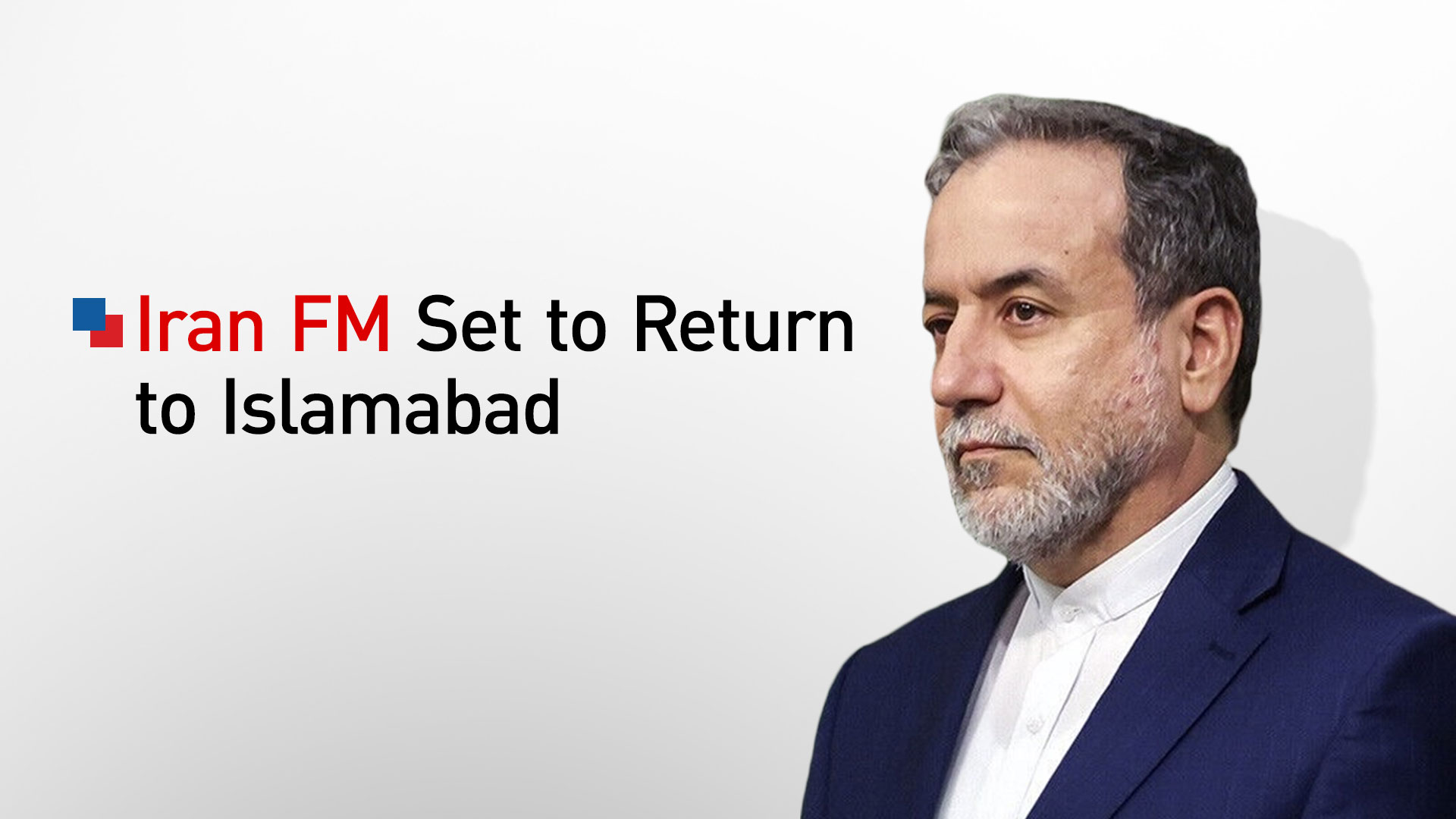
ERBIL (Kurdistan24) - Iranian Foreign Minister Abbas Araghchi is scheduled to return to Pakistan on Sunday to present Tehran's framework for ending the current war, according to Iranian media reports, as President Masoud Pezeshkian declared the country will not participate in negotiations under the duress of a military blockade.
In his fifth telephone conversation with Pakistani Prime Minister Shehbaz Sharif, Pezeshkian emphasized that diplomatic progress remains structurally difficult as long as United States hostile actions continue, the IRIB News Agency reported.
The Iranian president stated that Washington must set aside operational obstacles, specifically the ongoing naval blockade of Iranian ports, to facilitate the groundwork for resolving the conflict.
The renewed diplomatic shuttling follows a chaotic weekend of indirect negotiations in Islamabad that abruptly stalled when U.S. President Donald Trump canceled his envoys' planned trip.
The developments underline the entrenched friction between Washington and Tehran two months into a war that has disrupted global energy markets and severely damaged regional infrastructure.
While the U.S. demands a comprehensive agreement that includes lifting the closure of the Strait of Hormuz, Iranian officials insist that all U.S. military blockades must be lifted before constructive dialogue can occur.
Diplomatic Shuttling and Delegation Consultations
Araghchi's anticipated return to Pakistan on Sunday follows an initial round of key meetings in Islamabad.
According to Iranian media, the foreign minister was originally scheduled to depart for Russia following a stopover in Oman. However, the diplomatic itinerary was altered to allow Araghchi to return to Pakistan to convey Iran's perspective on ending the war to Pakistani officials, who are acting as intermediaries.
During his initial visit to Islamabad on Friday and Saturday, Araghchi met with Prime Minister Shehbaz Sharif, Army Chief Field Marshal Asim Munir, Foreign Minister Ishaq Dar, and Interior Minister Mohsin Naqvi.
Araghchi stated on social media that he shared Iran's position regarding a workable framework to permanently end the war, noting he has "yet to see if the U.S. is truly serious about diplomacy."
To coordinate the negotiating posture, an Iranian delegation accompanying Araghchi returned to Tehran on Saturday to conduct consultations and receive instructions regarding the terms for ending the war.
According to Iranian media, this delegation is expected to return from Tehran to Islamabad to join Araghchi for the Sunday talks.
Presidential Demands on the Blockade
The Iranian leadership has established strict preconditions for the continuation of the Pakistani-led mediation.
According to IRIB News Agency, Pezeshkian utilized his call with Prime Minister Sharif to reiterate that Iran will not be coerced into an imposed negotiation. Pezeshkian noted that rebuilding trust is contingent upon the cessation of U.S. operational pressures.
Prime Minister Sharif described the telephone discussion as a "warm and constructive" exchange regarding the evolving regional situation.
Sharif affirmed that Pakistan, supported by international partners, remains committed to serving as an honest and sincere facilitator to advance durable peace.
US Envoys Cancel Islamabad Trip
The diplomatic process fractured on Saturday when President Trump instructed his negotiating team, including Special Envoy Steve Witkoff and senior advisor Jared Kushner, to abort their scheduled 18-hour flight to Pakistan.
The envoys had been expected to conduct indirect talks to break the diplomatic stalemate and build momentum toward a ceasefire deal.
Trump told reporters and media outlets that he scrapped the visit after being unimpressed with Tehran's initial negotiating position.
The U.S. president stated he saw no point in sending representatives to "sit around talking about nothing," emphasizing that the U.S. holds "all the cards" and that Iranian officials can communicate via telephone.
However, Trump revealed that shortly after he canceled the envoys' trip, the Iranian delegation submitted a revised proposal.
"They gave us a paper that should have been better and interestingly the minute I cancelled it, within 10 minutes, we got a new paper that was much better," Trump said, adding that while they "offered a lot," it was still insufficient.
The U.S. conditions for a deal remain expansive.
Trump stressed that Iran must not possess a nuclear weapon, while talks are also intended to address Iran's enriched uranium, the Strait of Hormuz standoff, its missile program, and its support for regional armed proxies.
The president clarified that canceling the Islamabad trip does not indicate an immediate return to active hostilities, stating the administration has "not thought about it yet."
Oman Visit Highlights Regional Ties
Following his initial departure from Pakistan on Saturday evening, Araghchi arrived in Muscat, Oman.
The visit represents the first trip by the Iranian Foreign Minister to the Gulf region following the military aggression launched by the U.S. and Israel against Iran on February 28.
According to IRIB News Agency, Foreign Ministry Spokesperson Esmaeil Baqaei stated that the official visit to Muscat demonstrates Iran's commitment to strengthening mutual trust and constructive cooperation with Persian Gulf nations.
Baqaei characterized Iran-Oman relations as "distinguished and exemplary," serving as clear evidence of Tehran's dedication to maintaining respectful relations with its southern neighbors. Oman has historically served as a critical mediator for indirect talks between the U.S. and Iran.
The Strait of Hormuz Standoff
A central point of contention remains the mutual maritime blockades.
The price of Brent crude oil has surged nearly 50 percent since the war began, driven by Iran's de facto closure of the Strait of Hormuz, a critical chokepoint through which a fifth of the world's oil traditionally passes.
In retaliation, the U.S. maintains a strict blockade on Iranian ports.
Iran's powerful Revolutionary Guards stated on their official Telegram channel that controlling the Strait and maintaining its deterrent effect over America is the "definitive strategy of Islamic Iran."
Simultaneously, Iran's joint military command issued a formal warning that continued U.S. naval blockades, banditry, and piracy would provoke a strong and decisive response from Iran's armed forces.
The U.S. has escalated its naval operations, with Trump ordering the military to "shoot and kill" small boats suspected of placing mines.
The U.S. Navy is currently attempting to clear Iranian explosives from the waterway.
Internationally, European Council President Antonio Costa demanded the strait reopen immediately without restrictions, while Germany's Defense Minister Boris Pistorius announced plans to deploy a command and supply ship alongside a minesweeper to the Mediterranean, which could eventually be transferred to the Strait of Hormuz pending parliamentary approval.
To further pressure Tehran, the Trump administration announced secondary economic sanctions on Friday targeting a major China-based oil refinery and approximately 40 shipping companies involved in transporting Iranian oil.
Domestic Infrastructure and Regional Coordination
Amid the geopolitical standoff, Iran has initiated partial administrative normalization.
On Saturday, commercial aviation resumed at Imam Khomeini International Airport in Tehran for the first time since the war began. According to state-run television, scheduled flights departed for Istanbul, Muscat, and Medina.
However, the war's infrastructural toll remains severe.
President Pezeshkian urged citizens on state television to strictly conserve electricity, noting that U.S. and Israeli strikes have severely damaged the country's energy grid.
In a separate domestic development, Iran's judiciary announced the execution of Erfan Kiani, a man accused of participating in anti-government protests in Isfahan and operating on a "mission for Mossad," though human rights groups frequently criticize such closed-door trials.
Regionally, diplomatic coordination continues.
Egyptian Foreign Minister Badr Abdelatty spoke with Pakistani Foreign Minister Ishaq Dar late Friday, affirming that negotiations remain the optimal path to end the conflict.
Meanwhile, Pakistani President Asif Ali Zardari is scheduled to travel to Beijing to discuss economic cooperation and Islamabad's efforts to host the ceasefire talks.
Following the departure of the Iranian delegation, authorities in Islamabad eased a weeklong near-lockdown, reopening bus terminals and allowing transport access that had been heavily restricted by military checkpoints.
Casualties Mount as Lebanon Truce Falters
The broader regional conflict continues to inflict a heavy human toll. Since the war's outbreak, at least 3,375 people have been killed in Iran and 2,496 in Lebanon.
Additionally, 23 people have died in Israel, alongside 15 Israeli soldiers in Lebanon, 13 U.S. service members, and six U.N. peacekeepers. In Gaza, an Israeli drone strike near a school in the north killed at least one Palestinian on Saturday.
Despite a 10-day ceasefire in Lebanon that President Trump extended by three weeks on Thursday, hostilities resumed violently on Saturday.
Israeli Prime Minister Benjamin Netanyahu ordered the military to "vigorously attack Hezbollah targets," accusing the group of sabotaging the peace process.
The Lebanese Health Ministry reported that Israeli airstrikes in Nabatieh, Tyre, and Bint Jbeil districts killed at least six people.
The Israeli military stated it eliminated militants operating a vehicle loaded with weapons in Yohmor. In response, Hezbollah launched rockets and drones into northern Israel.
Inside Lebanon, the Supreme Islamic Sharia Council formally backed President Joseph Aoun's constitutional right to pursue diplomatic negotiations to end the war, contrasting with Hezbollah's rejection of the direct Washington-brokered talks.