Iraq's Shiite Framework Fails to Finalize Distribution of Cabinet Posts
Iraq's Shiite Coordination Framework remains divided over cabinet posts, delaying formation of Ali al-Zaidi's new government.
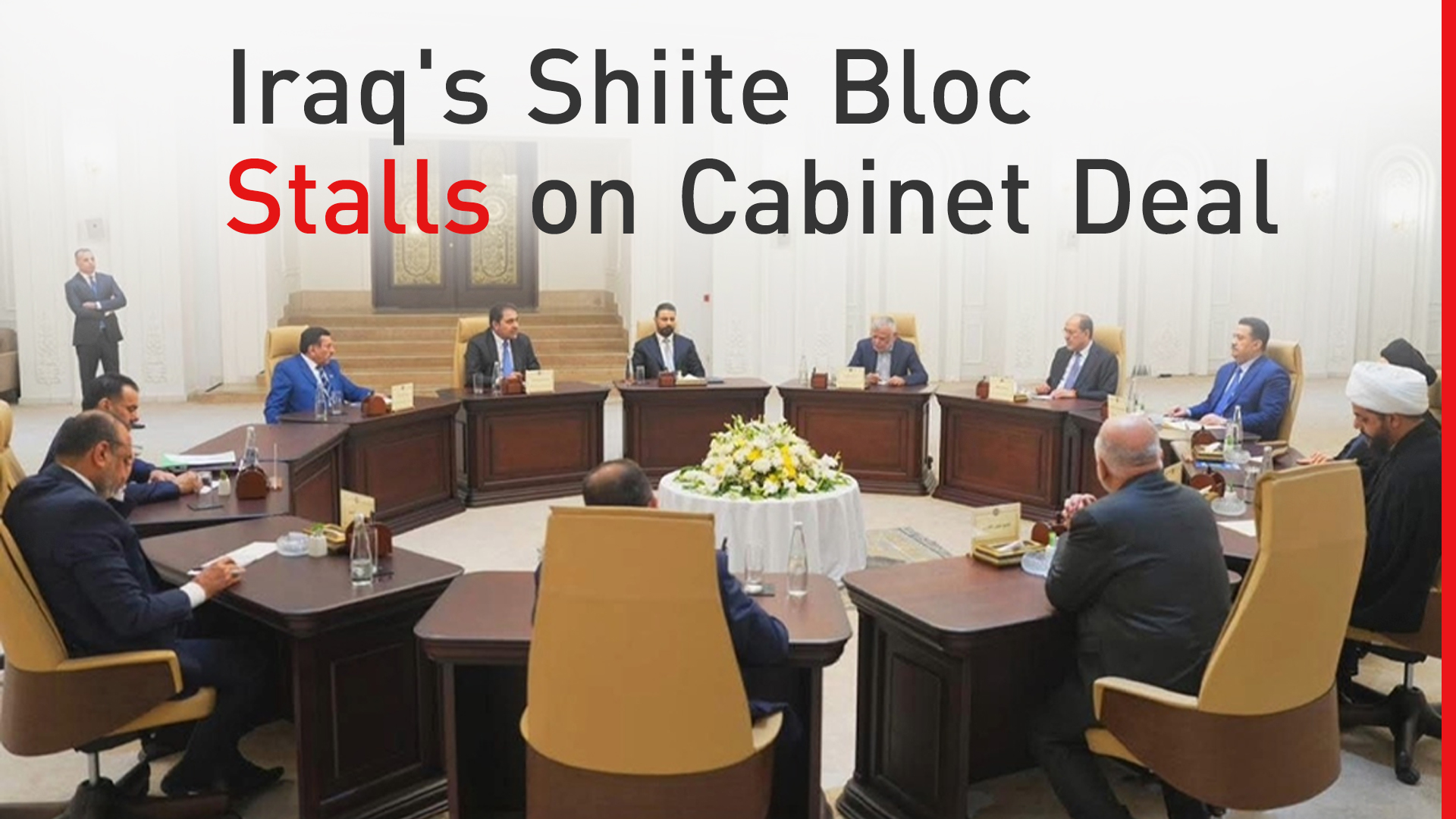
ERBIL (Kurdistan24) - Negotiations within Iraq's Shiite Coordination Framework (SCF) regarding the distribution of ministerial and sovereign posts remain unresolved, as constituent parties struggle to finalize a definitive power-sharing arrangement.
Despite the recent nomination of a consensus Prime Minister-designate, the umbrella alliance of Shiite political factions has yet to reach a final agreement on the technical "point-scoring" system used to allocate government positions.
According to a report detailing the internal deliberations, disagreements persist over the relative weight of senior leadership roles, including vice presidential and deputy ministerial portfolios.
This lack of consensus introduces significant procedural complications as the country attempts to navigate a complex leadership transition amid intense regional and international scrutiny.
The ongoing disputes within the Coordination Framework are politically significant because they directly impact the timeline for the formation of Iraq's next federal government.
Delays in agreeing upon the distribution of posts could hinder Prime Minister-designate Ali al-Zaidi's ability to present a complete cabinet for a parliamentary vote of confidence.
Furthermore, the process is being closely monitored by international actors; United States President Donald Trump recently characterized Iraq's leadership transition as "very good," signaling a degree of diplomatic goodwill that remains contingent on the incoming administration's ability to achieve stability and address Washington's concerns regarding regional security and the influence of armed factions.
Disputes Over Government Posts
The core of the current political impasse involves the mathematical and strategic distribution of executive authority.
Oudai al-Khadran, a prominent leader in the Badr Organization, told Kurdistan24 that the Coordination Framework's government formation committee has not yet achieved a consensus on the procedure for distributing "points" for various high-level positions.
These roles include the vice presidents, deputy speakers of parliament, and deputy prime ministers, in addition to the various service and sovereign ministries.
According to al-Khadran, the negotiations are currently stalled over two competing proposals regarding the valuation of deputy-level positions.
One proposal suggests that deputy presidential roles should be assigned a value of 12 points, while an alternative suggestion seeks to count them as 10 points.
In the Iraqi political context, the "points system" is a common mechanism for power-sharing, where each parliamentary seat held by a party translates into a specific sum.
This total determines the quantity and prestige of the ministries a party is entitled to receive, making the point-value of each office a subject of intense factional competition.
Beyond the technicalities of the points system, there is also a significant internal push for personnel changes.
Al-Khadran pointed out that there is a concerted effort among certain factions to ensure that current ministers are not re-appointed.
The report noted that while there is an appetite for placing new individuals in these positions to signal a break from previous administrations, a formal agreement on this policy has not yet been solidified.
Coordination Framework Faces Internal Divisions
The inability to finalize the cabinet list reflects the underlying fragmentation within the Shiite political house.
Although the bloc successfully nominated Ali al-Zaidi as a compromise candidate to end months of deadlock, the subsequent struggle over the "spoils" of office illustrates the competing interests of the constituent parties.
Sources familiar with the discussions indicated that each faction is seeking to maximize its institutional leverage through control over sovereign ministries such as Oil, Finance, and Interior.
Prime Minister-designate al-Zaidi has already delivered his proposed government program to the parliamentary presidency and the various political blocs.
However, the report stated that a parliamentary session for a vote of confidence, scheduled for later this week, may result in only a partial cabinet.
Due to the unresolved disagreements within the Coordination Framework, sources indicated it is expected that only half of the proposed ministerial lineup will be subjected to a vote in the initial session, leaving the remaining positions to be filled as negotiations continue.
The Badr Organization leader expressed a degree of cautious optimism, suggesting that the Coordination Framework would likely agree on a formula and a list of candidates by Sunday, May 10.
However, the historical complexity of Iraqi coalition-building suggests that these deadlines remain fluid as parties trade points and portfolios in late-stage bargaining.
Washington Watches Iraq Transition
As Baghdad's political elite deliberate over domestic allocations, the United States has signaled its approval of the overarching transition. In a significant diplomatic gesture, President Donald Trump told a Kurdistan24 reporter on Saturday that he is "happy" with the Prime Minister-designate.
According to the report, Trump characterized the recent turnover in Iraqi leadership as a favorable development for bilateral interests, marking a definitive shift from Washington's previous opposition to alternative candidates such as Nouri al-Maliki.
Trump's comments represent the first direct confirmation of the U.S. executive branch's support for al-Zaidi's nomination.
The article stated that Washington views the transition as a potential "new chapter" in U.S.–Iraq relations.
This institutional support has been echoed through other channels, including a congratulatory phone call from U.S. Secretary of War Pete Hegseth to the Prime Minister-designate and a formal statement of support from the U.S. Embassy in Baghdad.
However, this support is not without conditions.
The background report noted that while Trump signaled personal approval of al-Zaidi, senior U.S. officials have concurrently issued warnings regarding the future composition of the government.
Washington is demanding a clear institutional separation between state institutions and armed factions that operate outside of formal government authority.
Negotiations Continue in Baghdad
The pressure on al-Zaidi to form a government is intensified by a volatile security and economic environment.
A senior U.S. State Department official, cited in recent reports, urged al-Zaidi to sever ties with "outlawed armed groups" as part of the cabinet formation process.
The official expressed concern that the line between legitimate state security structures and independent militias has become "extremely blurred," warning that Iraq's international standing and economic stability could face consequences if these groups are not curtailed.
The bilateral relationship is further strained by ongoing disputes over sanctions enforcement and allegations of oil smuggling.
The U.S. Treasury Department recently designated Iraq's Deputy Minister of Oil, Ali Maarij al-Bahadly, accusing him of facilitating the diversion of Iraqi oil for the benefit of Iran and allied militias.
Baghdad has moved aggressively to deny these allegations, with the Iraqi oil ministry stressing the need for "transparency based on evidence" while clarifying that export operations were not part of the deputy minister's official duties.
These international pressures converge with a daunting domestic fiscal reality.
According to recent economic data, Iraq's domestic debt has surpassed 96 trillion Iraqi dinars, raising urgent questions about the incoming administration's ability to manage its financial obligations while navigating political uncertainty.
The task of forming a cabinet thus requires al-Zaidi to balance the demands of the Coordination Framework parties against the strict transparency and security requirements set by the United States.
Regional and Governance Implications
The strategic importance of the current transition is magnified by the broader rivalry between Washington and Tehran.
Iraqi political observers noted that the government formation process serves as a barometer for Iraq's ability to maintain its sovereignty while balancing relations with its two most influential partners.
The Coordination Framework's struggle over posts is, in effect, a struggle over who will control the primary revenue streams and security apparatus of the state during a period of regional instability.
As the May 10 deadline for an agreement approaches, the political climate in Baghdad remains one of high-stakes negotiation.
The eventual composition of al-Zaidi's cabinet will determine whether the new government can satisfy the demands of the Iraqi public for reform while meeting the expectations of international partners for transparency and the rule of law.
For now, the focus remains on the "point-scoring" exercise within the Coordination Framework.
Until the constituent parties can agree on a procedure that satisfies the political weight of each faction, the formation of a fully functional federal government remains incomplete.
The political parties within the Shiite Coordination Framework continue to deliberate over the allocation of government posts through a complex points-based system.
While Prime Minister-designate Ali al-Zaidi has received international support from the United States, internal factional disagreements over ministerial and sovereign positions remain the primary obstacle to finalizing Iraq’s next federal administration.