Jailed PKK Leader Says 'No Time to Lose' in Establishing Legal Basis for Türkiye's Peace Process
Abdullah Öcalan urged Türkiye to establish a legal framework for the stalled peace process, warning delays risk instability. Speaking via DEM Party delegates, he tied Kurdish settlement to democratic reform, amid renewed political tensions, opposition crackdowns, and broader regional volatility.
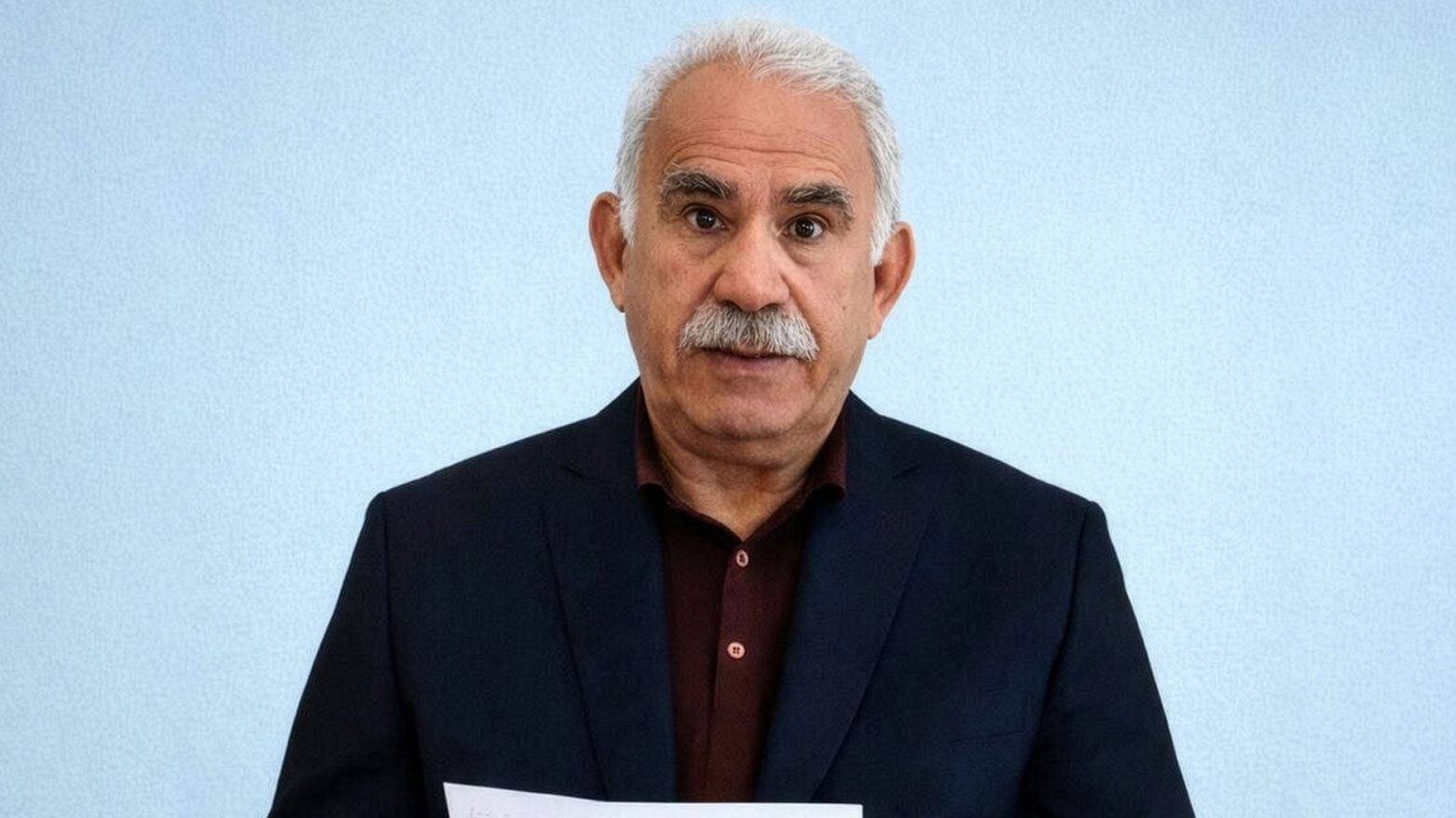
ERBIL (Kurdistan24) - The jailed founder of the Kurdistan Workers' Party (PKK) - now functioning under the name "Apoist Movement" - Abdullah Öcalan, issued a call on Monday for the Turkish state to formalize a legal framework for the ongoing peace process, warning that continued stagnation poses a fundamental risk to regional stability.
In a comprehensive statement, by a delegation from the pro-Kurdish People's Equality and Democracy (DEM) Party, Öcalan situated the Kurdish question within a broader critique of Türkiye's democratic erosion and a volatile Middle Eastern landscape.
The message, delivered from his long-term imprisonment on Imrali island, serves as a pivotal communication at a moment when Türkiye's internal political tensions are escalating toward a state of emergency.
The announcement of the Imrali meeting comes at a critical juncture for Türkiye's domestic and foreign policy. Last year, the PKK formally renounced its four-decade armed struggle against Ankara, a conflict that resulted in at least 50,000 fatalities, shifting the focus toward a negotiated settlement.
Furthering this transition, on May 5, 2026, the organization announced it had changed its name and is now awaiting reciprocal legal steps from the Turkish government.
During a press conference marking the first anniversary of the group's self-dissolution congress, top-level leadership announced the establishment of a newly formed political entity designated as the "Apoist Movement."
The leadership emphasized that they are awaiting legislative actions from authorities in Ankara to provide a formal basis for this ongoing political transition.
According to Agence France-Presse (AFP), Öcalan's primary message was one of extreme urgency, asserting that there is "no time to lose" regarding the implementation of concrete legal steps to flesh out the peace process.
Öcalan's insistence on a legal foundation is framed as a safeguard against the unpredictability of "hope and expectation," which he argues generates institutional risk.
This call for urgency appears directly tied to the deteriorating state of Türkiye's democratic institutions, characterized by recent judicial interventions against the main opposition and an increasingly hardline regional environment.
Imrali Message: Legal Framework as Political Cornerstone
In the statement shared by DEM lawmakers following their visit to the Imrali prison island on May 24, Öcalan provided a dense assessment of the current state of society.
He argued that a society "filled with anger" cannot undergo a genuine transformation without a foundation of deep intellectual inquiry and established moral values.
The jailed leader described Turkish society as currently "obstructed and constrained" across moral, political, legal, and economic levels, a condition he believes necessitates the acceleration of the peace process.
According to the Imrali delegation statement, Öcalan views a formal legal framework not merely as a technical requirement but as the "cornerstone of the democratic transformation process."
He suggested that the revision of existing laws should be viewed as a constructive effort to build a "positive structure" for a genuine democracy.
The statement emphasized that the Turkish Parliament carries a "historical responsibility" to act with sensitivity toward these legal requirements, rather than allowing the issue to remain in a state of political limbo.
The DEM Party delegation emphasized that Öcalan's vision involves a restructuring of the Turkish Republic into a "democratic republic" where the integration of Kurds is a central component.
By ending the years of stagnation surrounding the Kurdish issue, Öcalan believes the "element of violence" can be permanently eliminated through a systematic, modernized solution that redefines Turkish-Kurdish relations for the 21st century.
Urgency and Warning: 'No Time to Lose'
The theme of urgency dominated the communications released on Monday. AFP reported that Öcalan warned against any further delay, stating that prolonging the current state of uncertainty "only generates risk."
This rhetoric appears intended to pressure Ankara into moving beyond informal ceasefires toward a codified peace treaty.
The urgency is further underscored by Öcalan's analysis of regional dynamics. He observed that Middle Eastern powers, specifically citing Iran and Israel, are adopting increasingly hardline positions.
The rise of nationalism and discriminatory currents in the region was described as "harmful" to the prospects of radical change.
Öcalan's message suggested that the peace process in Türkiye is a vital mechanism for "monitoring and preventing dangerous developments" and ending regional bloodshed.
The delegation noted that Öcalan has been monitoring international support for this process, specifically referencing a compilation of letters from academics and intellectuals who advocate for a peaceful resolution.
He expressed a readiness to evaluate proposals and criticisms with "great sensitivity," positioning himself as a primary interlocutor for a "democratic society process" that he deems an urgent national need.
Democracy Under Strain in Türkiye
Öcalan's critique of the domestic political climate was bolstered by his specific reference to the ongoing crackdown on the main opposition Republican People's Party (CHP).
On Sunday, as the Imrali delegation was meeting with Öcalan, hundreds of Turkish riot police utilized tear gas to force their way into the CHP headquarters in Ankara. This followed a controversial court order on Thursday that dismissed the party's leadership.
"Is breaking into the headquarters of a political party by smashing the door with a sledgehammer something that should happen in a democracy?" Öcalan asked, according to the message shared by DEM lawmakers.
He characterized these events as a direct indicator of the "absence of a properly functioning democracy."
According to AFP reporting, the dramatic scuffles at the CHP headquarters involved supporters of the ousted leader Özgür Özel and security forces.
Öcalan's statement linked these events to a broader deprivation of "democratic standards inherent in the essence of the republic."
He warned that any governance approach that treats democracy as a "luxury, demagoguery, or empty talk" would face severe consequences. "The task of developing the democratic character of the republic," he asserted, "is the most urgent priority facing the country today."
Opposition Crisis and Political Backdrop
The context of Öcalan's message is inextricably linked to what human rights advocates describe as a systematic dismantling of the Turkish opposition.
On Saturday, Human Rights Watch (HRW) warned that President Recep Tayyip Erdoğan's government is utilizing "abusive tactics" to remove the CHP as a viable political force. This warning followed the arrest of thirteen CHP members across several regions as part of an official probe.
As reported by AFP's Volkan Nakiboğlu and Hazel Ward, an Ankara court recently annulled the 2023 leadership election that saw Özgür Özel defeat the former chair, Kemal Kılıçdaroğlu.
The court's decision to reinstate Kılıçdaroğlu as an interim leader has been met with widespread protests and a sharp reaction from the Turkish stock exchange, which tumbled more than six percent following the news.
Kılıçdaroğlu, often viewed as a lackluster figure with a history of electoral defeats, has signaled a willingness to accept the interim role, leading to accusations from analysts that the move is a government-orchestrated effort to "re-engineer" the opposition.
The political pressure extends beyond party leadership disputes. Last year, authorities jailed Istanbul Mayor Ekrem İmamoğlu, who was widely considered the CHP's strongest candidate for the 2028 presidential race.
İmamoğlu currently faces a multitude of legal cases, with prosecutors seeking sentences of up to 2,430 years. Jailed Mayor İmamoğlu recently described the judicial moves against the CHP as a "coup against Türkiye and against democracy."
Regional Stability and Stagnation Risks
The Imrali delegation statement released on May 25 suggests that Öcalan views the peace process and the defense of the opposition as two sides of the same democratic coin.
He argued that the lack of democracy within and between political parties is an obstacle that the Imrali negotiations could help overcome.
By preparing the republic for a "democratic initiative," Öcalan claims he is attempting to create the appropriate conditions for a sustainable peace that transcends partisan interests.
However, the path forward remains fraught with uncertainty. While the PKK has renounced its armed struggle, the lack of a legal framework, combined with the state's aggressive maneuvers against the CHP, suggests a disconnect between Öcalan's calls for "democratic transformation" and the current government's actions.
The DEM Party lawmakers are scheduled to visit Özgür Özel at his parliamentary offices on Monday to discuss these developments, signaling a potential alignment between the pro-Kurdish movement and the embattled main opposition.
The conclusion of the Imrali delegation's visit leaves the peace process at a crossroads.
While Öcalan maintains a posture of readiness and negotiation, his warnings about the risks of delay and the "harmful" rise of nationalism in the Middle East suggest that the window for a negotiated settlement may be narrowing.
As Türkiye navigates a period defined by judicial intervention, police raids on political headquarters, and regional war, the trajectory of the peace process remains one of the most volatile variables in the country's political future.
The international community and domestic actors now watch for whether the Turkish Parliament will assume the "historical responsibility" Öcalan has demanded, or if the process will continue to languish in a state of dangerous expectation.