Pakistan Sends Special Letter to Iran's Supreme Leader in Fresh Push for Peace
Interior Minister Mohsin Naqvi arrives in Tehran carrying a message from Prime Minister Shehbaz Sharif and Army Chief Asim Munir, as Islamabad intensifies mediation efforts on the 100th day of the Iran war
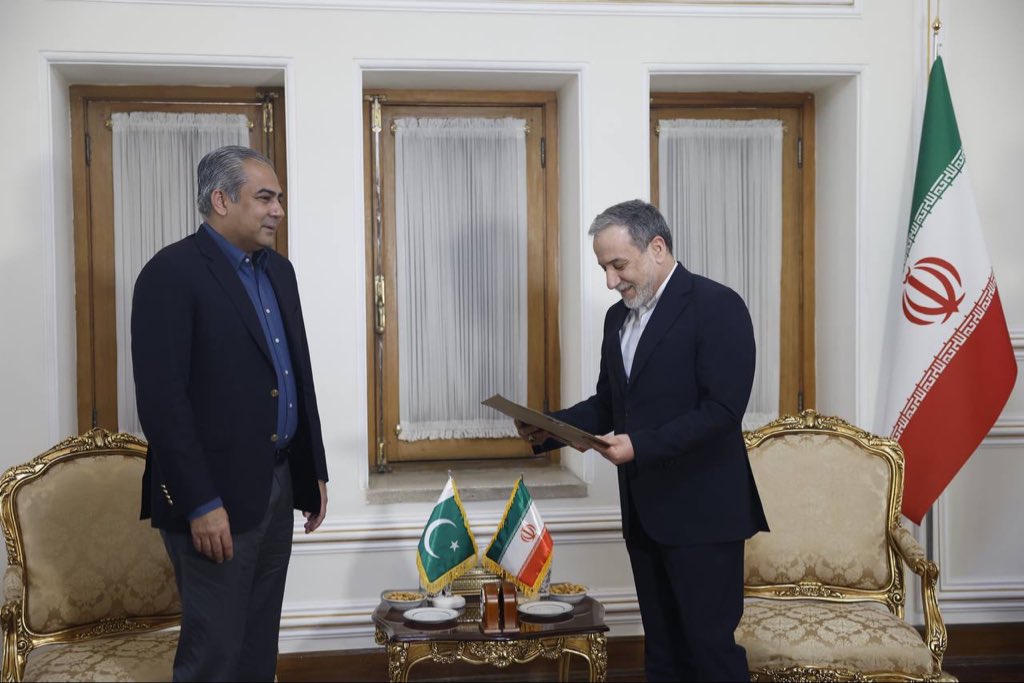
ERBIL (Kurdistan 24) - On the 100th day of the US-Israeli war against Iran, Pakistan made its most direct diplomatic intervention yet, dispatching a senior minister to Tehran carrying a special letter from the country's top civilian and military leadership to Iran's Supreme Leader, Ayatollah Mojtaba Khamenei.
Pakistan's Interior Minister Mohsin Naqvi arrived in Tehran on Sunday, on a high-level diplomatic mission, carrying what officials described as an important message from Pakistan's top civilian and military leadership to Khamenei. "I am in Iran to deliver a special letter from the Commander of the Army and the Prime Minister of Pakistan to Ayatollah Sayyed Mojtaba Khamenei," Naqvi said, according to Iran's semi-official Tasnim News Agency.
The Iranian Students' News Agency (ISNA) reported that Naqvi is specifically carrying a letter from Pakistani Army Chief Asim Munir to Khamenei, who has maintained a low public profile since assuming power in March 2026.
Third Visit in Weeks
The visit marks Naqvi's third trip to Iran in recent weeks, as Islamabad seeks to position itself as a credible bridge between Washington and Tehran at a moment when direct negotiations have repeatedly stalled.
The groundwork for the mission was laid before Naqvi's departure, when he met with Prime Minister Shehbaz Sharif for a briefing session. The Prime Minister's Office confirmed: "Consultations also took place between the prime minister and the interior minister regarding his upcoming visit to Tehran. The prime minister provided guidance related to the visit."
Upon arriving in Tehran, Naqvi was received by Iranian Interior Minister Eskandar Momeni. Talks focused on regional stability and ongoing diplomatic coordination, according to Pakistan's Interior Ministry.
Meeting with Araghchi and Senior Officials
Following his reception by Momeni, Naqvi was scheduled to meet Iranian Foreign Minister Abbas Araghchi and other senior officials as part of the visit, according to Tasnim News Agency. The letter addressed to Khamenei was also to be delivered through Araghchi, according to the user-provided information, marking a formal channel of communication between Islamabad and the highest level of Iranian authority.
Iranian Foreign Minister Araghchi stated that communication channels between the two sides remain open but emphasized that "no tangible progress" has been achieved so far.
Naqvi voiced optimism that Pakistan's diplomatic efforts would help bring the current crisis to an early conclusion, expressing hope that all stakeholders would be able to reach a constructive outcome. He also expressed his respect for senior Iranian officials including Parliament Speaker Mohammad Bagher Ghalibaf, Araghchi, and Interior Minister Momeni, according to ARY News.
A Fractured Diplomatic Landscape
The visit follows a key engagement between Naqvi and Momeni on Friday, June 6, during which both sides discussed bilateral relations and the evolving regional situation, stressing the need for sustained diplomatic engagement to achieve lasting peace in the region, according to Pakistan's Ministry of Interior.
The Tehran visit came a day after Pakistan condemned Iranian drone and missile attacks on Kuwait and Bahrain, warning that renewed hostilities were undermining diplomatic efforts aimed at easing tensions between the United States and Iran.
Pakistan's mediation role has not been without internal friction on the Iranian side. Iran International reported in April 2026 that a dispute emerged within Tehran's political establishment over whether senior officials, including Ghalibaf and Araghchi, had crossed red lines set by Khamenei by engaging in nuclear negotiations, with hardline-affiliated media outlets warning against what they described as "surrender and compromise."
Pakistan's sustained engagement, now extending to a direct written communication from its prime minister and army chief to Iran's supreme leader, reflects Islamabad's determination to keep the diplomatic channel open despite the deepening complexity of the crisis, the continued Iranian missile strikes on Gulf states, and the stalled state of formal peace negotiations.
|
BRIEF: |