Trump Says He 'Couldn't Care Less' After Iran Abandons U.S. Memorandum
U.S. President Donald Trump dismissed Iran's withdrawal from the U.S. memorandum while mourning two troops killed in Jordan as Washington expanded strikes on Iranian targets.
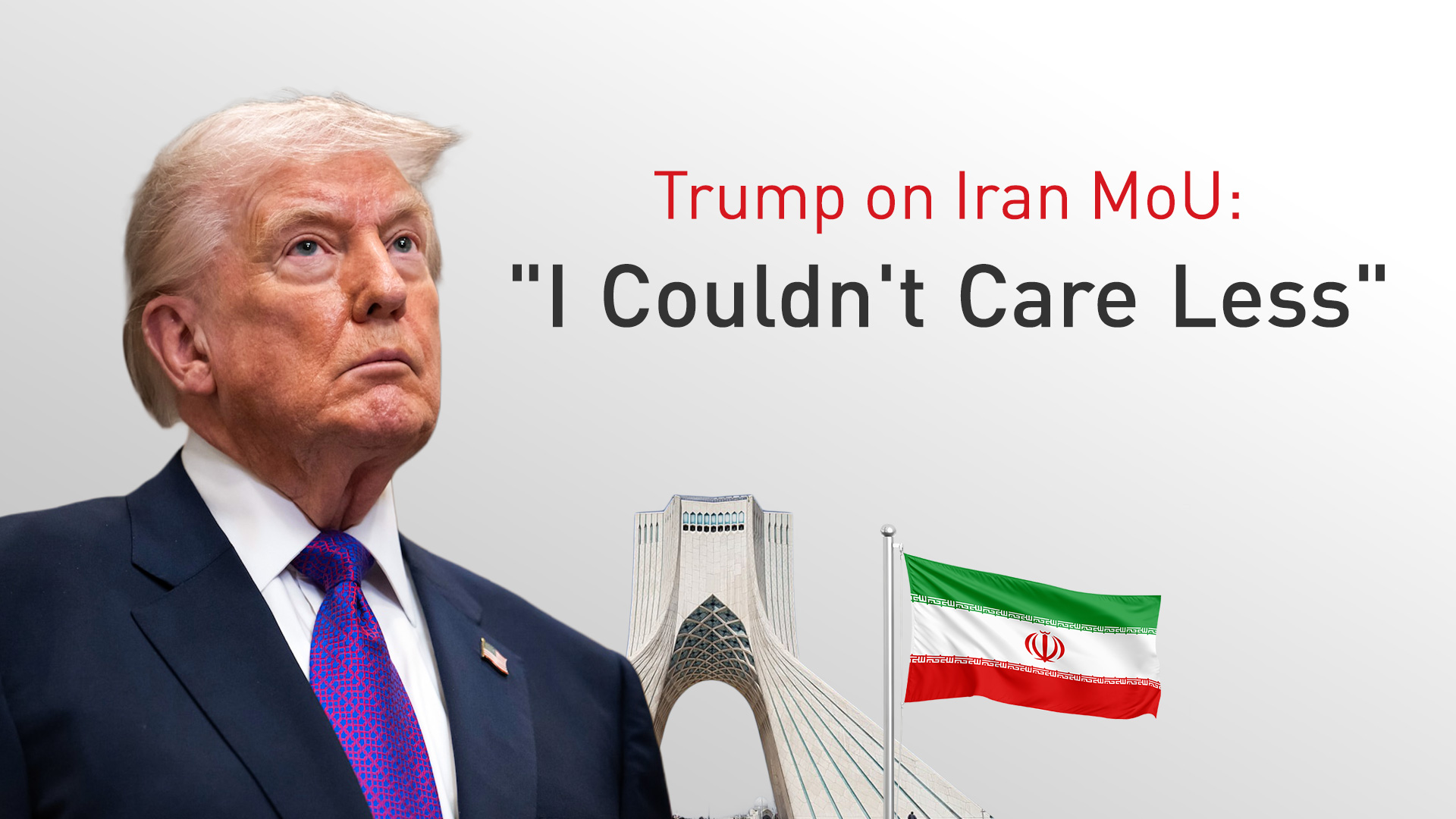
ERBIL (Kurdistan24) - Asked about Iran's announcement that it was no longer abiding by its memorandum of understanding with the United States, President Donald Trump offered a terse response that underscored Washington's increasingly confrontational posture toward Tehran: "I couldn't care less."
The remark, made during a brief interview with NewsNation, came as the conflict between the United States and Iran entered another dangerous phase marked by the collapse of diplomatic understandings and an expanding military campaign across the region.
Trump followed his dismissal of Tehran's announcement by addressing the deaths of two American service members killed while defending a U.S. position in Jordan, describing the loss as "a very sad thing" and saying they had died "in service of our country."
He also reiterated that preventing Iran from acquiring a nuclear weapon remains the administration's overriding objective.
The president's comments arrived as military developments continued to outpace diplomacy.
What had been presented only weeks earlier as an interim framework intended to reduce hostilities has effectively unraveled, while both sides have intensified military operations centered on the Strait of Hormuz, one of the world's most strategically important maritime corridors.
Against that backdrop, the U.S. military has widened its campaign against Iranian targets.
According to Agence France-Presse (AFP), U.S. Central Command (CENTCOM) said it conducted an eighth consecutive night of strikes and specifically targeted units of Iran's Islamic Revolutionary Guard Corps that it identified as being responsible for the attack in Jordan that killed the two American troops.
The operation provided immediate military context for Trump's remarks and highlighted Washington's decision to answer the deadly attack with direct action against forces it holds responsible.
CENTCOM said another American service member remains missing following the Jordan attack, while four personnel who were injured have since received treatment and been released from hospitals.
The identities of those killed have not yet been released pending notification of their families.
The latest military action forms part of a broader U.S. campaign that has steadily expanded since renewed hostilities erupted.
According to AFP and The Associated Press (AP), American strikes have targeted a range of Iranian military infrastructure, including coastal surveillance facilities, air defense systems, missile and drone storage sites, maritime capabilities, and Revolutionary Guard positions.
Military officials said the latest operation was intended in part to punish the forces they say carried out the Jordan attack, marking one of the clearest public acknowledgments that the Revolutionary Guard itself had become a direct target of the American campaign.
The exchange has continued to widen geographically.
AFP reported that Iran responded with new attacks targeting U.S. military facilities in Kuwait while also announcing additional operations linked to Jordan.
Iranian officials have simultaneously declared that the interim memorandum with Washington is no longer being implemented, arguing that the United States had failed to uphold its commitments.
The Associated Press reported that the conflict remains increasingly tied to the struggle over the Strait of Hormuz, where military operations, maritime pressure and infrastructure strikes have become central features of the confrontation.
The collapse of the interim understanding has removed one of the few remaining diplomatic mechanisms intended to prevent further escalation, leaving military actions to dominate relations between the two adversaries.
The expanding conflict has also heightened concern across the Gulf, where governments have warned against attacks on civilian infrastructure and urged restraint as retaliatory strikes spread beyond the immediate battlefield.
Regional officials continue to caution that prolonged fighting risks broader instability with consequences extending well beyond the United States and Iran.
Trump's latest comments offered little indication that Washington expects diplomacy to regain momentum in the near term.
Instead, his dismissal of Iran's decision to abandon the memorandum, coupled with his emphasis on preventing Tehran from obtaining a nuclear weapon, reflected an administration increasingly focused on military pressure following the deaths of American personnel.
As U.S. forces continue operations against Iranian targets and Tehran signals its own willingness to retaliate, the political space once occupied by negotiations has narrowed considerably, leaving the trajectory of the conflict increasingly defined by events on the battlefield rather than at the negotiating table.
|
Summary President Donald Trump brushed aside Iran's suspension of a U.S.-Iran memorandum while describing the deaths of two American troops in Jordan as "a very sad thing." His remarks came as U.S. forces expanded strikes against Iranian Revolutionary Guard targets amid escalating regional conflict. |