Türkiye's Fidan to SDF: Honor Integration Deal by Year-End or Face Military Action
Turkish FM warned the SDF shows "no intention" of complying with its March integration deal with Damascus, stating Ankara will take military action if the group fails to meet the year-end deadline.
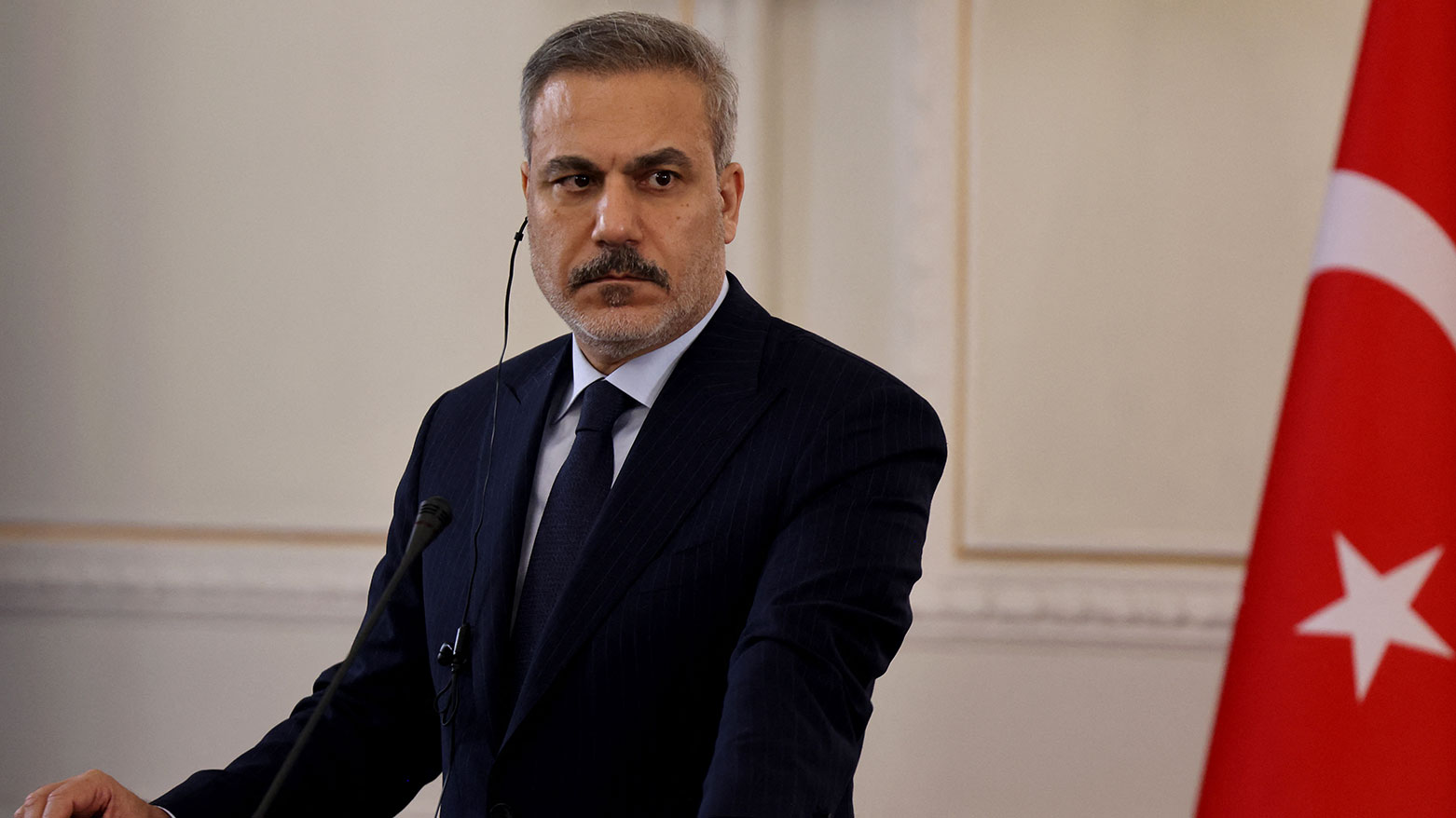
ERBIL (Kurdistan24) - Türkiye’s Foreign Minister Hakan Fidan said on Saturday that signals from the Syrian Democratic Forces (SDF) indicate the group has “no intention” of honoring the March agreement to integrate into Syria’s state structures, warning that Ankara will take military action if the SDF fails to comply by the end-of-year deadline.
Speaking to Reuters on the sidelines of the Doha Forum, Fidan stated that the SDF was seeking to sidestep the accord rather than move toward unification under Damascus. Ankara classifies the SDF as a terrorist organization and has repeatedly insisted that the deal must lead to a single chain of command in Syria.
Fidan said: “They should understand that the command and control should come from one place. There can be no two armies in any given country. There can only be one army, one command structure. But in local administration, they can reach different settlements and understandings.”
The remarks come nearly one year after the fall of former Syrian President Bashar al-Assad, as Syria’s new authorities attempt to navigate a fragile transition. Fidan said unresolved issues related to minority rights remain, stressing that Türkiye’s support for the new government is not a “blank cheque” to marginalize any segment of society.
He added that Damascus is taking steps toward national unity, but accused Israel of undermining progress: “Israeli destabilization policies” remain the primary obstacle, he said.
Israel has intensified strikes on southwestern Syria this year, citing threats near the frontier. Israeli Prime Minister Benjamin Netanyahu said earlier this week that Syria is expected to establish a demilitarized buffer zone stretching from Damascus to the border.
Fidan also discussed the ongoing negotiations over President Trump’s plan to end the two-year conflict in Gaza. He said a “credible Palestinian civil administration” and a properly vetted police force must be put in place to allow Hamas to disarm.
“First, we need to see that the Palestinian committee of technical people is taking over the administration of Gaza, then we need to see the police force formed to police Gaza—by Palestinians, not Hamas,” he said.
Türkiye, a NATO member and one of the most vocal critics of Israel’s assault on Gaza, played a key role in brokering the ceasefire deal and has signed on as a guarantor. Ankara has expressed readiness to join the international stabilisation force envisioned in the plan—an idea Israel strongly opposes. Fidan said Washington is pressing Israel to accept Türkiye’s participation.
On U.S.–Türkiye relations, Fidan said efforts to lift American sanctions imposed in 2020 over Ankara’s purchase of Russia’s S-400 air defense system were progressing.
“I believe we’ll soon find a way to remove that obstacle,” he said.
He also commented on Washington’s proposal to end the Russia–Ukraine war, calling the American 28-point roadmap “a starting point” that is now evolving. Fidan urged all sides to remain at the table, warning of mediator fatigue: “I just hope that nobody leaves the table, and the Americans are not frustrated.”
With shifting alliances and simultaneous crises in Gaza, Syria, Lebanon, and Ukraine, Fidan’s remarks reflect Ankara’s attempt to assert influence across multiple theaters—while keeping pressure on the SDF to fall in line with Damascus under a single military structure.
Türkiye has given the Kurdish-led force until the end of the year to comply.