Türkiye’s Fidan: Full Implementation of March 10 Agreement Needed to Open All Border Crossings with Syria
Turkish FM Hakan Fidan stated Ankara is prepared to open all Syria border crossings in principle, but only after full implementation of the March 10 Damascus-SDF integration agreement, which he says has been delayed.
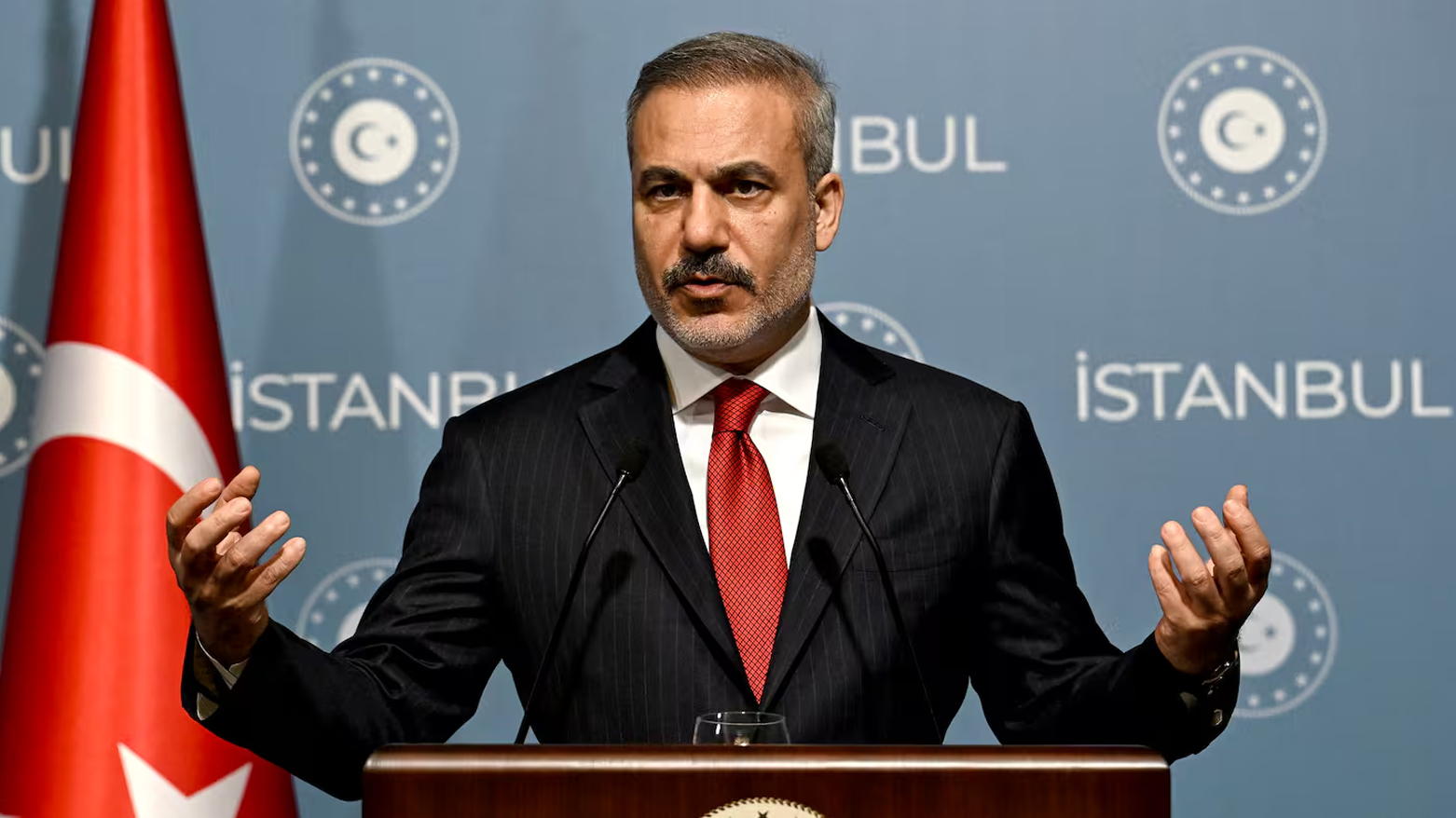
ERBIL (Kurdistan24) - Turkish Foreign Minister Hakan Fidan said Ankara is prepared “in principle” to open all border crossings with Syria, but stressed that full implementation of the March 10 agreement between Damascus and the Syrian Democratic Forces (SDF) is required before any comprehensive reopening can take place.
Speaking Tuesday during a parliamentary session on the 2026 Foreign Ministry budget, Fidan addressed the agreement signed earlier this year between Syrian President Ahmed al-Shara and SDF Commander Mazloum Abdi to integrate civil and military institutions in northeast Syria under state administration.
Fidan emphasized that Türkiye supports opening border gates as a general policy, but key crossings—particularly those opposite Qamishlo near Nusaybin—require political and administrative groundwork.
“We have the intention to open all border crossings as a general policy,” Fidan said.
“However, to open them—especially those around Nusaybin—procedures tied to the March 10 agreement must be completed, and the Syrian central government must reach a certain stage.”
He added that Ankara believes the agreement’s implementation has been delayed from the SDF side.
Responding to another parliamentary question, Fidan clarified Türkiye’s role in Gaza, saying that neither Ankara nor any other country currently holds guarantor status under international law.
He noted that Türkiye, Qatar, the United States, and Egypt signed the Sharm El-Sheikh Agreement, which relates to mediation and the continuation of peace efforts, not a formal guarantee mechanism.
“At this stage, we are not technically or legally a guarantor state, nor is there any other,” Fidan said.
He added that Türkiye remains prepared to assume such responsibility if future agreements require it, stressing Ankara’s readiness to cooperate openly and discreetly for regional stability.
Fidan’s remarks come at a time when tensions inside Syria have escalated, particularly between the SDF and armed groups aligned with Damascus.
In a strongly worded statement this week, the Syrian Democratic Forces condemned what it described as provocative, hate-driven acts by Damascus-linked armed groups. SDF accused these groups—linked to the Syrian interim government’s Ministry of Defense—of engaging in hostile rhetoric aimed at destabilizing the region and reviving “the Baathist mentality.”
SDF said the provocations are “not spontaneous nor isolated,” but part of a systematic effort to fuel internal hatred and drag the country back into a destructive cycle of violence. It held Damascus either responsible for directing these groups or failing to control them.
The forces reiterated that areas of North and East Syria will not be allowed to become platforms for incitement, warning that any attempt to disturb local peace would be met with a firm response. SDF concluded that Syria’s future must be built on cooperation and respect for communities, not on “hysterical behavior.”
Separately, Tulay Hatimogullari, Co-Chair of the Peoples' Equality and Democracy Party (DEM Party), issued a statement marking the anniversary of Syria’s political transition and the fall of Bashar al-Assad’s regime.
Hatimogullari said that despite a full year under a new governing structure, Syria remains deeply unstable, citing mass atrocities committed against the Druze community in Suwayda and Alawite areas along the coast.
She stressed that ongoing abuses across Syria reveal the failure of the current model and argued that decentralization is the only viable political and legal framework capable of ensuring protection, rights, and representation for all Syrians.
Both SDF and the DEM Party highlighted that Syria cannot move forward by repeating old patterns of governance or by tolerating provocations that undermine internal peace.
Fidan’s comments underscore Türkiye’s position that reopening border crossings with Syria must be tied to the implementation of the Damascus–SDF agreement, a process that remains stalled amid internal Syrian tensions and competing visions for the country’s political future.