Kurdistan Region Reports Tenfold Increase in Agricultural Investment
KRG Agriculture Minister reports investment in the sector rose from under 2% to nearly 10% under the Ninth Cabinet, citing a push for smart farming and water efficiency.
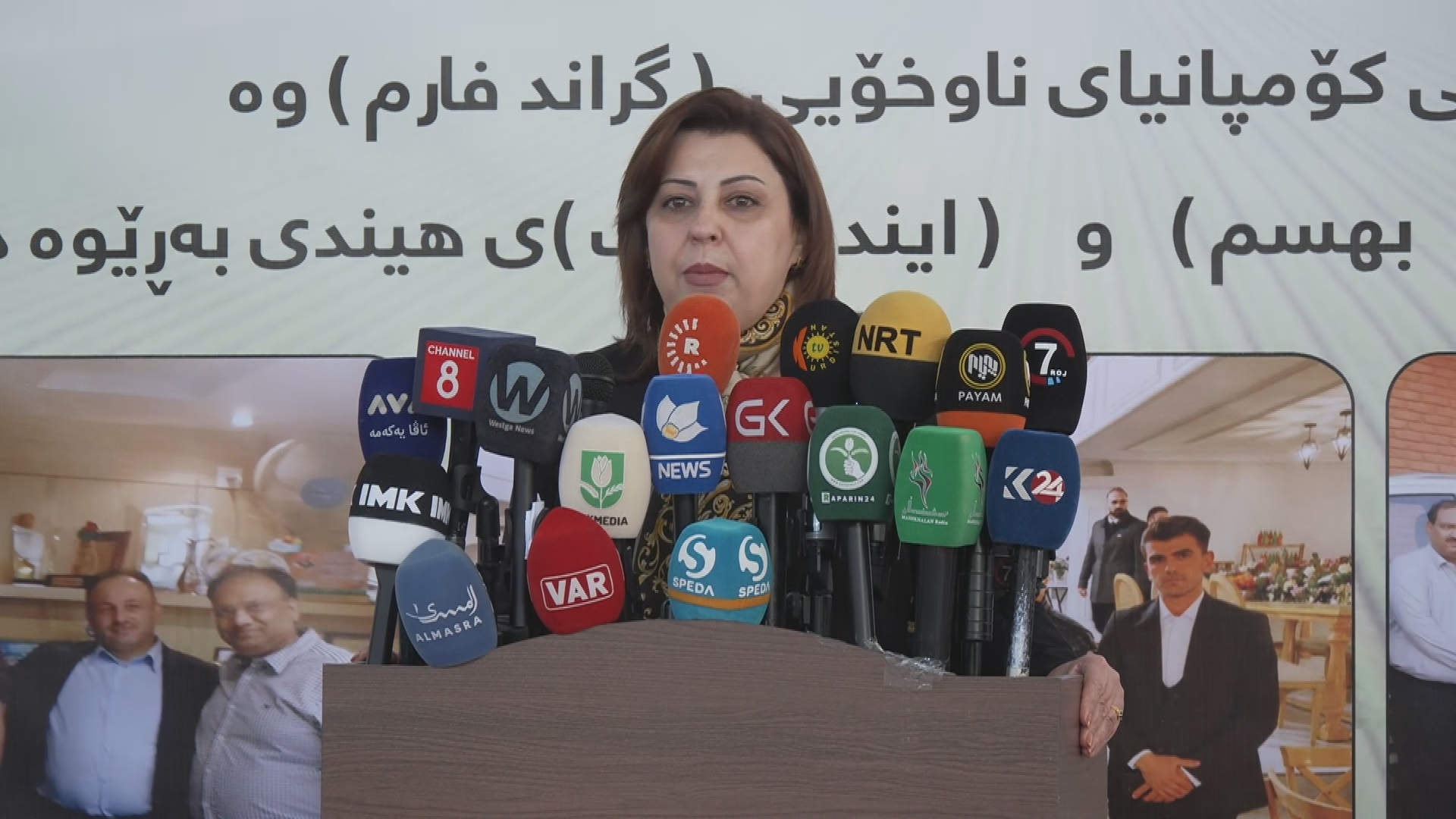
ERBIL (Kurdistan24) — Investment in the agricultural sector of the Kurdistan Region has surged dramatically over the past several years, rising from less than 2 percent of total investment to nearly 10 percent, a senior government official announced on Sunday.
The sharp increase was attributed to the strategic policies implemented by the Ninth Cabinet of the Kurdistan Regional Government (KRG), which has prioritized the modernization of farming and the efficient management of water resources to attract capital from both domestic and international sources.
Begard Talabani, the KRG Minister of Agriculture and Water Resources, disclosed the figures during an opening ceremony for a new agricultural facility in the Raparin Independent Administration. Speaking on Sunday, December 21, 2025, Talabani utilized the inauguration of the "Plant Energy" project to outline the administration’s broader economic achievements and its evolving regulatory approach toward sustainable farming.
According to the data cited by the Minister, the rate of investment in the agricultural sector prior to the commencement of the Ninth Cabinet hovered between a marginal 1.5 percent and 1.8 percent. However, current data from the Board of Investment indicates that this figure has risen to approximately 10 percent.
Talabani framed this nearly ten-fold increase as a definitive validation of the government's strategy, arguing that it proves investors inside and outside Kurdistan have developed "great trust" in the region's agricultural development plans.
The specific event on Sunday marked the opening of "Plant Energy," a project that Talabani described as a potential "foundation stone" for the future of organic agriculture in the area and throughout the wider Kurdistan Region. The Minister noted that the project represents a specific focus of the current administration’s policy, which has placed significant weight on supporting similar initiatives that diversify the region's economy.
Talabani acknowledged that the approval and support for the "Plant Energy" project required a degree of administrative flexibility. She revealed that the Ministry of Agriculture and Water Resources did not possess specific, pre-existing guidelines for projects of this nature.
However, the ministry chose to extend its support regardless of the regulatory gap, driven by the belief that establishing such a facility would catalyze the start of "organic" projects across the region. This decision underscores a broader governmental willingness to adapt regulatory frameworks to foster innovation in the agrarian sector.
In her address, the Minister detailed the operational philosophy guiding her ministry's approach to modernization. She indicated that the government has steadfastly followed a policy of introducing "smart agriculture." This approach relies heavily on the integration of modern technology and contemporary agricultural machinery into traditional farming practices.
The primary objective of this technological shift, according to Talabani, is to maximize the volume of production while simultaneously minimizing the utilization of critical natural resources, specifically water and land area.
The push for efficiency is inextricably linked to the region’s water management strategies. Talabani emphasized that the Kurdistan Regional Government has developed and is implementing a comprehensive, long-term plan for water retention. This strategy is critical for a region seeking to secure its food supply amidst varying climate conditions.
The Minister outlined several specific infrastructure components of this water strategy. She noted that the government has moved forward with the implementation of numerous projects designed to capture and store water, including the construction of ponds and lakes. Furthermore, the ministry is enforcing and encouraging the use of advanced irrigation systems.
These systems are designed to replace traditional, water-intensive methods, thereby significantly reducing water wastage and ensuring that the region’s limited hydrological resources are directed efficiently toward crop production.
The ceremony in the Raparin Independent Administration served as a microcosm of the Ninth Cabinet’s stated goals: leveraging private sector investment to modernize infrastructure, transitioning toward high-value organic produce, and utilizing technology to overcome resource constraints.
By highlighting the statistical leap in investment percentages, Talabani sought to portray the agricultural sector not merely as a traditional livelihood, but as a rapidly expanding pillar of the Kurdistan Region's economy that has successfully garnered the confidence of the investment community.
The Minister concluded her remarks by reaffirming that the opening of the "Plant Energy" project and the rising investment metrics are direct results of the Ninth Cabinet's policy to give "great importance" to the sector, signaling that the government intends to maintain this trajectory of support for smart and organic agriculture in the years to come.