Coordination Framework Leaders Meet at Maliki’s Residence to Break Deadlock Over Iraq’s Next Prime Minister
Talks expected to decide nomination mechanism amid disputes over Sudani’s second term and renewed focus on state control of arms
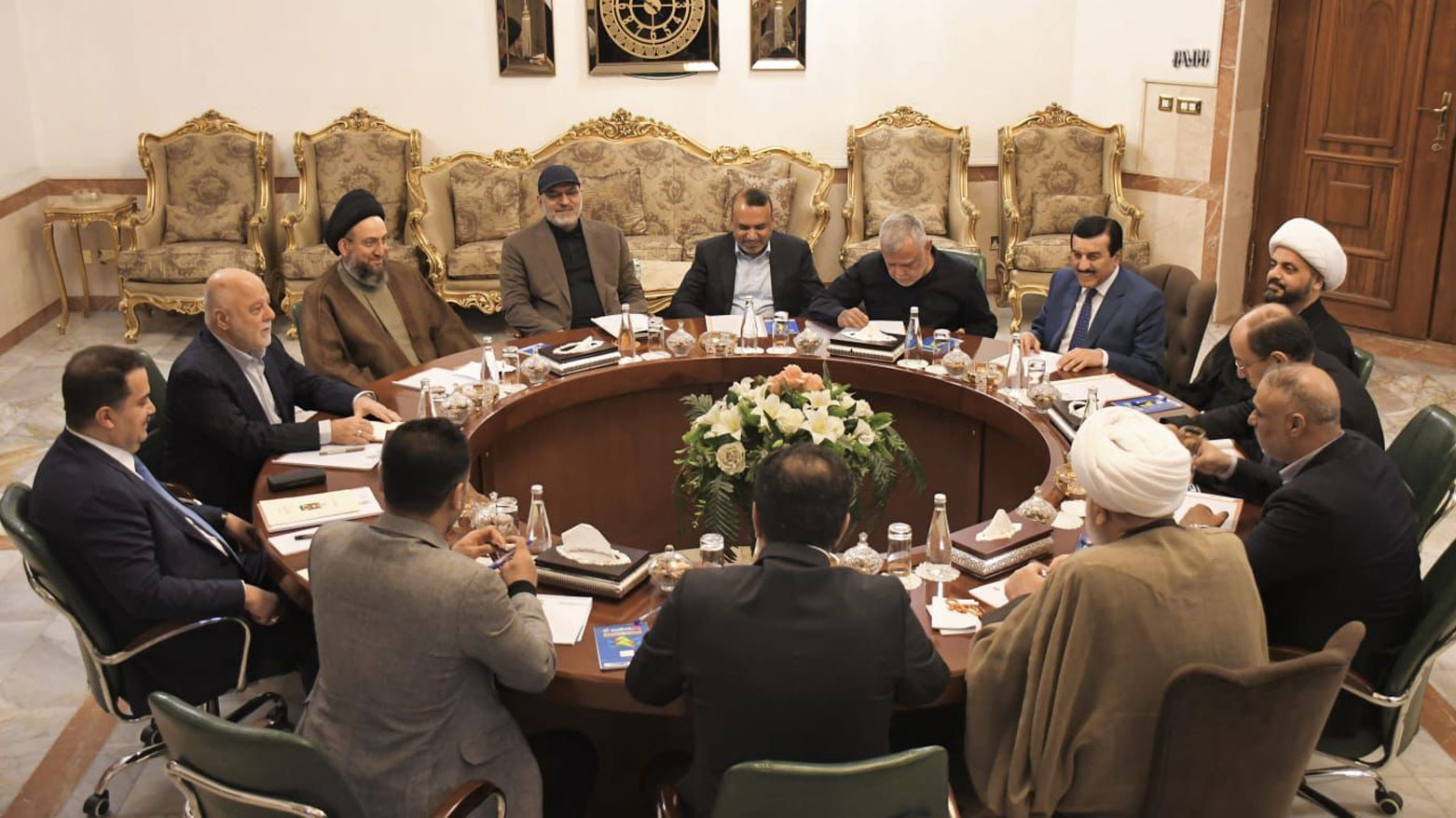
ERBIL (Kurdistan24) — Leaders of Iraq’s Coordination Framework are set to convene on Monday evening, at the residence of former Prime Minister Nouri al-Maliki, head of the State of Law Coalition, in a high-stakes meeting aimed at resolving the deadlock over naming the country’s next prime minister and ending weeks of political wrangling.
According to informed sources within the Coordination Framework, the meeting is expected to focus on agreeing on a clear mechanism to select a candidate for the prime minister position. Leaders will first attempt to reach consensus on a single nominee; failing that, they may turn to an internal vote.
In the event of a stalemate, the sources said, the framework could resort to a compromise candidate under what was described as a “consensus-saving option.”
Despite the current Prime Minister, Mohammed Shia al-Sudani, being viewed as a potential contender, sources indicated that his bid for a second term faces serious obstacles. Al-Maliki is reportedly firmly opposed to renewing Sudani’s mandate, a position shared by several other senior figures within the framework.
This resistance, the sources said, could ultimately push the blocs toward proposing an alternative figure from outside the list of previously circulated names.
Beyond the premiership dispute, the meeting is also expected to address the sensitive issue of weapons outside state control. The Coordination Framework is set to discuss the “arms file,” including mechanisms to ensure that weapons remain exclusively in the hands of the state and how to deal with armed groups unwilling to disarm, reflecting mounting domestic and international pressure on the issue.
Earlier on Monday, the Development and Reconstruction Alliance, led by Prime Minister Sudani, announced a new political initiative aimed at breaking the political deadlock and unifying positions on the premiership. In a statement, the alliance said the initiative is grounded in “national consensus and constitutional entitlement” and seeks to pave the way for the formation of a stable and effective government. Details of the proposal are expected to be presented during the Coordination Framework meeting.
The political push comes as Iraq moves closer to key constitutional milestones. Following the Federal Supreme Court’s ratification of the final election results, President Abdul Latif Rashid has set Dec. 29 as the date for the first session of the new parliament.
Veteran lawmaker Amer Fayez, the oldest member of parliament, confirmed that Monday’s meeting at Maliki’s residence could be decisive in determining the fate of the premiership.
“The Monday meeting may determine the course of selecting the prime minister,” Fayez told local media on Sunday, describing it as part of ongoing efforts by political factions to conclude the nomination process within constitutional timelines. He stressed that all parties are seeking to complete the process in line with legal and constitutional frameworks.
Fayez also highlighted the significance of the venue, noting that meetings held at Maliki’s residence have traditionally provided space for frank exchanges and coordination among rival factions.
The goal, he said, is to narrow differences and agree on a candidate who reflects the collective will of the political forces and can restore stability to the country.
The domestic talks unfold against a backdrop of heightened international attention on Iraq’s political and security trajectory. U.S. Special Envoy to Iraq Mark Savaya on Monday welcomed reported steps by Iraqi armed groups toward disarmament, calling them encouraging but insufficient without concrete, binding measures.
In a statement posted on X, Savaya praised the moral leadership of the Marjaeya in Najaf while stressing that disarmament must be comprehensive, irreversible, and carried out within a clear national framework.
Savaya emphasized that the Iraqi Constitution grants the exclusive right to bear arms to state institutions alone, warning that illegal armed groups undermine sovereignty and stability. He described the current moment as a decisive crossroads for Iraq—between consolidating state authority and the rule of law, or remaining trapped in fragmentation and insecurity.
As Coordination Framework leaders prepare to convene on Monday afternoon, expectations remain cautious, with no certainty that the meeting will produce a definitive agreement on the next prime minister.
Any outcome will depend on unresolved internal divisions within the framework and leaves open broader questions about whether a future candidate would be able to alter Iraq’s political trajectory, address external influence, and adjust Baghdad’s approach in line with evolving U.S. policy toward Iraq and the wider Middle East.