Iraq to Bolster Air Defense with French Aircraft as Regional Tensions Intensify
Iraq announced the imminent arrival of six French aircraft and advanced radars to boost air defense, amid efforts to mediate US-Iran talks and pressure militias to disarm.
ERBIL (Kurdistan24) – Iraq’s Ministry of Defense announced on Saturday that it is prioritizing the enhancement of its air defense capabilities, confirming that six new French aircraft are scheduled to arrive by the end of the year. The move comes as Baghdad navigates a complex security landscape marked by internal militia challenges and external diplomatic maneuvering between Washington and Tehran.
In a statement to the Iraqi News Agency (INA), Gen. Tahseen al-Khafaji, Director of Media and Moral Guidance at Iraq's Ministry of Defense, outlined the government’s strategic focus on securing the nation's airspace. “Priorities currently are Air Defense and important weapons for the Air Force,” al-Khafaji said, noting that recent contracts signed over the past period are expected to yield deliveries starting late this year and continuing into early next year.
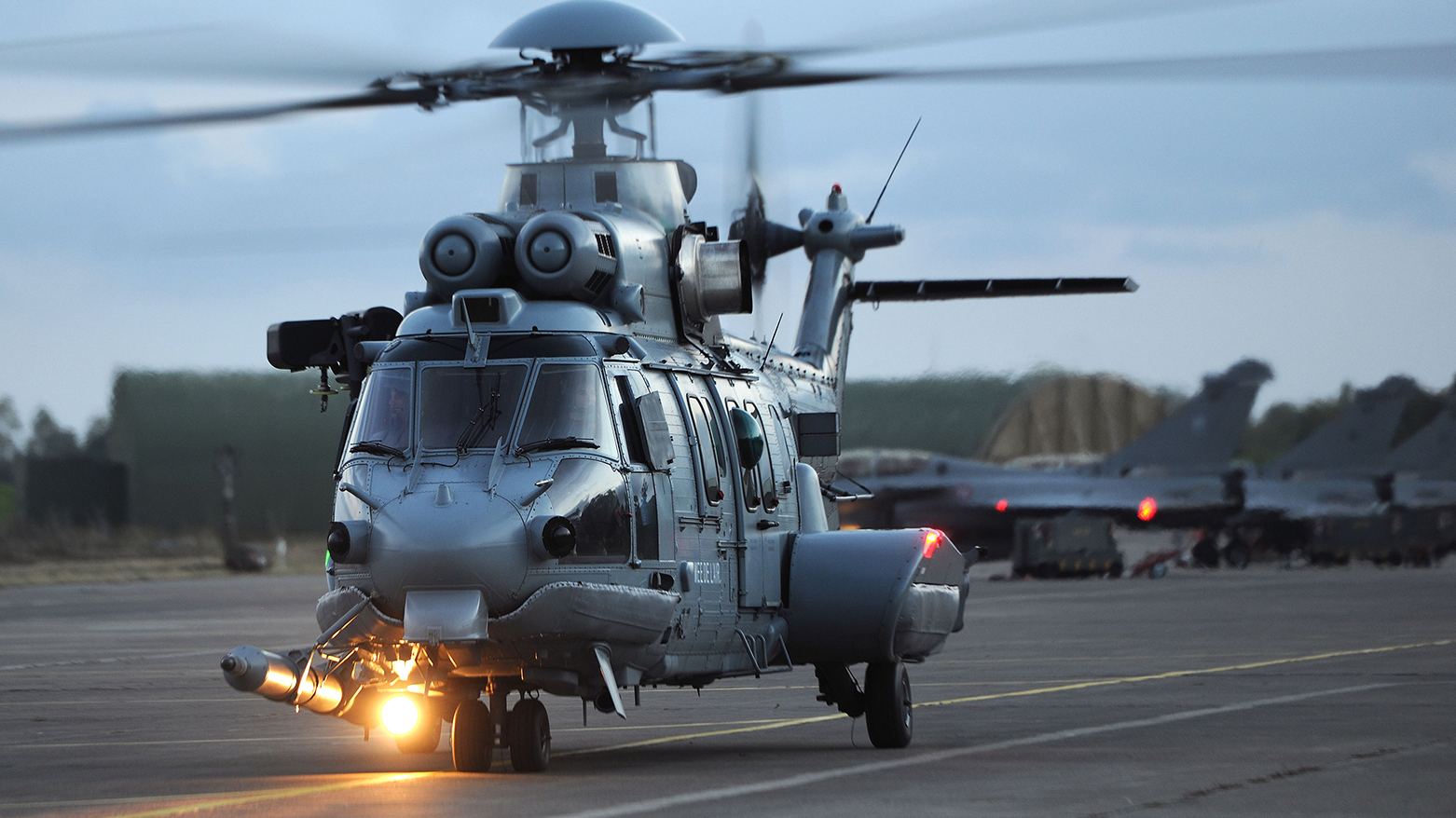
The forthcoming delivery includes six French Caracal aircraft (Aribus Helicopter H225M), which al-Khafaji described as having a “great and important” role in supporting security forces. These advanced helicopters are part of a broader effort to modernize Iraq’s military hardware.
“Advanced aircraft will reach us before the end of this year to complete the arrival of 6 French Caracal aircraft,” he confirmed.
In addition to the rotary-wing assets, Iraq is significantly upgrading its surveillance and interception capabilities.
Al-Khafaji revealed that the Air Defense command has already obtained “very advanced French radars that deal with all challenges.”
Furthermore, he pointed to ongoing cooperation with South Korea, a nation he characterized as “advanced in Air Defense.” This partnership is set to deliver medium-range missile batteries at the beginning of next year, which officials believe will add a “strong and excellent addition” to the country's defensive architecture.
The push for sophisticated weaponry reflects a deliberate policy by the Ministry of Defense to acquire top-tier technology.
“There is great work in the field of arming aircraft with very high capabilities in terms of enabling them to work in partnership with the airspace,” Al-Khafaji explained, attributing this development to the ministry’s insistence on possessing the finest weapons available.
He also acknowledged “great support from the Iraqi government through providing very large sums for armament for the sake of diversity,” ensuring that the military can meet various security requirements.
This military build-up occurs against a backdrop of heightened geopolitical sensitivity.
Just hours before the defense announcement, Iraqi Prime Minister Mohammad Shia al-Sudani revealed in a televised interview that Baghdad is actively working to broker renewed negotiations between the United States and Iran.
Speaking to Lebanon’s Al-Mayadeen channel, al-Sudani stated, “We are now undertaking an important initiative to arrange a bilateral meeting between Iran and the United States in Baghdad to resume dialogue between the two sides.”
The Prime Minister’s diplomatic overture coincides with intense domestic pressure regarding the status of armed factions operating within Iraq.
Al-Sudani emphasized that restricting weapons to state control is an Iraqi decision rather than an American imposition, a stance that has faced resistance from powerful groups like Kataeb Hezbollah. Despite some factions signaling a willingness to integrate, others have rejected disarmament until foreign troops withdraw, complicating the government’s efforts to assert full sovereignty.
The urgency of Iraq’s defense modernization is underscored by recent intelligence warnings. According to reports cited by Asharq Al-Awsat earlier this week, Baghdad received "unprecedented" messages from an Arab state and a Western intelligence service cautioning of imminent military strikes inside the country.
The threats, which reportedly targeted infrastructure linked to Iran-backed militias, have accelerated political discussions on disarming non-state actors, even as the government seeks to fortify its own conventional military strength with French and South Korean systems.
U.S. officials have closely monitored these developments. U.S. Special Envoy Mark Savaya recently welcomed signals from armed groups toward disarmament but warned that “verbal commitments alone are insufficient.”
With the U.S. Congress conditioning future security cooperation funding on Iraq’s ability to rein in militias, Baghdad’s dual strategy of procuring advanced air defenses while pursuing regional diplomacy appears designed to insulate the state from both internal fragmentation and external conflict.