Iraq Intensifies Diplomatic Push to De-escalate U.S.-Iran Tensions Ahead of FM’s Visit to Tehran
Iraqi FM Fuad Hussein consulted French, Saudi, and Turkish counterparts before a Sunday visit to Tehran. The talks aim to de-escalate US-Iran tensions, following Iraq's proposal to host direct negotiations.
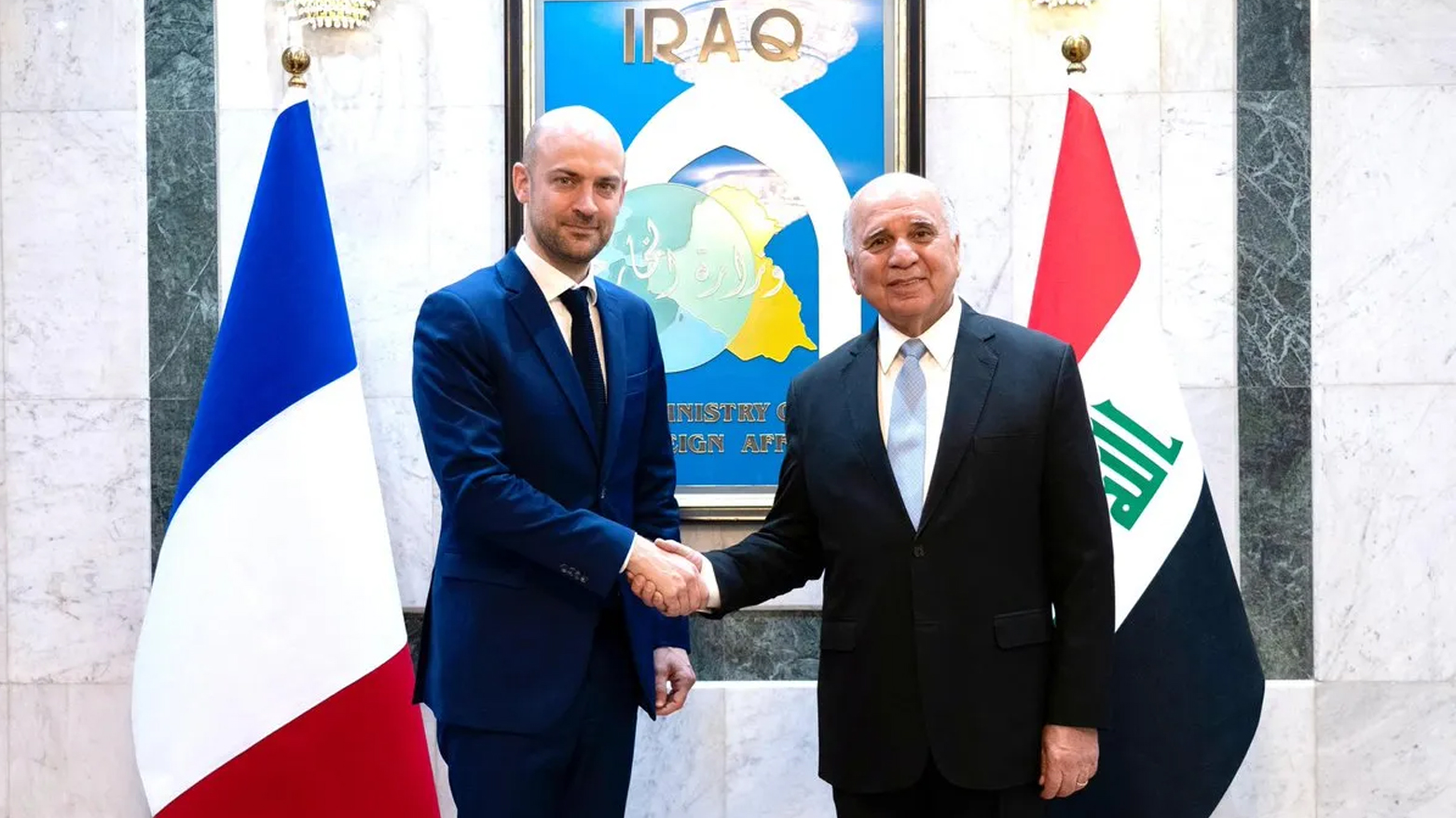
ERBIL (Kurdistan24) - Iraqi Deputy Prime Minister and Foreign Minister Fuad Hussein engaged in a series of high-level diplomatic consultations with key international and regional counterparts on Saturday, including a significant discussion with French leadership.
The diplomatic surge comes as Baghdad accelerates its efforts to mediate the widening rift between Washington and Tehran, just hours before Minister Hussein’s scheduled arrival in the Iranian capital for urgent talks.
The Iraqi Ministry of Foreign Affairs confirmed in a formal statement that Minister Hussein initiated a telephone call with Jean-Noël Barrot, the French Minister for Europe and Foreign Affairs.
The conversation was described as part of a broader framework of continuous efforts by the Iraqi government to reduce regional tensions and foster political coordination with decision-making capitals.
According to the ministry, the dialogue between the two foreign ministers addressed the current state of bilateral relations but was primarily dedicated to the security implications of the ongoing standoff between the United States and Iran.
During the exchange, the discussion focused heavily on the impact of these rising tensions on the security architecture of the Middle East.
The Iraqi Foreign Ministry noted that Barrot utilized the call to review and articulate the official stance of both France and the broader European bloc regarding how best to engage with Tehran at this critical juncture.
The coordination with Paris underscores Baghdad’s strategy of aligning its mediation efforts with European diplomatic channels to present a unified approach to de-escalation.
Following these preparatory consultations, Hussein is scheduled to arrive in Tehran on Sunday for an official visit.
Information provided by Iraqi officials indicates that the Foreign Minister’s itinerary includes high-level meetings with his Iranian counterpart, Foreign Minister Abbas Araghchi, as well as other senior officials of the Iranian government.
The primary objective of this visit, as outlined by the ministry, is to discuss the trajectory of relations between Baghdad and Tehran and, crucially, to identify a pathway to calm the "severe escalation" that has recently characterized relations between Washington and Tehran.
In parallel with his engagement with Paris, Hussein conducted separate telephone conversations with the top diplomats of two of the region's most influential powers: Saudi Arabia and Türkiye.
The Iraqi Foreign Minister spoke with Prince Faisal bin Farhan, the Foreign Minister of Saudi Arabia, and Hakan Fidan, the Foreign Minister of Türkiye. In both calls, the leaders emphasized the absolute necessity of maintaining open channels of dialogue and unifying regional positions.
The stated goal of this coordination is to prevent any slide toward military escalation, which the ministers agreed would jeopardize the stability of the entire region.
These intensified diplomatic movements by the Foreign Ministry are the latest development in a strategic initiative championed by Iraqi Prime Minister Mohammed Shia al-Sudani.
At the conclusion of 2025, Prime Minister al-Sudani revealed that his government was undertaking a serious effort to position Baghdad as a venue for direct negotiations between the United States and Iran. The initiative aims to move the two adversaries from indirect confrontation to the negotiating table.
The Iraqi proposal has reportedly received positive signals from the Iranian leadership.
The Iranian Ministry of Foreign Affairs has publicly welcomed the initiative by Iraq to revive the negotiating process with Washington, signaling a potential opening for diplomacy despite the current hostilities.
The meetings scheduled for Sunday in Tehran are expected to test the viability of this mediation track and determine whether the Iraqi government can successfully facilitate a de-escalation mechanism.
At the conclusion of the round of contacts on Saturday, all parties—including the French, Saudi, and Turkish officials—agreed on the importance of continuing close coordination in the coming days. The consensus among the diplomats is to support any dialogue that contributes to reducing the level of tensions and preserving regional security.
As Iraq's Foreign Minister heads to Tehran, his mission represents a critical test of Iraq’s growing role as a stabilizer and mediator in a volatile neighborhood.