Trump Backs Syria’s President as U.S. Signals End of Partnership With SDF
President Trump backed Syria's new leader amid an anti-Kurd offensive, while the U.S. declared the SDF era over, urging integration into the state as a ceasefire and transition deal takes shape.
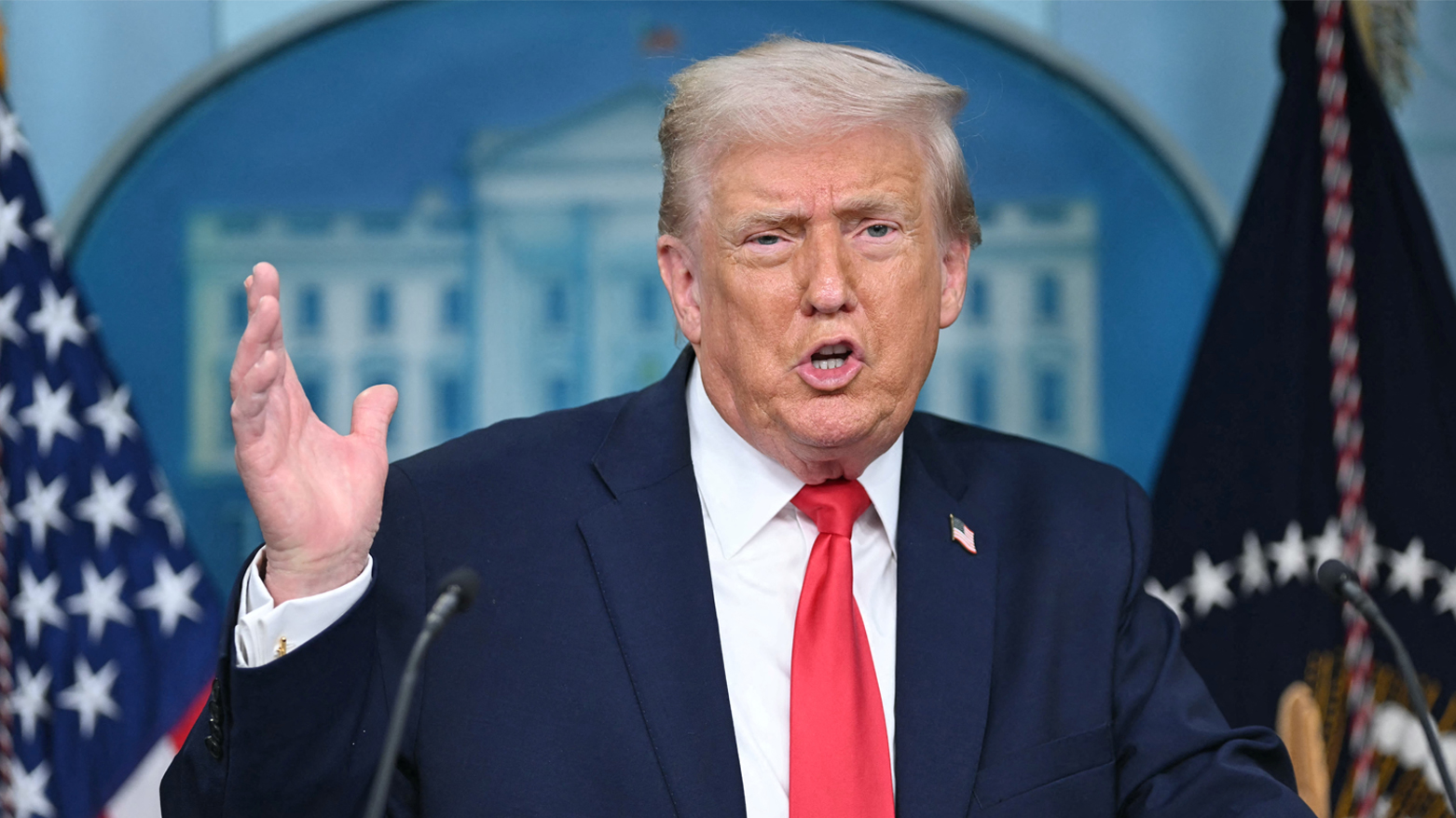
ERBIL (Kurdistan24) - U.S. President Donald Trump voiced strong support on Tuesday for Syrian President Ahmed al-Sharaa, whose government has launched a military offensive against Kurdish-led forces in northeast Syria.
The endorsement comes as American officials signal a fundamental shift in policy, effectively declaring the end of the U.S. partnership with the Syrian Democratic Forces (SDF) and urging their integration into the Syrian state.
Speaking to journalists at the White House, President Trump praised al-Sharaa’s handling of the volatile security situation. “He's working very hard, the president of Syria. He's working very, very hard. Strong guy, tough guy,” Trump said.
Acknowledging the Syrian leader's background, the president added, “Pretty rough resume. But you're not gonna put a choir boy in there and get the job done.”
"I like the Kurds," President Trump said during the press conference. However, he qualified this sentiment by framing the partnership in economic and strategic terms.
"Kurds were paid tremendous amounts of money - we have given oil and other things. So, they were doing that for themselves, more so they were doing it for us," President Trump said.
Despite this characterization, the president maintained that Washington has not abandoned the population. "But we get along with the Kurds and we are trying to protect the Kurds," he added, implying that the current U.S. push for their integration into the Syrian state could perhaps represent the new mechanism for that protection.
The comments coincide with reports of a prison break involving Islamic State (ISIS) detainees during the ongoing clashes. In an interview with the New York Post, Trump claimed credit for thwarting a larger escape of European jihadists.
“European terrorists were in prison. They had a prison break. And working with the government of Syria and the new leader of Syria, they captured all the prisoners, put them back to jail,” the U.S. President said, according to Agence France-Presse (AFP).
Washington Pivots to Damascus
The president’s remarks align with a broader strategic pivot outlined by U.S. Special Envoy for Syria Tom Barrack. In a statement published on X, Barrack declared that the original role of the SDF as the primary ground force fighting ISIS has effectively concluded.
He argued that the rationale for the U.S.-SDF partnership has expired because Syria now has an "acknowledged central government" capable of taking over security responsibilities.
Barrack emphasized that the best path forward for the Kurds lies in the "post-Assad transition" under President al-Sharaa.
He framed the integration of the SDF into the Syrian state as a unique opportunity for Kurds to secure full citizenship rights, cultural protections, and political participation—rights he noted were systematically denied under the rule of Bashar al-Assad.
“The US has no interest in long-term military presence,” Barrack stated, adding that Washington is now facilitating the transfer of key infrastructure, including oil fields and border crossings, to Damascus. He warned that the alternative of "prolonged separation" could invite instability or an ISIS resurgence.
Integration Agreement and Ceasefire
The shift in U.S. policy has accelerated diplomatic efforts on the ground.
The Syrian presidency announced on Tuesday that a "joint understanding" had been reached with the SDF regarding the future of Hasakah province.
According to the state news agency SANA, the agreement grants the SDF a four-day consultation period to prepare a plan for military and administrative integration.
Under the terms outlined by Damascus, Syrian government forces would remain on the outskirts of major cities like Hasakah and Qamishlo, while local security forces drawn from the area's residents would police Kurdish villages.
The deal reportedly includes the integration of SDF fighters into the Syrian Ministries of Defense and Interior, as well as the implementation of "Decree No. 13," which guarantees linguistic and cultural rights for Kurds.
In a significant move, the SDF issued a statement on Tuesday announcing its "full commitment" to the ceasefire.
“We announce our full commitment of our forces to the ceasefire that was agreed upon with the government in Damascus, and we confirm that we will not initiate any military action unless our forces are subjected to attacks in the future,” the statement read.
The Kurdish-led force expressed readiness to advance dialogue to implement the integration agreement signed on Jan. 18.
Violent Clashes and Prison Breaks
Despite the diplomatic progress, the situation on the ground remains perilous.
SDF General Commander Mazloum Abdi stated that his forces have withdrawn to Kurdish-majority areas, declaring their protection a “red line.”
In a statement to the Hawar News Agency, Abdi described "brutal attacks and systematic killing against Kurds" and accused Damascus of intensifying assaults on Hasakah and Kobani.
The chaos has directly impacted the security of detention facilities holding thousands of ISIS fighters.
Abdi reported that al-Hol camp faced "violent attacks" involving tanks and armored vehicles, forcing guards to withdraw. The U.S. has estimated that approximately 200 ISIS detainees escaped from Shaddadi prison following attacks linked to the Syrian Arab Army.
The security vacuum has drawn alarm from international observers. Nobel Peace Prize laureate Nadia Murad criticized the international community for abandoning the Kurds.
“The US-led coalition relied on Kurdish forces in Rojava to fight and defeat ISIS,” she wrote on X. “Now, at a critical moment, those who stood on the front lines against evil are being abandoned.”
Regional Warnings
The escalation has also drawn concern from neighboring Kurdistan Region of Iraq.
President Masoud Barzani issued a statement warning that harming the people of Western Kurdistan is "unacceptable in any form."
He urged the international community to intervene to prevent a resurgence of terrorist groups, emphasizing that instability poses a serious threat to regional security.
As the four-day consultation period begins, the durability of the ceasefire and the feasibility of integrating the SDF into the Syrian military remain untested.
With Washington throwing its weight behind Damascus and President Trump praising al-Sharaa’s "tough" approach, the Kurdish administration faces intense pressure to accept the new political reality or risk further conflict without its primary international ally.