Protests Erupt Near U.S. Embassy in Baghdad as Trump Warns Against Maliki’s Return
Former prime minister rejects U.S. “dictates” amid warnings of sanctions, militia dismantling demands, and heightened scrutiny over corruption.
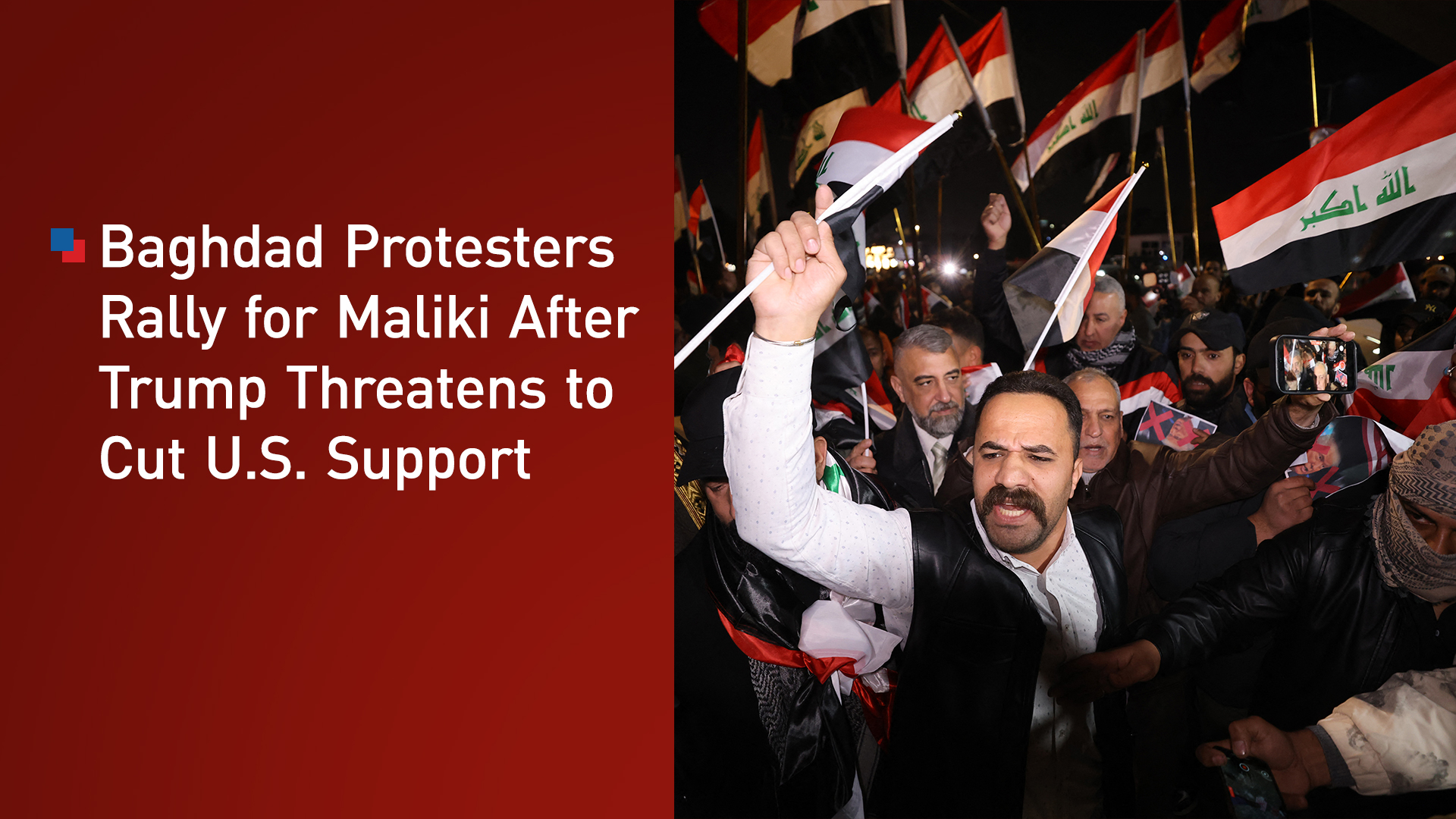
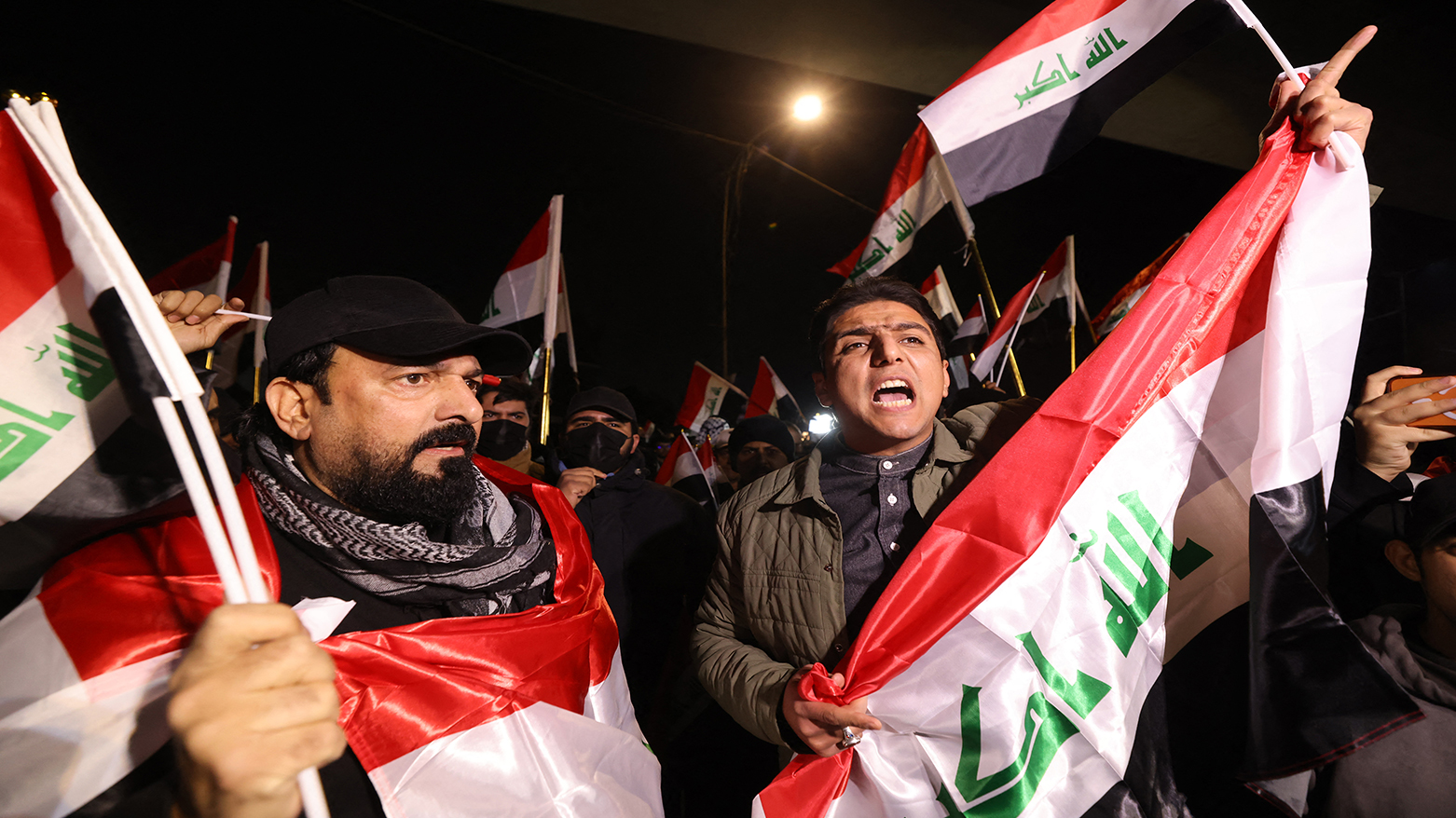
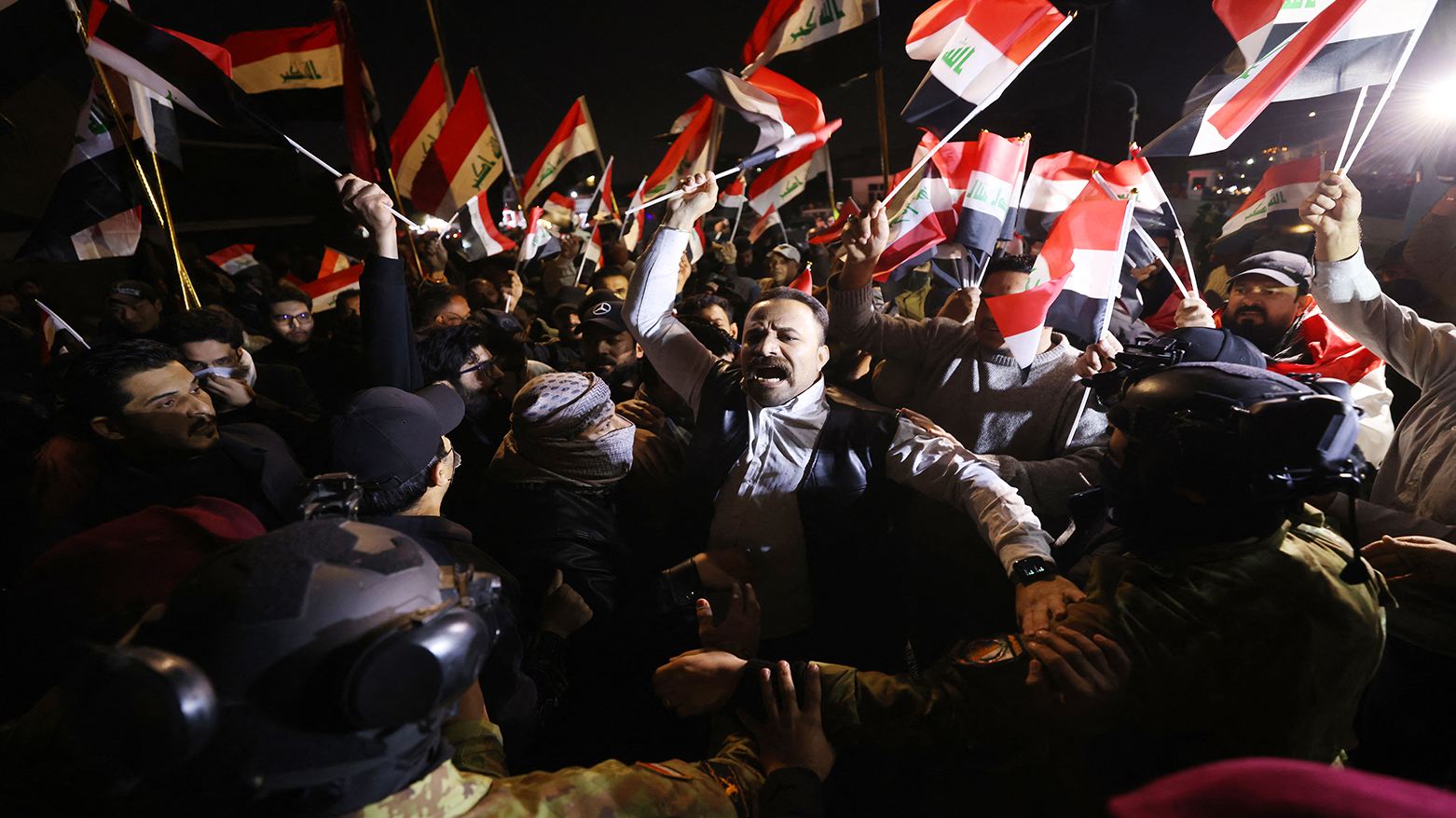
ERBIL (Kurdistan24) — Several hundred protesters rallied near the U.S. embassy in Baghdad on Wednesday after U.S. President Donald Trump warned that Washington would end all support for Iraq if former prime minister Nouri al-Maliki returns to power, Kurdistan24’s correspondent in Baghdad reported.
Demonstrators gathered near the Green Zone, chanting “Yes for Maliki,” while some burned posters bearing Trump’s image alongside an American flag, reflecting growing anger over what supporters describe as U.S. interference in Iraq’s political process.
The protests came as Maliki, the Shiite Coordination Framework’s nominee for prime minister, issued a sharp rebuke of Washington, accusing the United States of violating Iraq’s sovereignty and undermining its post-2003 democratic system.
In a statement published on X, Maliki said he “categorically rejects” U.S. involvement in Iraq’s internal affairs and denounced what he called the “language of dictates and threats.”
“Stemming from my respect for the national will and the decision of the Coordination Framework, I will continue to work until the very end in a manner that achieves the supreme interests of the Iraqi people,” Maliki wrote.
He briefly deleted the post before republishing it minutes later with a pointed addition, accusing Washington of acting “in violation of the democratic system in Iraq after the year 2003.”
Maliki’s statement was a direct response to Trump’s remarks a day earlier, in which the U.S. president warned against Maliki’s potential return to office. Writing on TruthSocial, Trump said he was “hearing that the Great Country of Iraq might make a very bad choice by reinstalling Nouri al-Maliki as Prime Minister,” accusing him of policies that previously led Iraq into “poverty and total chaos.”
Trump warned that a Maliki-led government would lose U.S. assistance, arguing that without American support Iraq would have “ZERO chance of Success, Prosperity, or Freedom,” concluding with the slogan, “MAKE IRAQ GREAT AGAIN!”
The exchange has intensified tensions at a sensitive stage of Iraq’s government formation process, as political blocs negotiate the next prime minister and cabinet amid growing U.S. scrutiny of Baghdad’s future orientation.
U.S. pressure escalated further in the early hours of Wednesday when Representative Joe Wilson warned Iraq’s political leadership that Washington’s position under Trump was “clear and unequivocal.”
In a statement on X, the South Carolina Republican said Iraqi leaders must not misinterpret the U.S. stance as “ambiguous or negotiable,” stressing that any new government must serve only Iraqi interests.
Wilson outlined conditions for continued U.S. support, including the disarmament and dismantling of militias within six to twelve months, immediate action against corruption and money laundering, and the establishment of an independent judiciary free from political influence.
He also called for clearly defining the role of the Popular Mobilization Forces under unified state command and urged Baghdad to deepen strategic economic and security ties with Washington.
Trump’s Special Envoy Mark Savaya reinforced the tougher tone, saying U.S. efforts in Iraq extend beyond government formation and countering militias to confronting what he described as entrenched corruption networks.
In a post on X, Savaya said U.S. authorities have mapped how looted Iraqi funds were used, including purchases of properties abroad and the acquisition of foreign citizenships—sometimes under false identities—by senior officials and their families.
He warned that corruption weakens Iraq’s national security and empowers terrorist groups, pledging close coordination with the U.S. Treasury and the Office of Foreign Assets Control to enforce accountability “without exception.”
Meanwhile, two U.S.-sanctioned armed groups within the Coordination Framework condemned Trump’s remarks. Asaib Ahl al-Haq said it rejected “all attempts to interfere in our country’s internal affairs,” while Kataeb Sayyid al-Shuhada also voiced opposition to what it called external dictates.
Last month, Iraqi officials and diplomats said Washington had demanded that the incoming government exclude Iran-backed armed groups. Despite the pressure, Iraqi political sources said the Coordination Framework remains determined to push forward with Maliki’s nomination, believing he could eventually ease U.S. concerns.
Iraq has regained a measure of stability after decades of conflict, but observers warn the country remains vulnerable. With weak economic growth and exposure to U.S. financial leverage, Baghdad risks punitive measures at a time when Washington has already sanctioned several Iraqi entities.