Iran Reviews Framework for U.S. Talks Amid Escalating Diplomatic Row With Europe Over IRGC Designation
Iran is reviewing frameworks for U.S. talks via regional mediators while preparing reciprocal measures against the EU for designating the IRGC a terrorist group, a move Germany dismissed as "propagandistic."
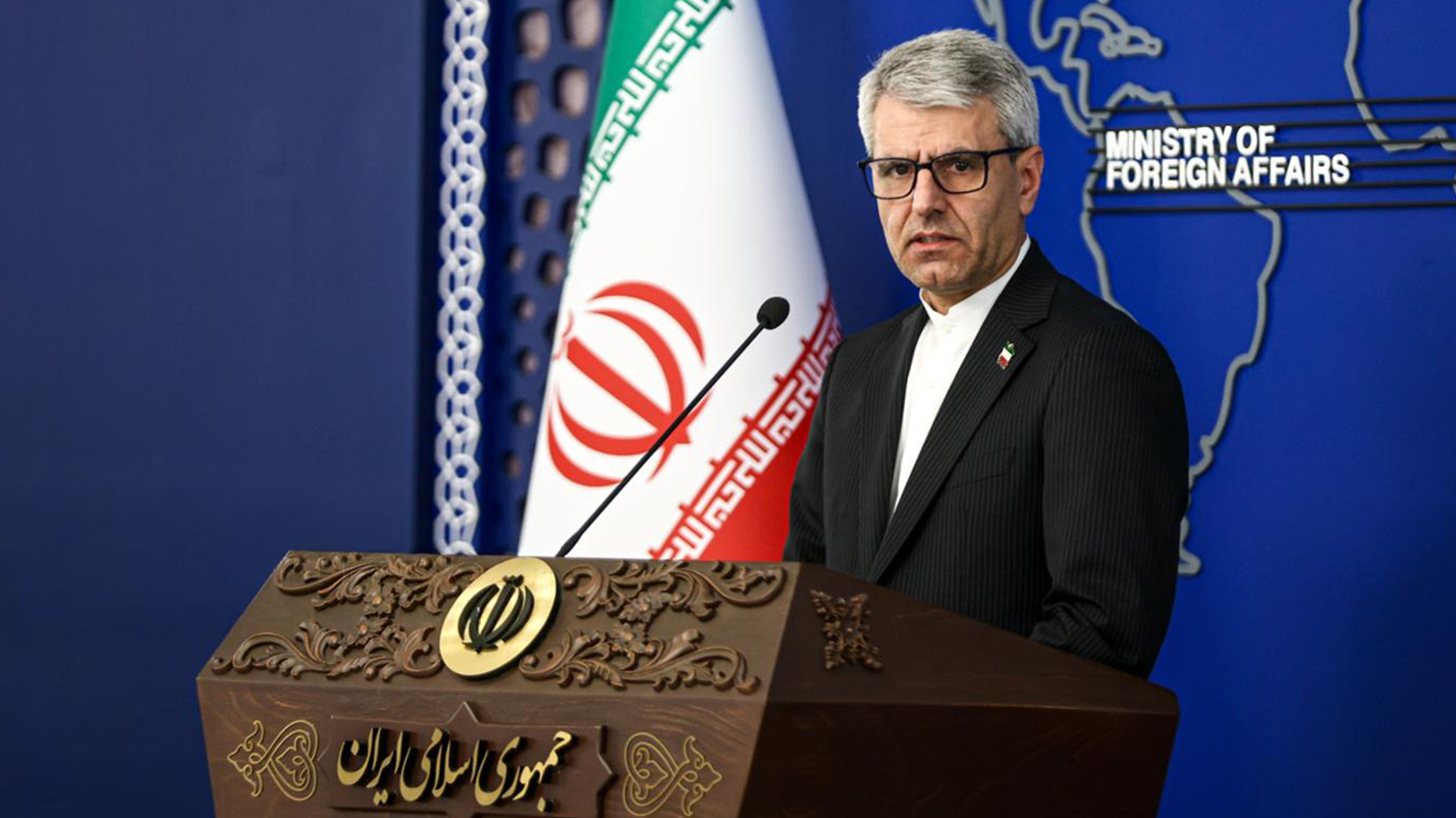
ERBIL (Kurdistan24) - The Iranian government announced on Monday that it is actively reviewing "operational details" and potential frameworks for resuming negotiations with the United States, utilizing regional countries as intermediaries. However, this diplomatic opening toward Washington coincided with a sharp deterioration in Tehran’s relations with Europe, following the European Union’s designation of the Islamic Revolutionary Guard Corps (IRGC) as a terrorist organization.
According to the state-run Islamic Republic News Agency (IRNA), Foreign Ministry spokesperson Esmaeil Baqaei addressed the prospect of renewed dialogue with the U.S. during a press conference on Monday in Tehran.
Baqaei confirmed that the Iranian government is currently evaluating the "various dimensions" of the issue. He drew a sharp distinction between the role of European nations, whom he accused of escalating tensions, and regional neighbors, whom he described as playing a "positive role" in transmitting messages between Tehran and Washington.
"At this stage, we are responsible for conducting various reviews and must evaluate the various dimensions of the issue," Baqaei stated, according to IRNA.
He added that regional countries are "sincerely trying" to facilitate communication due to their valid concerns regarding regional stability. This review process involves deciding on the method of conduct and the specific "framework" for a diplomatic process that Tehran hopes will reach a conclusion.
While signaling a cautious willingness to engage with the U.S., Baqaei emphasized that the lifting of sanctions remains Iran's "fundamental and indispensable priority."
Citing a history of what he termed American "breach of promise," specifically referencing the events of June, he noted that past experiences would heavily influence current decisions.
"We do not need to re-prove our seriousness and good faith in the field of diplomacy, as this has been proven before," he said, asserting that the onus lies on the U.S. to demonstrate a shift away from threats, which he argued are incompatible with diplomacy.
The diplomatic tone regarding the U.S. contrasted starkly with the rhetoric directed at the European Union. The dispute centers on the EU’s recent decision to list the IRGC as a terrorist organization, a move reached by EU foreign ministers on January 29.
According to IRNA, Baqaei characterized the EU’s decision as "illegal, unjustified, and highly erroneous," warning that a set of reciprocal measures has been formulated and sent to decision-making bodies for final determination.
Iran has already summoned ambassadors from all European countries and EU member states with a presence in Tehran to formally communicate its protest. Baqaei described this as merely a "minimum measure." He accused the EU of engaging in a "strategic miscalculation" and asserted that the designation was an attempt to appease the United States and Israel.
"The fact that the Zionist regime is the first party to congratulate Germany and the German Foreign Minister for this European resolution is highly significant and clarifies who the director of this offensive theater is," Baqaei told reporters, according to IRNA.
In response to Tehran’s threats of retaliation, Germany issued a strong condemnation.
According to the Anadolu Agency (AA), German Foreign Minister Johann Wadephul dismissed Iran's counter-move—which involves designating the armed forces of EU member states as terrorist organizations under Iranian law—as "baseless" and "propagandistic."
The Anadolu Agency reported that Wadephul, speaking before a trip to Southeast Asia and the Pacific, defended the EU's listing of the IRGC as "correct and long overdue." He accused the IRGC of violently suppressing peaceful protests, executing opponents, and exporting terrorism beyond Iran's borders.
"Those who violently suppress peaceful protests, execute members of the opposition, and spread terror to Europe cannot deflect criticism with political diversionary tactics," Wadephul stated. He further reaffirmed Berlin’s political support for Iranians seeking "a better life," Anadolu Agency reported.
The friction with Europe comes as Iran continues to assert its military posture in the region.
Baqaei confirmed to IRNA that there has been no change to the schedule of the Iranian Armed Forces' military drills. He specifically addressed reports regarding joint exercises with Russia and China, clarifying that the trilateral naval drills in the northern Indian Ocean are an annual event and will proceed as planned.
Furthermore, he defended the IRGC’s ongoing exercises as necessary for maintaining defense capabilities, rejecting warnings from U.S. Central Command (CENTCOM) regarding the use of live ammunition. "The IRGC is the guardian of security and stability in the Persian Gulf region and the Strait of Hormuz," Baqaei stated.
Addressing regional security, the Foreign Ministry Spokesperson condemned the continued violence in Gaza and Lebanon.
IRNA reported that Baqaei criticized the international community's failure to enforce a ceasefire, noting that "one of the most severe assaults" by Israel occurred within recent days, despite existing understandings. He argued that the reopening of the Rafah crossing was being used as a tool for forced displacement and accused Israel of seeking to partition regional countries and create rifts within the Islamic world.
Regarding relations with Saudi Arabia, Baqaei dismissed media reports suggesting friction between Tehran and Riyadh, specifically denying the validity of statements attributed to the Saudi Defense Minister regarding a potential U.S. attack on Iran.
According to IRNA, he described the relationship as positive, citing a "good call" held the previous night between the Iranian and Saudi foreign ministers. He emphasized that regional countries share a consensus on the risks associated with any "adventurous action" against Iran.
The press conference also touched on the standoff with the International Atomic Energy Agency (IAEA). When asked about the IAEA Director General's comments regarding a lack of awareness concerning enriched uranium stockpiles and damaged facilities, Baqaei deflected responsibility.
He told IRNA that the lack of access was a direct result of aggression against the facilities, stating, "The problem is that no protocol exists for the inspection of the country's peaceful nuclear facilities that have been assaulted and damaged." He suggested the IAEA should seek answers from the U.S. and Israel regarding the disruption of inspections.
In a separate and controversial segment of the press conference reported by IRNA, Baqaei addressed questions regarding the release of documents related to Jeffrey Epstein. While declining to give an official opinion, he noted media speculation that the "Zionist regime" utilizes such files to blackmail Western politicians and influence decision-making.
"There are also signs and evidence showing that the Zionist regime has repeatedly used such issues to exert influence on policymakers," he said, though he admitted he was not in a position to confirm the specific claims involving European leaders.
As Tehran navigates these complex diplomatic fronts—reviewing negotiation frameworks with Washington while trading punitive designations with Brussels—Baqaei reiterated that Iran’s ultimate goal is to secure national interests. He marked the beginning of the "Decade of Fajr," stating that for the past 47 years, decisions about Iran have been made within Iran, a sovereignty he vowed Iran would continue to defend against external pressure.