Trump Signals Sweeping Shift in Iran Policy After Ceasefire, Warns of Tariffs on Arms Suppliers
U.S. president claims progress on nuclear curbs and sanctions relief following early Wednesday truce with Tehran
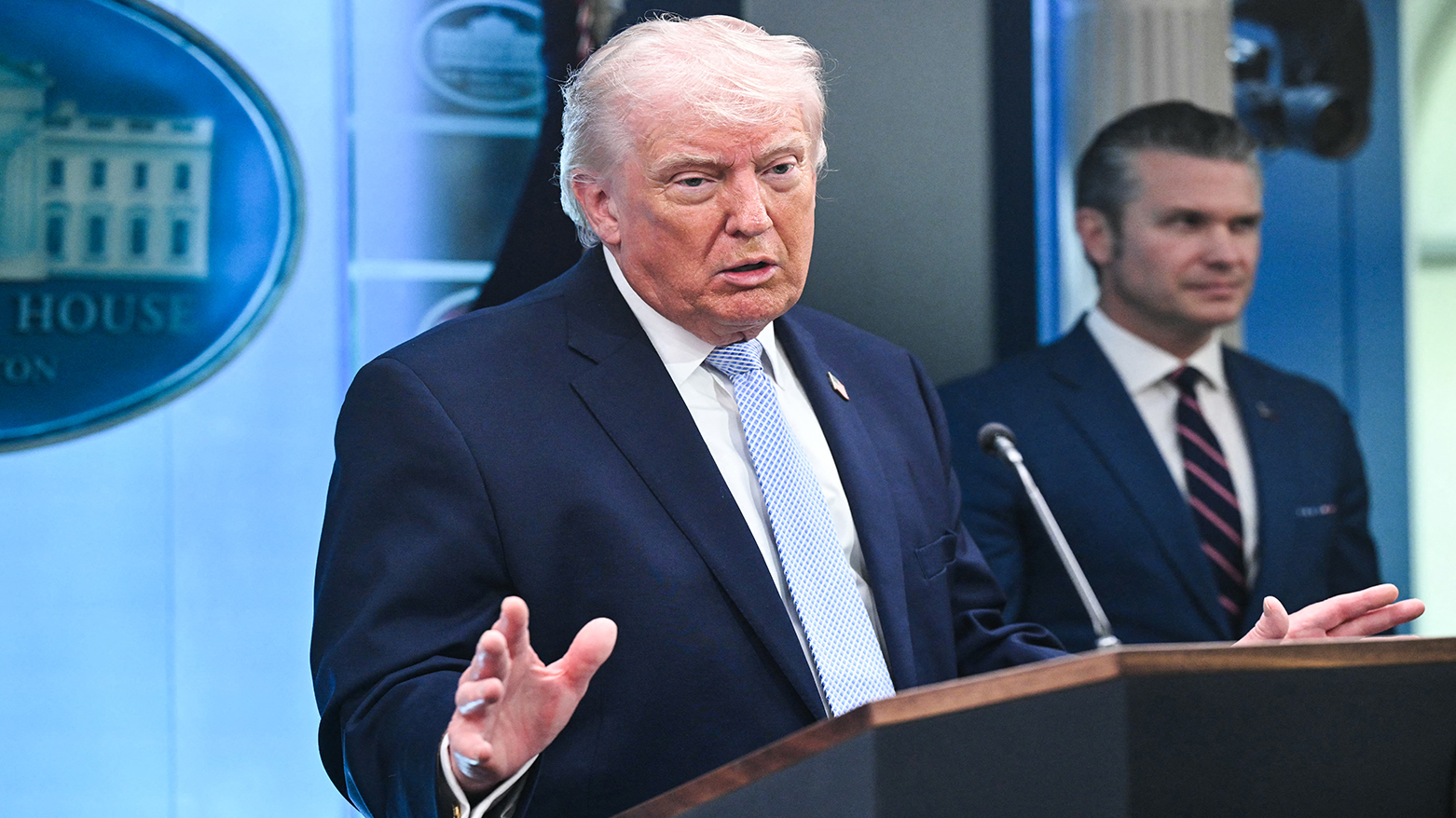
ERBIL (Kurdistan24) — U.S. President Donald Trump on Wednesday outlined Washington’s approach toward Iran, citing progress on nuclear restrictions and potential sanctions relief while warning of punitive tariffs on any country supplying weapons to Tehran.
In a series of posts on Truth Social, Trump said the United States would “work closely with Iran,” asserting that the country had undergone what he termed a “very productive regime change.”
He added that there would be no uranium enrichment and that U.S. forces would oversee the removal of what he described as deeply buried nuclear material, monitored under “very exacting” satellite surveillance.
Trump also indicated that discussions on tariffs and sanctions relief were already underway, stating that “many of the 15 points have already been agreed to,” suggesting the outline of a broader framework beyond the current ceasefire.
In a separate post, Trump issued a stark warning to third countries, saying any nation supplying military equipment to Iran would face an immediate 50% tariff on all goods exported to the United States, with “no exclusions or exemptions.”
The remarks come hours after the United States and Iran reached a two-week ceasefire early Wednesday, halting weeks of escalating confrontation that had brought the region to the brink of wider war.
The truce, brokered through intensive diplomatic efforts, is intended to create a narrow window for negotiations over key issues, including Iran’s nuclear program, sanctions, and regional security.
The agreement also includes steps toward stabilizing critical infrastructure and reopening vital trade routes such as the Strait of Hormuz, where disruptions had sent shockwaves through global energy markets.
The conflict leading up to the ceasefire saw a sharp escalation in hostilities, including U.S. strikes on Iranian-linked targets and retaliatory actions by Tehran and its regional allies.
Concerns over Iran’s nuclear program have long been at the center of tensions, with Washington insisting on strict limits to enrichment activities while Tehran has defended its program as peaceful.
Trump’s claim that uranium enrichment would cease entirely marks a significant assertion, though it remains unclear whether Iranian officials have formally agreed to such terms as part of the current framework.
His reference to “deeply buried” nuclear material and the involvement of U.S. strategic assets, including B-2 bombers and space-based surveillance, points to the sensitive and highly technical nature of any potential dismantlement process.
Analysts say Trump’s statements reflect a dual-track strategy combining pressure and incentives—offering the prospect of sanctions relief and economic engagement while simultaneously threatening punitive measures against countries supporting Iran militarily.
The proposed 50% tariff on nations supplying weapons to Iran could have far-reaching implications for global trade and diplomatic relations, particularly if enforced broadly.
At the same time, the suggestion that elements of a multi-point agreement have already been reached indicates that preliminary negotiations may be more advanced than previously disclosed.
Despite the sweeping tone of Trump’s remarks, the situation remains highly fluid. The two-week ceasefire is seen as a temporary pause rather than a comprehensive settlement, and significant gaps are likely to remain between Washington and Tehran on core issues.
Regional actors and global powers are closely monitoring developments, as the outcome of these negotiations could reshape security dynamics, energy markets, and diplomatic alignments across the Middle East.
For now, Trump’s statements signal an ambitious vision for recalibrating U.S.-Iran relations—but whether that vision can translate into a durable agreement will depend on the success of talks in the days ahead.