Three Kurdistan Villages Among Shortlisted Sites by Iraq for UN Tourism Program
Iraq has nominated seven rural communities, including three in the Kurdistan Region, for the UN Tourism Organization's "Best Tourism Villages" program, as Erbil and Baghdad deepen efforts to expand eco-tourism and reduce reliance on oil-driven growth.
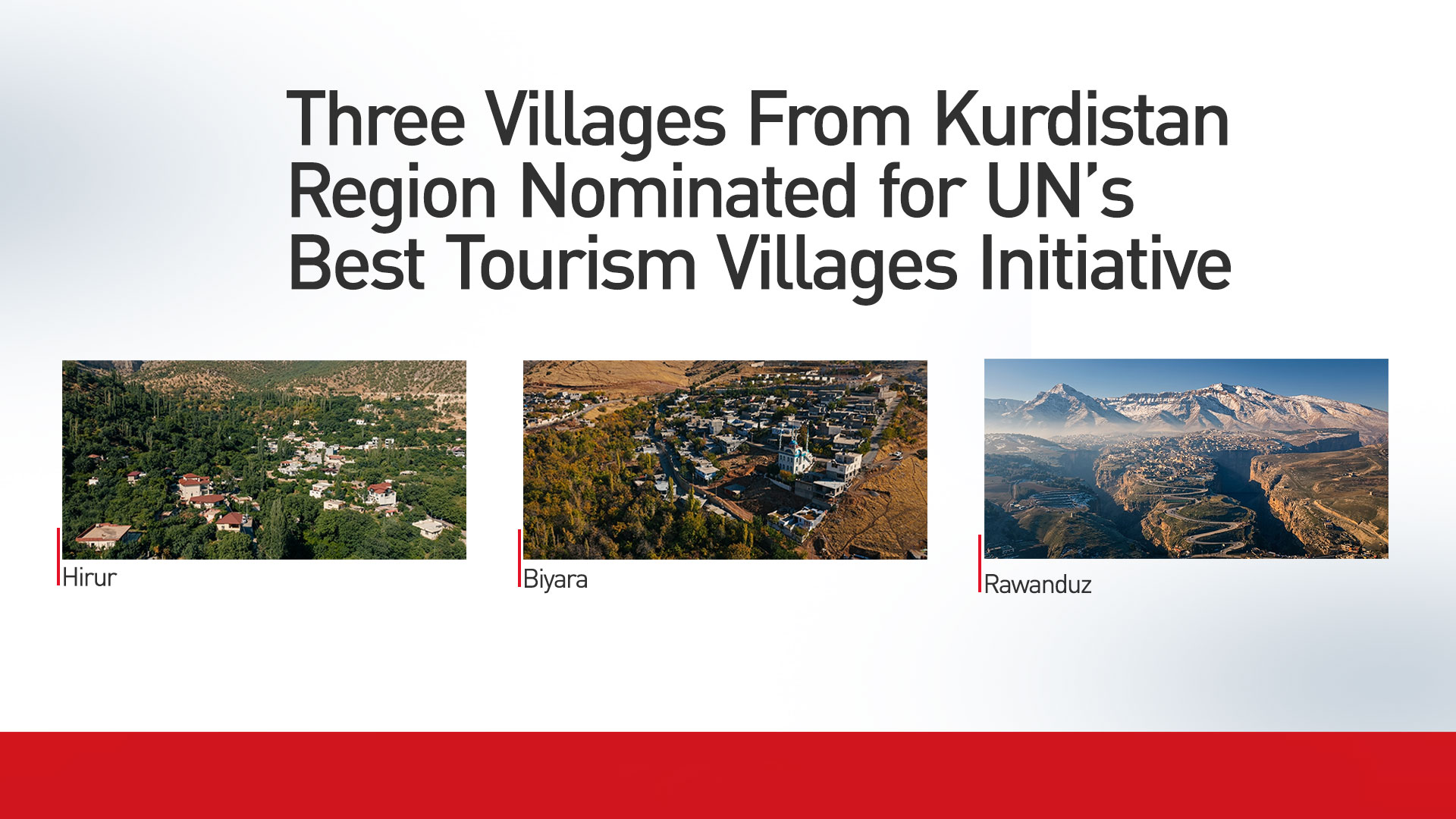
ERBIL (Kurdistan 24) - The Iraqi Tourism Board has announced the nomination of seven rural villages nationwide, including three located in the Kurdistan Region, for the United Nations Tourism Organization's 2026 "Best Tourism Villages" initiative.
According to Iraqi tourism officials, the Kurdish nominees include Biyara in Halabja Province, Hirur in Duhok Province, and Rawanduz in Erbil Province.
The nominations are part of broader efforts to strengthen eco-tourism, mountain tourism, and sustainable rural development, with officials stating that the UN's final decision regarding the globally recognized sites is expected in early 2027.
The move aligns with long-term regional strategies to position tourism as a central pillar of economic growth.
This development reveals that the Kurdistan Region has increasingly prioritized tourism investment to reduce its structural dependency on oil revenues.
Through initiatives such as the "Visit Kurdistan" campaign and the strategic roadmap developed by the Kurdistan Tourism Board, regional authorities are attempting to attract millions of visitors over the next decade.
The nomination of rural villages like Biyara, Hirur, and Rawanduz underscores how heritage preservation and eco-tourism are being integrated into these broader, multi-billion-dollar economic diversification plans.
Villages Nominated for UN Initiative
The process for selecting the seven villages relies on strict international benchmarks.
According to the Iraqi Tourism Board spokesperson, the candidates are being chosen in accordance with the specific criteria established by UN Tourism.
Yasin explained that Iraq will submit comprehensive dossiers for these rural sites to be evaluated by the international organization's experts.
The evaluation process will assess the villages based on the quality of their tourism services, environmental and nature conservation efforts, and the promotion of "green" tourism.
Furthermore, the selection criteria will consider the extent to which local communities are integrated into the tourism development process and the level of social cohesion achieved within them.
Yasin emphasized that the "Best Tourism Villages" initiative aims to encourage rural tourism as a vital sector that is inextricably linked to nature and the environment.
The official confirmed that the Board has already commenced the preparation of the formal nomination files, with expectations to finalize them within one month for official submission.
The spokesperson noted that winning villages will receive significant international exposure through promotion on the UN organization's platforms, potentially transforming these sites into premier destinations for both domestic and international travelers.
Kurdistan Region Tourism Expansion
The inclusion of Kurdistan Region villages in the national submission reflects the area's growing prominence as a travel destination.
The Kurdistan Regional Government (KRG) has launched a comprehensive, long-term strategy aimed at transforming the sector.
According to tourism officials, a structured strategic plan extending to 2030 has been approved by the Council of Ministers to lay the groundwork for sustained tourism growth.
A central component of this strategy is the "Visit Kurdistan" initiative, a foundation operating under the umbrella of the tourism sector.
The spokesperson for the campaign, Helmet Kesteyi, told Kurdistan24 that the core mission is to showcase Kurdistan's natural beauty and promote international tourism across its diverse landscapes.
"We aim to bring more than 20 million tourists to the Region by 2035," Kesteyi stated, adding that the initiative is expected to create significant job opportunities.
The Kurdistan Tourism Board has reported an unprecedented natural growth in visitor numbers recently, attributing the increase to favorable weather conditions and infrastructure development, such as the construction of dams.
Sirwan Tawfiq, Director of Marketing at the Board, stated that modern infrastructure, especially newly constructed roads and bridges, has played a crucial role in facilitating travel across the Region.
Despite acknowledged impacts from regional conflicts, Tawfiq stressed that the Board remains committed to welcoming visitors and expanding infrastructure.
Investment and Economic Diversification
To support these ambitious visitor targets, massive financial resources are being directed toward the sector.
According to Saman Arab, Director General of Investment in Erbil, the KRG has committed more than $13 billion to tourism under the current cabinet.
Arab stated that 131 tourism investment licenses have been granted within the Erbil province alone, signaling a strategic shift toward non-oil economic diversification.
The Director General highlighted that the government is prioritizing strategic projects that strengthen tourism infrastructure.
He clarified that alongside these projects, significant importance has been given to the road sector and water infrastructure, ensuring that tourists can easily access destinations.
To formalize this economic shift, the KRG recently established the Kurdistan Tourism Council (KTC).
During the launch ceremony, Minister of Municipalities and Tourism Sasan Awni described the council as a bridge to unite capabilities and visions for the future of tourism.
According to the minister, approximately 80 tourism projects have already been implemented across the Region at a combined cost exceeding $7.5 billion, reflecting the government's strategy to prioritize tourism as a key pillar of economic recovery.
Focus on Rural Heritage and Sustainability
While large-scale investments focus on urban and resort development, the UN nominations highlight the parallel importance of rural heritage.
According to the Iraqi Tourism Board, the strategy for rural tourism involves integrating modern technology and contemporary services into heritage and environmental sites without compromising their authenticity or cultural character.
Yasin stated that this approach ensures the development of these locations while safeguarding their unique historical and natural essence.
The strategy aligns with the broader goals of both Baghdad and Erbil to prioritize eco-tourism, stimulate domestic travel, and preserve the cultural identity of the country's villages.
The focus on sustainability extends to environmental protection.
Officials from the Kurdistan Tourism Board have called on both residents and visitors to help preserve the environment by maintaining cleanliness and responsibly managing waste during their travels, underscoring the shared responsibility of protecting the region's natural beauty.
The nomination of Kurdistan Region and Iraqi villages to the UN "Best Tourism Villages" initiative reflects an ongoing strategy to elevate rural heritage on the global stage.
Regional authorities continue to position tourism development and cultural preservation as central components of their broader economic diversification efforts.